

Choose Patio Doors That Fit Your Florida Home
The best patio doors balance hurricane protection, energy performance, easy operation, and a style that suits your home. Start by choosing a configuration that fits the opening and available floor space, then compare impact ratings, glass packages, frame strength, U-Value, and Solar Heat Gain Coefficient (SHGC).
For many Florida homeowners, an energy-efficient, impact-rated sliding glass door is a practical choice: it saves space, brings in natural light, and can help limit heat transfer when paired with Low-E glass, insulated glazing, warm-edge spacers, and tight weatherstripping. French rail doors offer a more traditional look, while storm doors and screen systems can support airflow and insect protection.
Do not choose based on appearance alone. A door that looks great but is not properly rated, sized, and sealed may leave your home less comfortable during summer heat and more vulnerable in severe weather. The right installation matters just as much as the door itself.
This guide explains how to compare patio door types, modern and classic design options, energy ratings, hardware, and professional installation so you can make a confident upgrade.
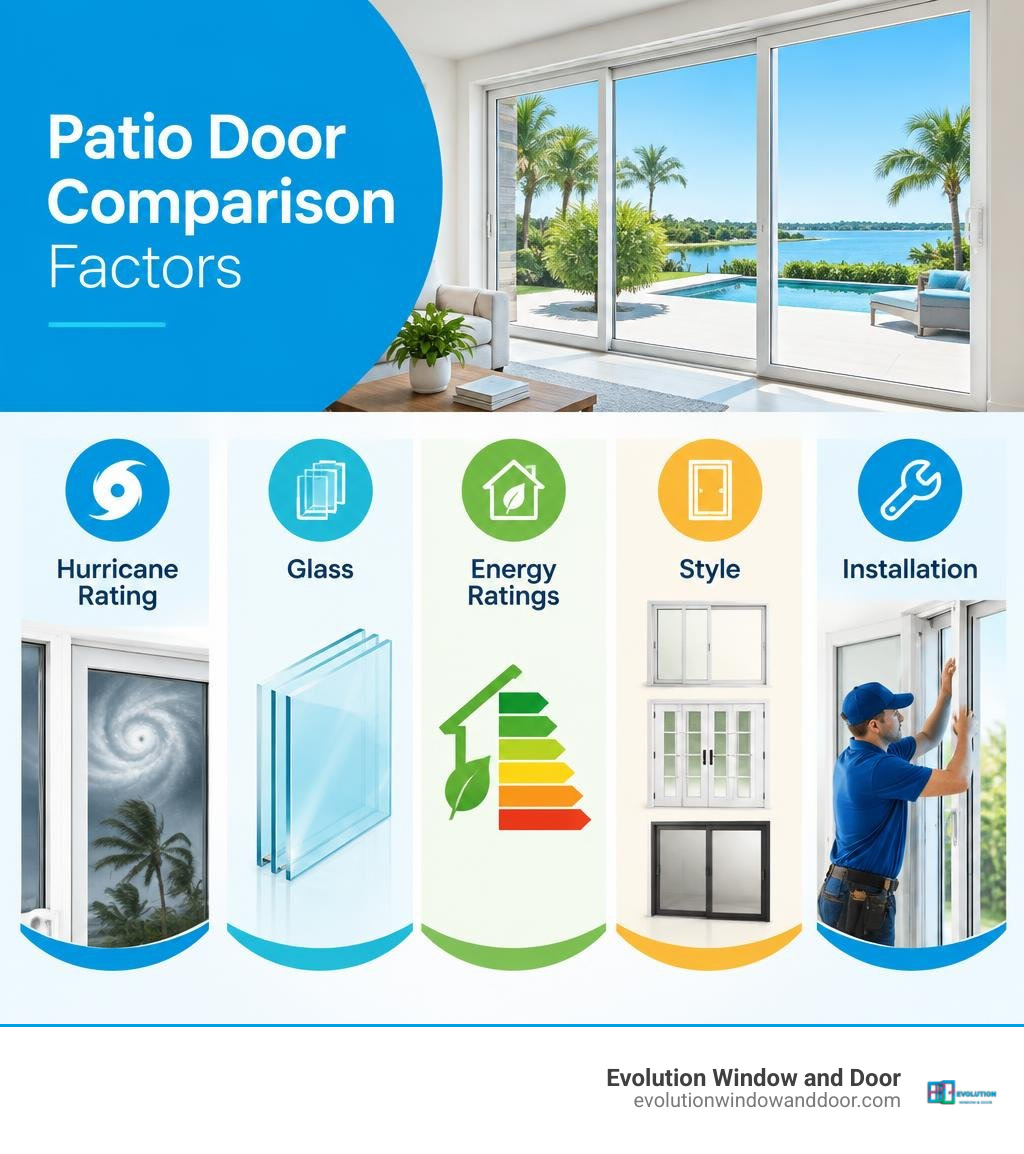
Core Types of Patio Doors for Modern Homes
Selecting the ideal configuration depends heavily on your daily traffic patterns, interior room dimensions, and overall lifestyle. Homeowners in Southwest Florida—from coastal communities like Sanibel and Pine Island down through Bonita Springs and Naples—often desire a smooth, unobstructed transition between indoor living rooms and outdoor lanais.
When evaluating different interior and exterior door styles, you will find three primary structural categories:
| Feature / Property | Sliding Glass Doors | French Rail Patio Doors | Storm Doors & Integrated Screen Systems |
|---|---|---|---|
| Operation Type | Horizontal sliding track | Hinged swing (in-swing or out-swing) | Secondary exterior hinged or rolling frame |
| Floor Space Required | Zero interior or exterior swing clearance | Needs clear radius for swing clearance | Minimal swing path or self-storing track |
| Architectural Style | Contemporary, streamlined, sleek | Classic, traditional, elegant | Functional secondary protection & ventilation |
| Sightline Profile | Thin, narrow sightlines for maximum glass | Broad 5-inch rails mimicking wood craftsmanship | Slim mesh borders, full-view glass or screen |
| Primary Advantage | Maximum natural daylight and space savings | Timeless aesthetic with multi-point locking | Year-round cross-ventilation and bug defense |
Sliding Glass Units
Sliding systems glide horizontally along an integrated track, making them the most floor-space-conscious solution available. Because they do not swing outward onto your deck or inward into your furniture arrangement, you can position couches, dining sets, and decor directly beside the glass.
Engineered with high-grade tandem stainless steel or composite roller assemblies, modern sliding panels glide effortlessly despite housing heavy-duty, multi-layered hurricane impact glass. When evaluating your home’s needs, understanding the sliding glass door replacement cost and options can help you determine the balance between panel count, frame material, and long-term durability.
French Rail and Hinged Models
If you admire classic architectural symmetry, French rail doors offer historic elegance combined with heavy-duty construction. Unlike ultra-narrow sliding frames, French rail configurations feature bold, 5-inch wide bottom rails and generous side stiles that replicate traditional millwork.
These distinct exterior doors feature multi-point locking systems that secure the door into the top header, bottom sill, and center jamb simultaneously. This mechanical latching provides exceptional resistance against high wind loads and unwanted forced entry.
Storm Doors and Integrated Screen Systems
Living near the Gulf Coast means enjoying gentle evening breezes while keeping outdoor insects outside. Adding a specialized storm door or integrated screen enclosure turns your threshold into an active ventilation portal during the cooler autumn and winter months.
If you want a seamless screen system that hides away when not in use, you can keep bugs out with stylish retractable screen doors. Alternatively, for heavy daily foot traffic, you can find the perfect sliding screen door for your home with heavy-duty extrusion tracks that resist warping in intense coastal heat.
Design Aesthetics and Customization Options
Your patio entrance serves as a key visual focal point inside your living space and from your backyard patio or pool deck.

Contemporary vs Classic Style Sliding Patio Doors
The fundamental visual difference between contemporary and classic patio entrances lies in rail proportions and glass exposure:
- Contemporary-Style Doors: Built with narrow, symmetrical 3-inch rails. This slim framework expands your visible glass area, maximizing natural light penetration and blending effortlessly with modern minimalist decor.
- Classic-Style Doors: Feature substantial 5-inch rails, providing depth, weight, and visual grounding that complements Mediterranean, Craftsman, or traditional architecture.
Understanding the key differences between doors and windows helps clarify why door frame engineering must support significant structural loads while maintaining these tailored aesthetic profiles.
Frame Colors and Hardware Finishes
Gone are the days when white vinyl was your only design option. Today, modern extrusion finishes allow you to match your interior trim and exterior facade:
- Matte Black and Bronze Frames: A growing favorite in 2026 architectural design, black frames create sharp, modern contrast against neutral walls and pool areas.
- Classic White, Almond, and Clay: Clean, reflective tones that maintain a bright, expansive atmosphere.
- Architectural Hardware: Heavy-duty die-cast handles available in satin nickel, oil-rubbed bronze, brushed chrome, and polished brass.
- Integrated Keylocks and Security Footbolts: Secondary locking features built into custom door parts and accessories for multi-layered physical defense.
Thermal Performance and Glass Technology
A common concern among homeowners in Port Charlotte, Punta Gorda, and Sarasota is whether large glass doors will cause interior rooms to overheat. Modern glazing engineering has resolved this issue, turning large glass expanses into robust thermal barriers.
Investigating how doors and windows work together for energy efficiency shows that a well-insulated structural envelope keeps air-conditioned spaces cool without overworking your HVAC compressor. Large-scale regional benchmarks, like housing performance data, consistently highlight how modern building envelopes improve residential performance.
Understanding U-Value and SHGC Ratings
When reviewing energy tags on replacement glass, two metrics matter most:
- U-Value (Thermal Transfer Rate): Measures how much non-solar heat transfers through the assembly. Lower numbers indicate superior insulating power. Standard single-pane clear glass often sits around a poor 0.41 U-Value, whereas high-performance SolarZone™ insulated units achieve an efficient 0.20 to 0.27 U-Value.
- Solar Heat Gain Coefficient (SHGC): Measures the fraction of solar radiation admitted through the glass. In sun-drenched regions like Florida, lower is always better. Clear glass carries an SHGC around 0.49, while specialized SolarZone Elite glass drops this figure to a low 0.18, deflecting roughly 82% of harsh ambient solar heat.
Selecting energy-rated windows and doors engineered for our Southern climate ensures year-round indoor comfort.
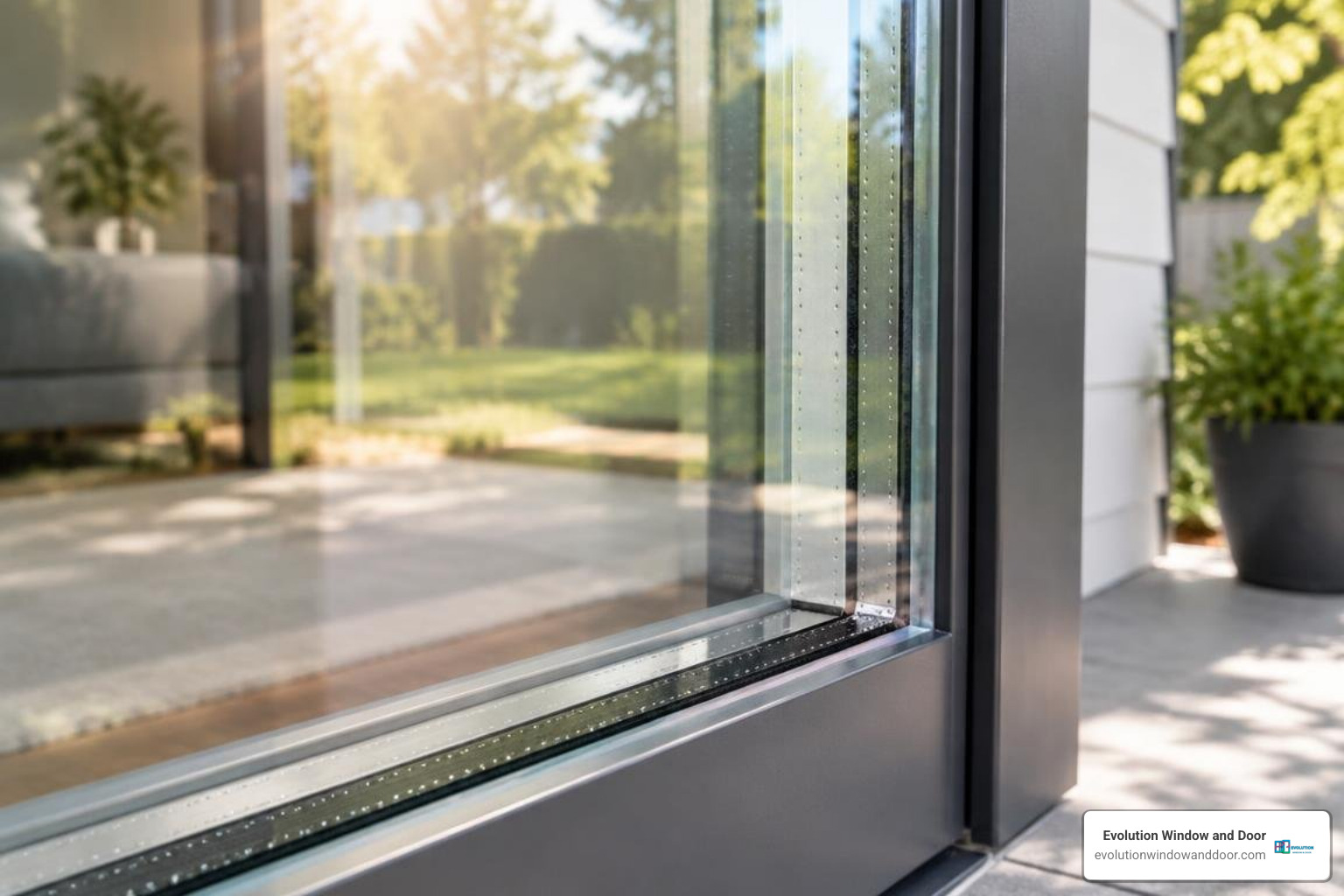
Maximizing Efficiency with Insulated Patio Doors
Modern insulated units use several coordinated technologies to minimize heat gain:
- Microscopic Low-E Coatings: Thin, transparent metallic oxide layers applied to internal glass surfaces bounce infrared heat away while letting visible light pass through.
- Warm-Edge Spacers: Traditional metal spacers conduct temperature along the glass edges, leading to perimeter heat bleed and condensation. The Intercept™ Warm-Edge Spacer insulates the glass edges, providing up to a 5% savings on monthly energy costs.
- Argon Gas Fills: Non-toxic, high-density inert gas injected between panes slows thermal convection significantly compared to air.
- Dual Internal & External Weatherstripping: High-density fin seals along the perimeter interlock when closed, preventing drafts and humidity infiltration.
The Professional Installation and Replacement Process
Even the best-engineered patio unit will fail if installed improperly. In hurricane-prone environments like Fort Myers and Cape Coral, structural anchoring and flashing require meticulous execution.
Spotting the warning signs it is time to replace your doors—such as recurring track water pooling, sticky rollers, wood rot, or whistling drafts—is the first step toward securing professional replacement services.
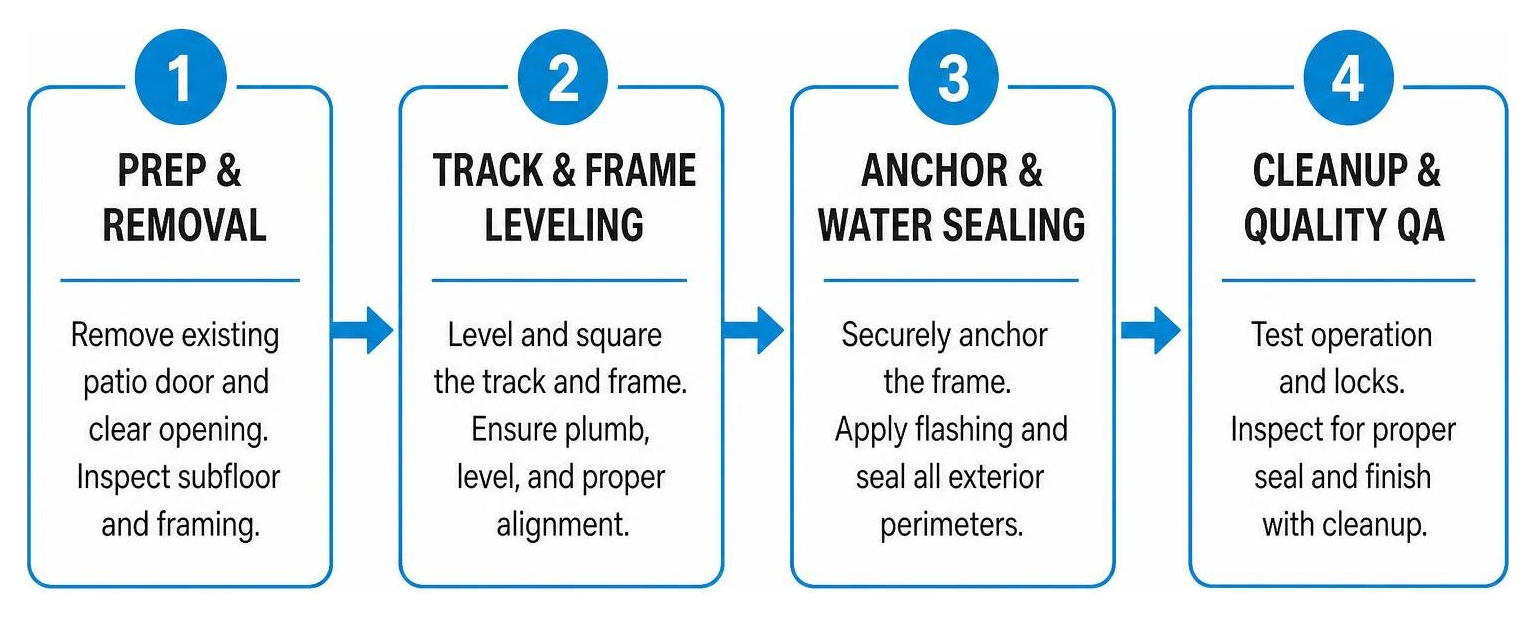
Precision Fitting and Rapid Turnaround
When our skilled crews handle a replacement, the installation is smooth, precise, and respectful of your home:
- Subfloor Inspection & Leveling: The existing structural opening is cleared down to the concrete buck or stud framing, leveled, and checked for subfloor rot.
- Structural Squaring: The frame is leveled with shims and fastened into structural concrete or studs using heavy-gauge impact anchors.
- Flashing & Moisture Barrier Sealing: Commercial polyurethane sealants and sill pans are installed to prevent rain driven by tropical storms from penetrating your home.
- Swift Turnaround & Cleanliness: Most residential sliding glass installations are finished in under 6 hours, complete with full site cleanup and old door disposal.
Planning Your Upgrade with In-Home Estimates
Upgrading your home should be exciting and straightforward. Modern planning tools, such as augmented reality previews, let you visualize different frame colors and grid patterns directly on your smartphone before manufacturing begins.
When you are ready to evaluate your home’s structural requirements and explore custom configurations, you can easily request a quote for a pressure-free in-home assessment.
Frequently Asked Questions about Patio Door Selection
What are the main benefits of energy-efficient patio door units?
Energy-efficient patio doors significantly lower utility costs by keeping cooled air inside and blocking outdoor heat. High-performance Low-E coatings also filter out damaging ultraviolet (UV) rays, which prevents hardwood floors, rugs, and furniture from fading over time.
How do contemporary patio doors differ from classic styles?
Contemporary patio doors feature slim, 3-inch symmetrical rails designed to maximize glass area and deliver a sleek, modern look. In contrast, classic styles feature wider 5-inch profiles that provide traditional architectural depth and mimic classic woodwork.
How long does a typical patio door replacement take?
A standard residential replacement typically takes between 4 to 6 hours from arrival to final cleanup. Custom structural retrofits or opening expansions may require additional time, but our crews make every effort to seal and secure your home within a single business day.
Conclusion
Choosing the right patio door upgrades your daily comfort, improves energy efficiency, protects your home during storm season, and enhances overall curb appeal. Whether you prefer the modern minimalism of slim black sliding doors or the timeless look of classic French rails, investing in quality materials and precision installation delivers lasting peace of mind.
To explore customizable hurricane impact options built specifically for your Florida home, discover our complete home window and door solutions and schedule your consultation today.


