

Understanding How Retractable Screens Work and Their Main Types
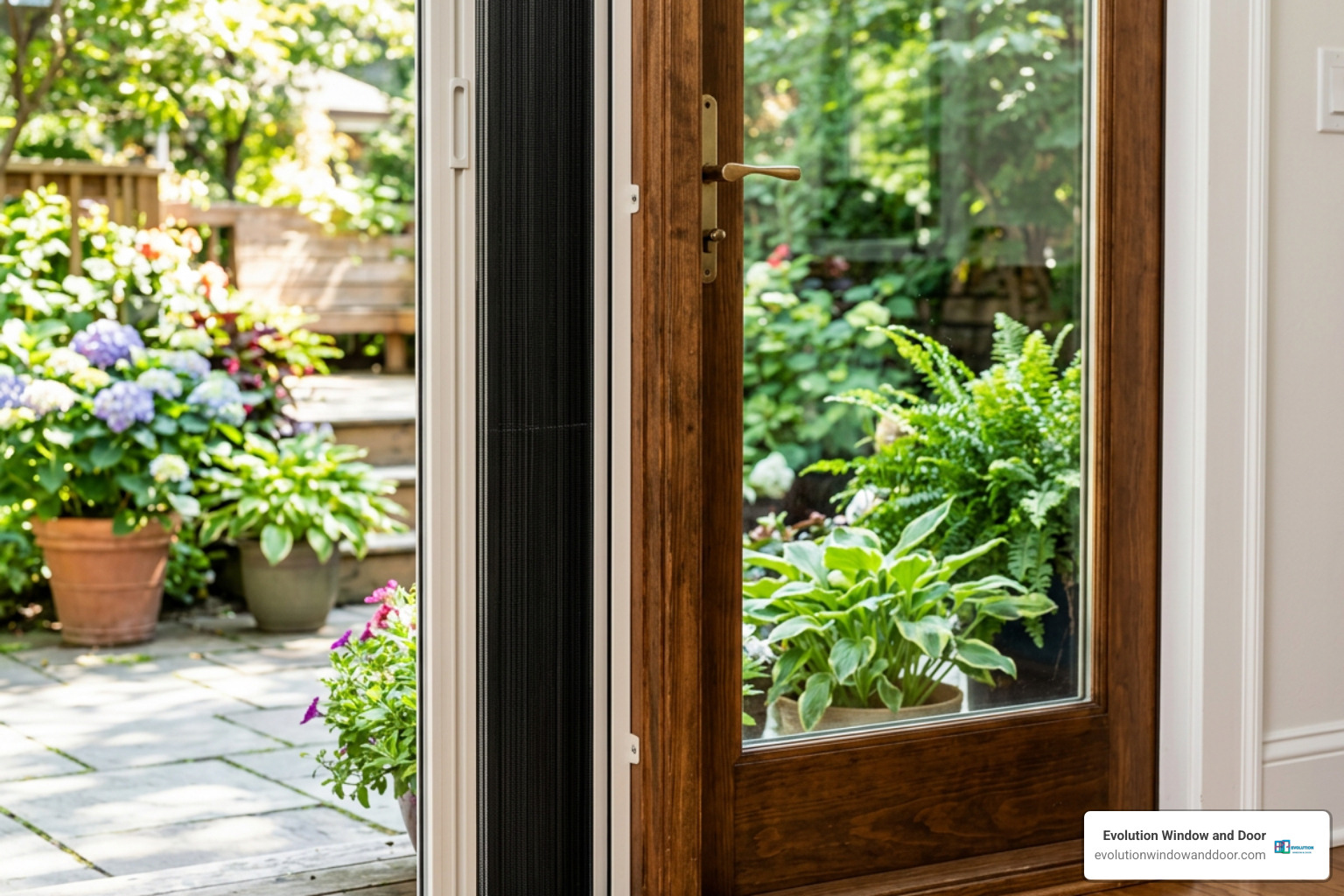
A retractable screen door operates on a simple yet highly effective mechanical concept. When active, the mesh unrolls horizontally across the doorway, guided along top and bottom channels. When released, an internal mechanism smoothly pulls the mesh back into a protective vertical housing (or cassette) mounted along the side of the door frame.
Most modern units rely on several key components working together:
- Screen Cassette (Housing): An extruded aluminum profile that houses the internal roller tube, tension spring, and rolled mesh when the door is open.
- Aluminum Frame and Low-Friction Tracks: Upper and lower channels that keep the screen taut and straight while sliding across the opening.
- Spring-Tension Recoil System: Internal springs provide the exact tension needed to keep the mesh smooth when deployed, pulling it back cleanly inside the housing when unlatched.
- Magnetic Latch System: A full-length magnetic strip along the door jamb or meeting stile that securely holds the pull bar closed against breezes and subtle pressure.
Single vs Double Retractable Screen Door Options
When selecting a screen system, matching the door configuration is essential. Single retractable screen doors utilize a single side cassette mounted on either the left or right jamb. They excel on standard entry doors, inswing or outswing side doors, and single patio exits. Most standard stock single screen units cater to openings ranging from 32 to 36 inches wide, with standard height limits around 80 to 96 inches.
Double retractable screen doors—often installed on French doors or dual patio doors—use two opposing cassettes installed on both sides of the door frame. The two screens pull toward the center of the opening and latch together using a central magnetic strip or mechanical drop-bolt system. Standard double door configurations typically accommodate openings between 68 and 72 inches wide, though larger residential kits can span up to 72 inches wide by 100 inches high. You can review exact measurements on these 72-inch double retractable screen specifications.
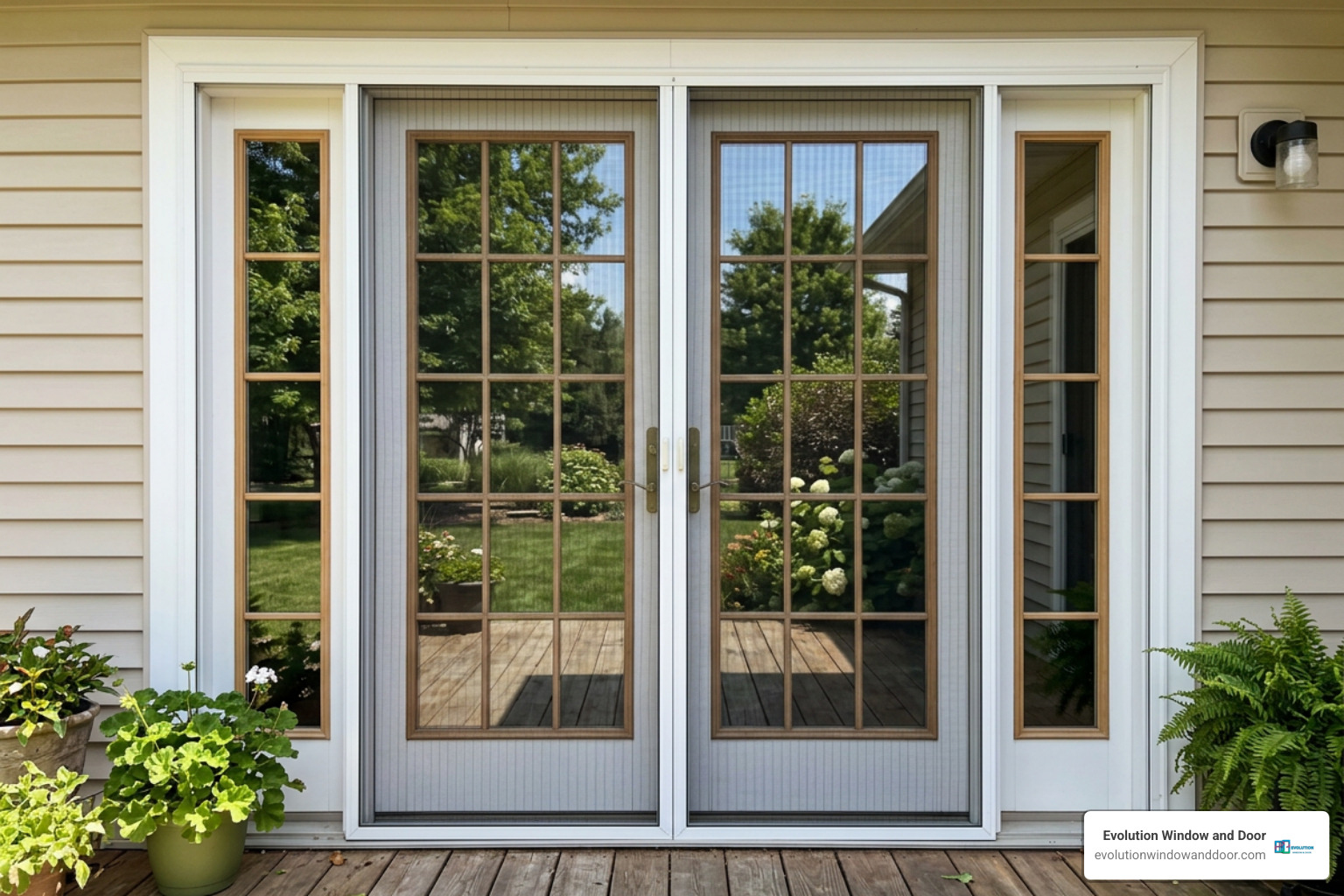
Pleated Mesh and Surface-Mount Designs
Beyond traditional spring-loaded roll-up screens, pleated mesh models offer a distinct alternative. Instead of rolling onto a spring-loaded cylinder inside a cassette, pleated screens fold like an accordion when retracted.
Pleated systems offer notable benefits:
- Springless Manual Sliding: Because there is no internal spring recoil, the screen stays safely in whatever position you leave it without snapping back shut.
- Ultra-Low Profile Railing: Many pleated models utilize an architectural 4 mm bottom guide rail. This flat profile provides smooth passage for strollers, wheelchairs, and family members, eliminating trip hazards along high-traffic thresholds.
- Versatile Mounting Methods: They can be installed as a surface mount onto existing exterior trim/brickmold (requiring at least 3/4 inch of mounting depth) or recessed inside the door frame jamb.
For detailed technical layout options, review these pleated screen system specifications.
Benefits of Installing a Retractable Screen Door in Your Home
Adding a retractable screen to your entryway provides a range of day-to-day advantages over permanent, traditional screens.
| Feature | Retractable Screen Doors | Traditional Rigid Screen / Storm Doors |
|---|---|---|
| Aesthetic Integration | Disappears into color-matched side housing when not in use. | Permanently covers door face; alters front curb appeal. |
| Door View & Light | 100% unobstructed view when retracted. | Glass/mesh frames obstruct entry views year-round. |
| Threshold Clearance | Low-profile or 4 mm bottom rails prevent tripping. | Standard raised bottom sill threshold. |
| Maintenance & Wear | Mesh protected inside cassette from UV, weather, and dirt. | Mesh constantly exposed to rain, harsh sun, and elements. |
| Slam Safety | Dampened recoil speed reducers or springless sliding. | Mechanical door closers can slam shut unexpectedly. |
Insect Protection and Natural Ventilation
Standard retractable screens utilize durable 18×16 weave charcoal mesh. This tight mesh pattern effectively blocks mosquitoes, flies, gnats, and debris without impeding airflow. Top and bottom track edge seals, combined with flexible seal bug flaps along the threshold, ensure insects cannot crawl under or around the housing frame.
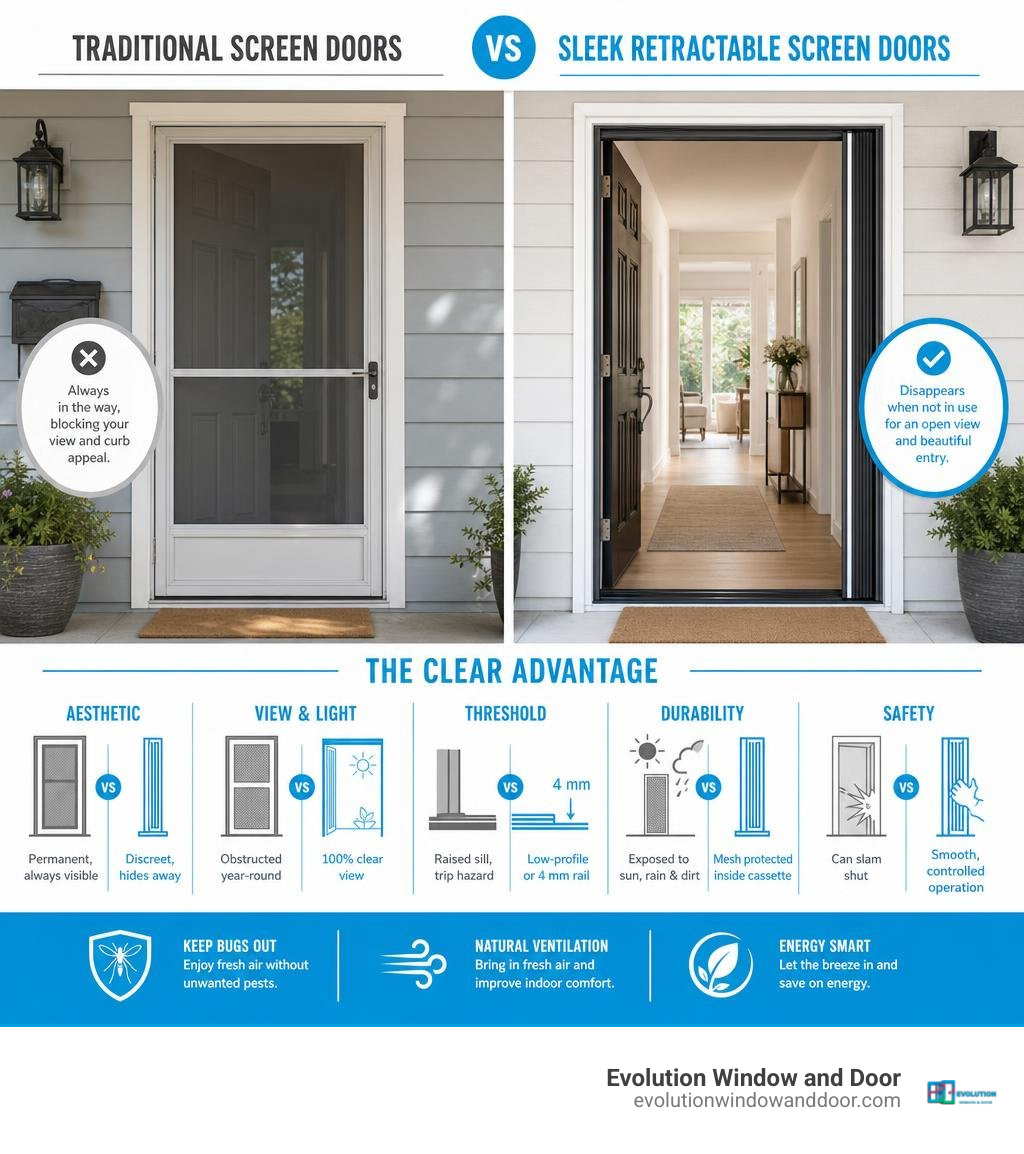
By opening your primary entrance while keeping the retractable screen latched, you encourage natural cross-ventilation. Bringing fresh outdoor air into living spaces sweeps out stale indoor humidity and improves indoor air quality. If you are upgrading your main entryways, explore our full range of Interior Exterior Doors to pair with your screen selection.
Energy Efficiency and Space Saving
Relying on natural cooling breezes during mild autumn or spring days allows homeowners to lower thermostat settings and reduce air conditioning usage. For a complete look at optimizing airflow and insulation, read about How Doors And Windows Work Together For Energy Efficiency.
Furthermore, traditional hinged screen doors swing outward, taking up porch or patio floor space and potentially blocking walkways. Retractable models eliminate this concern entirely; the screen operates entirely within the footprint of your door frame, making it ideal for compact porches or narrow entry landings.
Measuring, Selecting, and Installing Retractable Screen Systems
Installing a retractable screen door is a manageable weekend DIY project, provided you take accurate frame measurements beforehand.
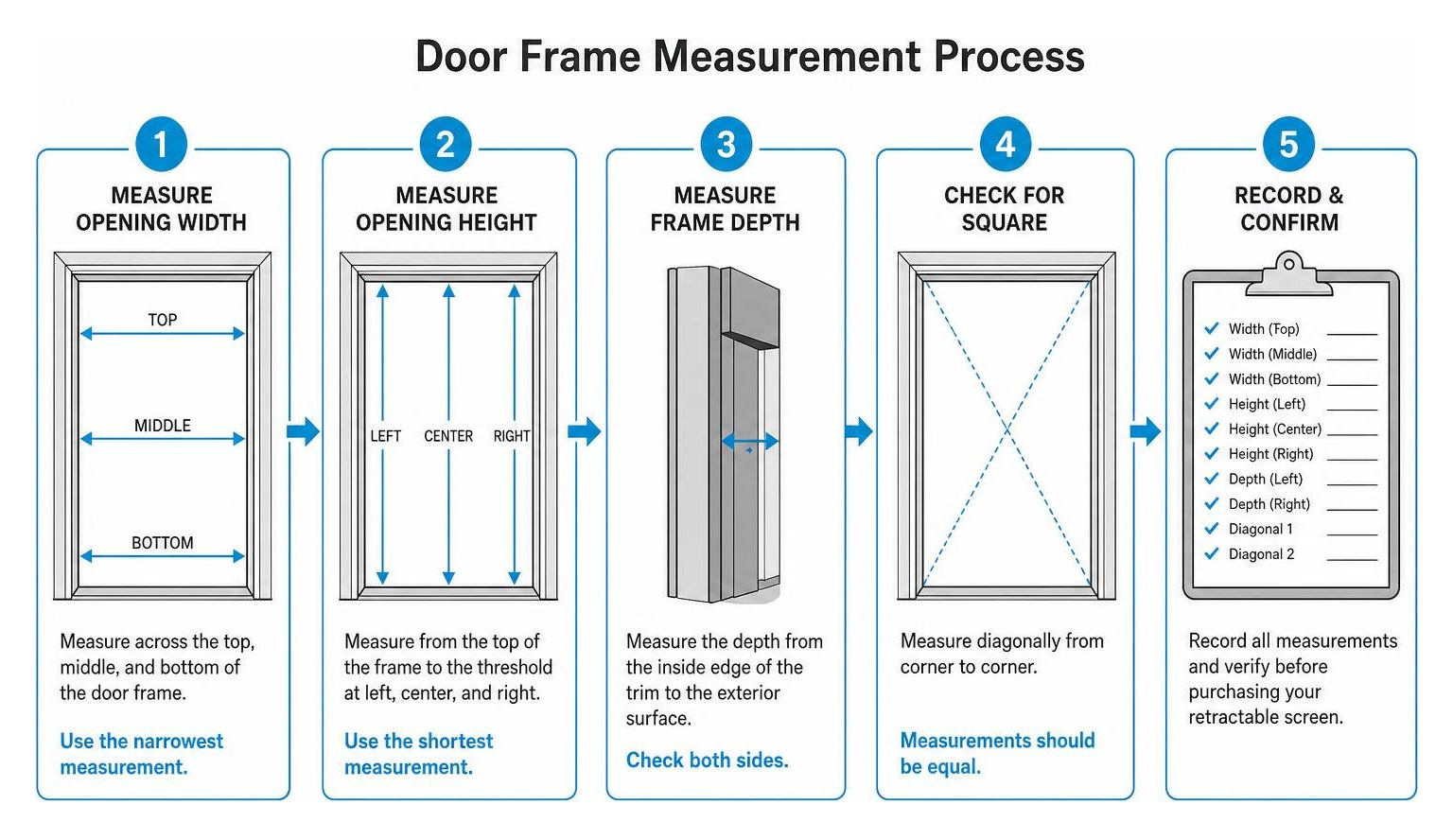
Measuring Door Openings and Surface Depth
To ensure a precise fit, follow these key measuring steps:
- Measure Opening Width: Take horizontal measurements across the top, middle, and bottom of the door frame trim or brickmold. Use the narrowest measurement if your door jamb is slightly out of square.
- Measure Opening Height: Measure vertically from the threshold sill to the underside of the top casing on both the left and right sides.
- Verify Surface Mounting Depth: Ensure your door trim or brickmold provides at least 3/4 inch of flat, unobstructed surface depth. Total product casing depth typically ranges between 2 and 2-3/4 inches.
- Confirm Door Handing and Swing: Verify whether your primary entry door swings inward or outward, and confirm that door hardware (handles, deadbolts) will not obstruct the screen handle path.
Many universal stock models feature quick-snap tracks that fit standard openings between 32 and 36 inches without manual cutting. Check out these single retractable screen door specs for standard fit details.
Key Features to Consider When Choosing a Retractable Screen Door
- Speed-Reducer Mechanisms: A built-in hydraulic brake or speed reducer prevents the screen from snapping back abruptly if accidentally released, protecting hands and ensuring quiet operation.
- Pet-Resistant Mesh Options: For homes with active dogs or cats, heavy-duty vinyl-coated polyester mesh provides added tear resistance compared to standard fiberglass weaves.
- Low-Profile Bottom Rails: Consider ultra-low profile bottom tracks (as low as 4 mm) to guarantee smooth, barrier-free access.
- Powder-Coated Aluminum Finishes: Look for durable powder-coated frame finishes (such as White, Sandtone, Black, or Bronze) that resist chipping and coastal humidity.
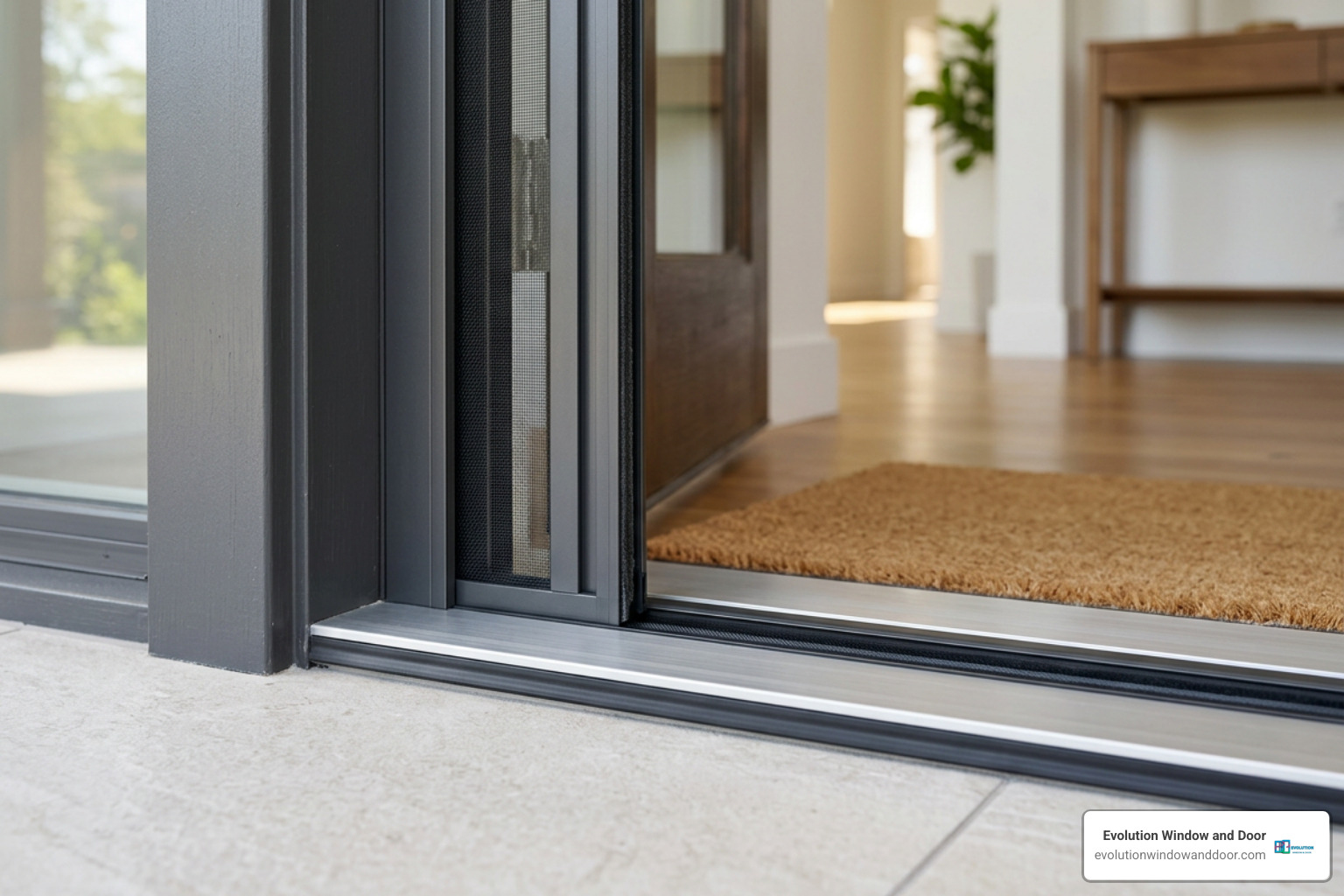
Need replacement components or track parts? Browse our guide on Parts Accessories for high-quality hardware solutions.
Maintenance, Care, and Troubleshooting Guide
Proper care keeps your retractable screen sliding smoothly for years.
Cleaning and Track Maintenance
- Vacuum Tracks Regularly: Dirt, gravel, and pet hair settle quickly into bottom tracks. Vacuum channels monthly using a soft brush attachment.
- Clean Mesh Safely: Lightly dust pleated or straight mesh using a duster or soft micro-fiber cloth. For stubborn dirt, gently wipe along the mesh lines with a sponge dipped in lukewarm water and mild dish soap.
- Avoid Oily Lubricants: Never spray standard oils, WD-40, or grease into aluminum screen tracks! Oil attracts dust and grit, forming a abrasive paste that jams the sliding glides.
- Use Dry Silicone Spray: If screen movement feels sluggish, spray a light coat of dry silicone lubricant along the top and bottom guide channels.
High Wind Care and Tension Calibration
Retractable screens are designed for ventilation during calm weather—they are not structural storm barriers.
- Retract During High Winds: Strong coastal wind gusts can pull screen mesh fabric out of side guide rails. Always retract the screen into its cassette during storms, heavy wind events, or extended periods away from home.
- Re-aligning Pushed-Out Mesh: If wind forces the screen mesh out of its channel, do not force it shut. Gently guide the pull bar back into the main cassette housing; operating the internal roller will automatically re-align the fabric back into the guide tracks.
- Calibrating Screen Tension: Many non-drill adhesive models or pleated units offer built-in tension adjustment dials on the side housing, allowing you to fine-tune glide resistance after installation.
Have more maintenance questions? Visit our comprehensive FAQs page for expert door care tips.
Frequently Asked Questions About Retractable Screens
Can a retractable screen be installed on any door type?
Yes, retractable screen systems work on almost all standard residential entryways, including inswing, outswing, single hinged, double French, and sliding patio doors. The key requirement is having a flat, square mounting surface on the casing or brickmold (typically requiring 3/4 inch of mounting depth).
How do retractable screens handle children and pets?
Retractable screens are designed for family safety. Many models feature soft-closing speed reducers or springless manual glides that eliminate recoil snap-backs, keeping small fingers safe. Low-profile bottom rails remove tripping risks for children and seniors. For homes with pets, choosing high-density or pet-resistant mesh helps prevent claws from snagging the weave.
What is the price range for installing retractable screen doors?
Stock single-door DIY retractable screen kits typically range from $90 to $350, depending on frame finishes and features. High-end custom units, double-door French screen kits, or professional installations generally range from $320 to $550+. Custom oversized openings or multi-panel barrier-free screens can cost more based on dimensions and specialized mesh selections.
Conclusion
A retractable screen door is a practical home upgrade that delivers fresh breezes and natural lighting without compromising the beauty of your entrance. By storing out of sight when not in use, it preserves your curb appeal, protects screen mesh from severe weather, and eliminates bulky swinging screen frames.
Whether you need a single surface-mount unit for a front entry door or a double pleated system for French doors, we are here to help you select and install the perfect fit. Contact us today to explore our full selection of stylish quality windows and doors and transform your home’s indoor-outdoor living experience.


