

Replace Patio Door Glass or the Whole Door?
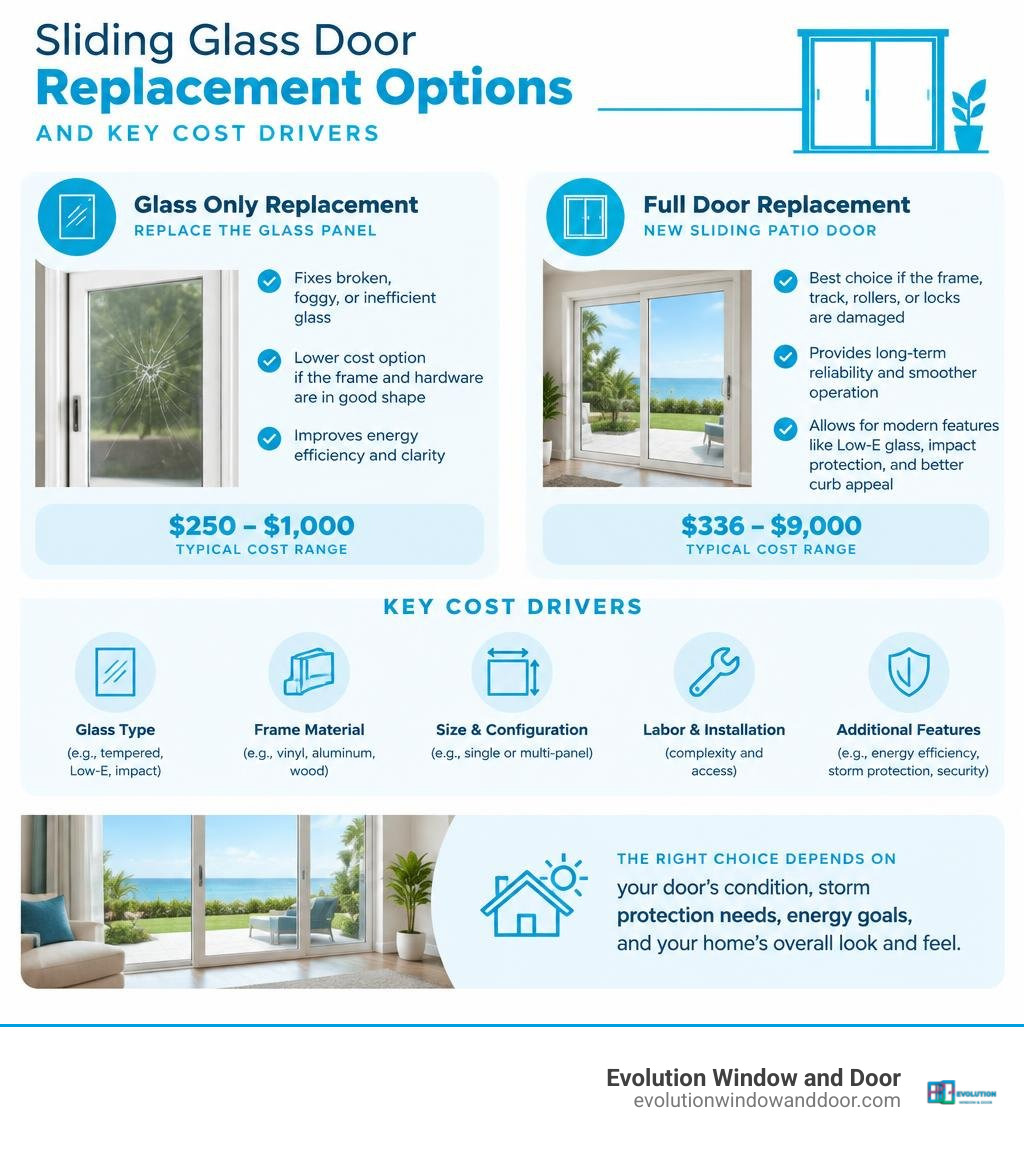
Glass door replacement can mean replacing only a broken, foggy, or inefficient glass panel – or installing a complete new sliding patio door. If the frame, track, rollers, and locks are sound, glass-only replacement is often the lower-cost option. If the frame leaks, is damaged, or the door no longer slides or locks reliably, a full replacement may be the smarter long-term fix.
For Florida homes, prioritize tempered safety glass, energy-saving Low-E glazing, and hurricane-rated impact options where required or desired. Glass-only work for a sliding door often runs about $250 to $1,000, while a new sliding door can range from roughly $336 to nearly $9,000 depending on size, materials, glass, and installation.
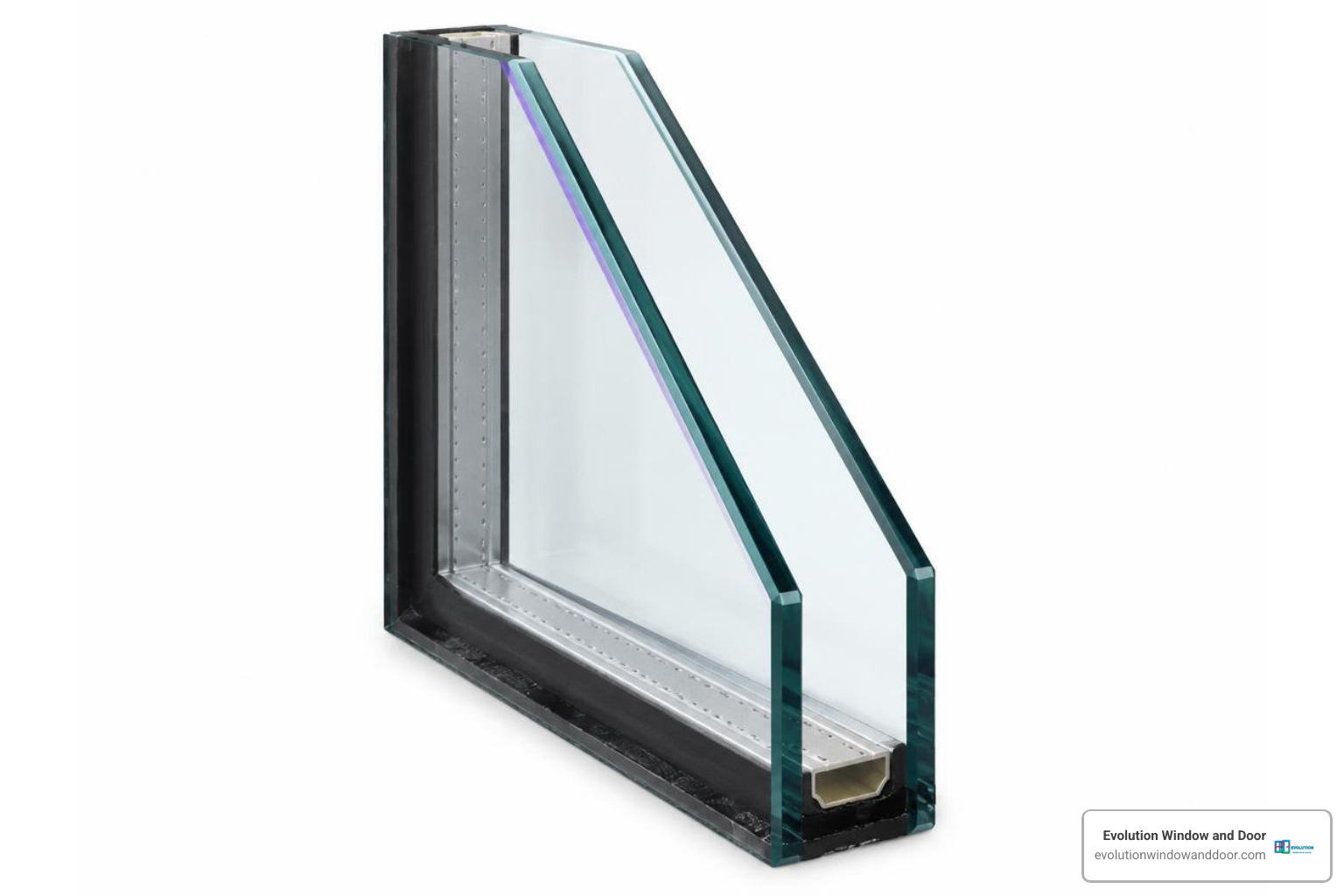
The right choice depends on more than the crack or fogging you can see. It also depends on your door’s frame condition, storm protection needs, energy goals, and whether an upgrade could improve curb appeal and everyday comfort. For a broader technical overview of glazing standards, the Insulated glazing entry explains how multi-pane units are constructed and why seal failure causes fogging.
Complete Glass Door Replacement Cost and Value Guide
Replacing patio glass or an entire sliding unit is one of the most rewarding home improvements you can make, but budgeting accurately requires understanding all the moving parts. On average, a brand-new standard sliding glass door installation costs approximately $2,564 across the United States. Depending on your home’s layout, opening size, and architectural demands, total replacement projects can start around $336 for basic entry units and climb to nearly $9,000 for multi-panel, high-performance systems.
Knowing when to invest in a simple repair versus a total overhaul starts with recognizing the signs it’s time to replace your doors or windows. If your door sticks constantly, lets in outdoor humidity, or rattles during coastal squalls, basic upkeep might no longer cut it.
From a return on investment (ROI) standpoint, upgrading patio openings delivers exceptional value. Real estate industry data shows that replacing a sliding glass door yields an average ROI of up to 65% in added home resale value. Beyond equity, modern energy-efficient glazing drastically reduces heat transfer, helping lower monthly air conditioning expenses in warm coastal climates.
Labor accounts for a noticeable portion of your budget. Professional installers typically charge between $70 and $100 per hour. Complex installations requiring structural reframing, drywall repair, or exterior stucco adjustments take longer, while direct panel swaps keep labor costs near the lower end.
Glass Door Replacement vs. Complete Door Unit Installation
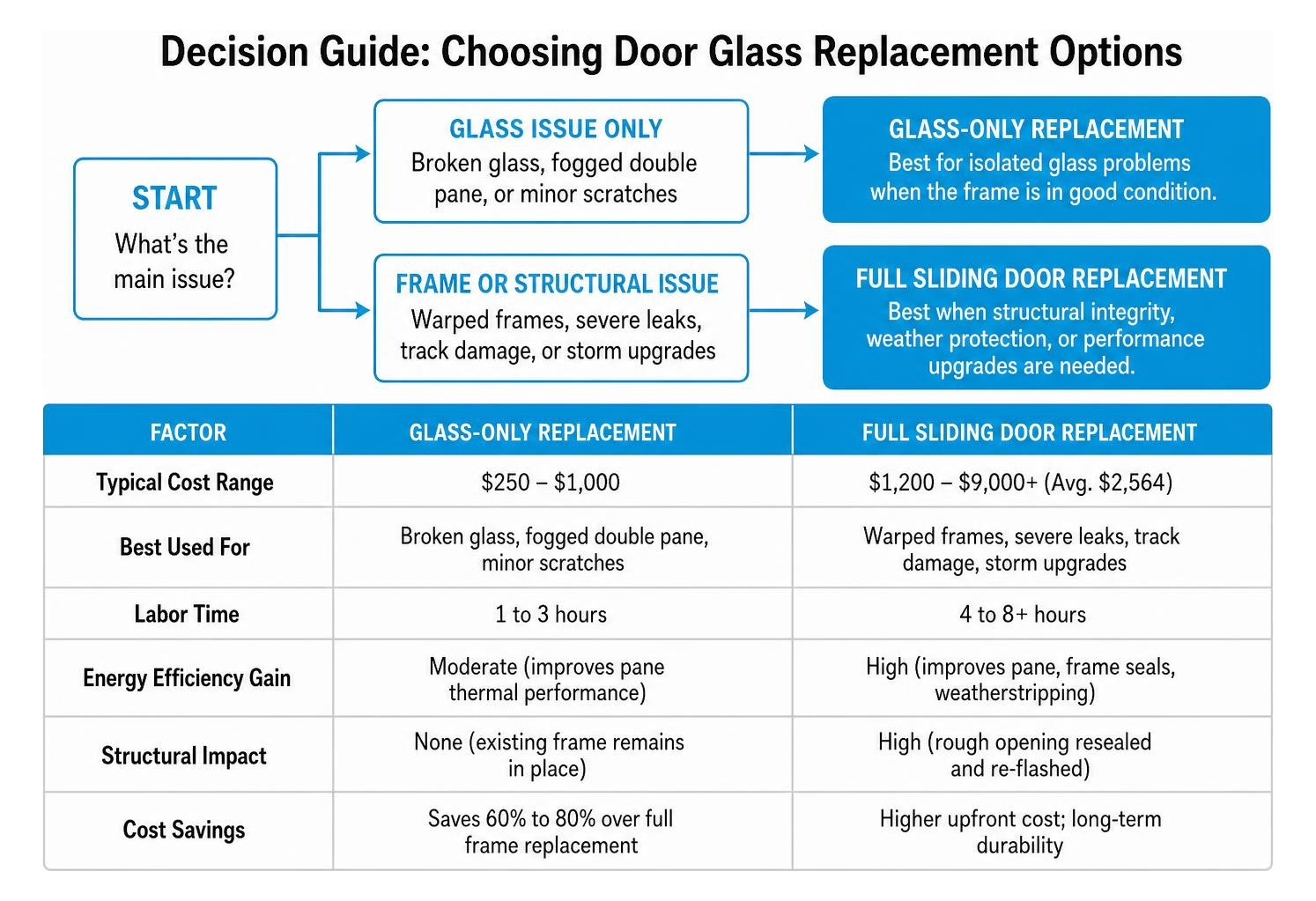
Homeowners often ask whether they must replace the entire frame when only the glass is compromised. When the surrounding frame, threshold, and tracks remain plumb and structurally sound, swapping just the glass panel offers a fast and affordable solution. Glass-only replacement costs 60% to 80% less than a complete tear-out.
However, if you notice wood rot around the rough opening, extensive aluminum corrosion, warped vinyl tracks, or air leaks around the perimeter, a full door replacement is the only way to restore proper structural integrity and storm protection.
| Factor | Glass-Only Replacement | Full Sliding Door Replacement |
|---|---|---|
| Typical Cost Range | $250 – $1,000 | $1,200 – $9,000+ (Avg. $2,564) |
| Best Used For | Broken glass, fogged double pane, minor scratches | Warped frames, severe leaks, track damage, storm upgrades |
| Labor Time | 1 to 3 hours | 4 to 8+ hours |
| Energy Efficiency Gain | Moderate (improves pane thermal performance) | High (improves pane, frame seals, weatherstripping) |
| Structural Impact | None (existing frame remains in place) | High (rough opening resealed and re-flashed) |
| Cost Savings | Saves 60% to 80% over full frame replacement | Higher upfront cost; long-term durability |
When dealing with moisture trapped between panes—known as insulated glass unit (IGU) seal failure—replacing the sealed glass unit clears up visibility and restores thermal insulation without disturbing your walls or interior trim.
Frame Material Options and Pricing
The material encasing your patio door glass dictates weather resistance, long-term maintenance, and thermal performance:
- Vinyl ($300 – $1,200): Vinyl frames provide outstanding resistance to temperature swings and moisture. They do not rot, peel, or rust, making them an energy-efficient, budget-friendly option for humid environments.
- Aluminum ($400 – $1,500): Lightweight, durable, and exceptionally strong, aluminum handles wind loads effortlessly. While standard aluminum conducts heat, modern thermally broken aluminum frames provide enhanced energy efficiency.
- Wood ($1,000 – $3,500+): Wood offers classic beauty and natural thermal insulation. It requires routine painting or sealing to prevent moisture damage and insect intrusion.
- Fiberglass ($1,200 – $4,000): Highly stable and resistant to warping, rot, and swelling, fiberglass matches the thermal expansion rate of glass, extending the life of your seals.
- Composite ($800 – $2,500): Combining wood fibers and thermoplastic polymers, composites deliver the look of painted wood with superior moisture resistance and low maintenance.
Patio Door Glass Types, Energy Glazing, and Privacy Upgrades
Choosing the right glass composition transforms how your living spaces look and feel. Modern sliding patio doors feature advanced glazing engineered to block solar heat, reduce outdoor noise, and resist accidental impacts.
Building codes mandate tempered safety glass for all patio doors and adjacent sidelites. Standard annealed glass shatters into jagged, hazardous shards when broken. In contrast, tempered glass undergoes extreme thermal heating and rapid cooling during manufacturing, making it four times stronger than standard glass. If broken, tempered glass fractures into small, rounded, dull granules that minimize injury risk.
Acoustic control is another significant advantage of modern glass. High-performance soundproof patio glass can reduce unwanted exterior noise by up to 75%, creating a tranquil indoor environment even if you live near busy roads or active neighborhood corridors. The Soundproofing article provides additional background on how mass, air gaps, and damping materials reduce noise transmission.
Glazing Tiers: Single, Double, and Triple Pane
The number of glass panes in your door directly influences comfort, noise reduction, and utility costs:
- Single-Pane Glass: Consisting of a single sheet of tempered glass, this legacy option provides minimal thermal resistance and permits significant solar heat gain.
- Double-Pane Glass: The standard for modern construction, double-pane units feature two glass sheets separated by a sealed airspace filled with insulating argon gas. This setup dramatically slows heat conduction. Understanding how doors and windows work together for energy efficiency helps ensure your whole home operates as a cohesive thermal barrier.
- Triple-Pane Glass: Featuring three panes and two insulating gas cavities, triple-pane systems offer top-tier insulation and sound dampening. While slightly heavier, they excel in reducing sound and stabilizing indoor room temperatures.
Low-E Coatings, Hurricane Impact, and Privacy Features
Modern glass options incorporate micro-thin coatings and structural interlayers designed for year-round protection:
- Low-E (Low-Emissivity) Glass: Low-E coatings reflect infrared and ultraviolet light while allowing visible sunlight to pass through. This keeps solar heat outside, protects interior furnishings from UV fading, and cuts cooling costs by up to 30%.
- Hurricane-Rated Impact Glass: Essential for storm-prone regions, hurricane-proof sliding doors typically cost between $2,000 and $3,000. These systems combine heat-strengthened glass with a heavy-duty polyvinyl butyral (PVB) or SentryGlas interlayer. Even if severe impacts crack the outer layer, the interlayer holds the pane firmly in place, keeping high winds and windborne debris out of your living space.
- Built-In Blinds: Sealed between two panes of tempered glass, cordless enclosed mini-blinds stay dust-free and eliminate dangling cords that pose risks to children and pets.
- Privacy Tints & Decorative Lites: Options range from frosted, obscure, and rain glass to half-lite, full-lite, craftsman, and fanlite grid profiles that complement your home’s exterior design.
Hardware Maintenance, Measuring, and Installation
Accurate measurements are critical when replacing a glass door insert. A fraction of an inch error can compromise air seals or prevent the insert from locking into the door frame.
When you need specialized assistance with complex openings, our professional interior and exterior door services ensure precise factory tolerances and weather-tight installation.

Step-by-Step DIY vs. Professional Glass Door Replacement
If you are a handy homeowner swapping out a standard modular glass insert, a DIY installation is achievable with proper precautions.
Required Tools & Materials:
- Heavy-duty safety glasses and cut-resistant work gloves
- Industrial dual-locking glass suction cups
- Putty knife or 5-in-1 tool
- Cordless drill with driver bits
- High-grade neutral-cure silicone sealant
- Non-marring pry bar and wood shims
The Replacement Process:
- Safety Preparation: Wear safety gear and clear the surrounding area. Tape cracked glass with heavy packing tape in a crisscross pattern to keep it intact during handling.
- Remove Fasteners: Locate and remove the screw plugs on the interior door frame molding. Back out the retaining screws while an assistant supports the exterior frame.
- Pry the Retaining Frame: Use a putty knife to carefully break the factory caulk seal along the perimeter of the interior frame trim.
- Extract the Old Glass: Using suction cups, gently ease the glass panel out of the opening.
- Clean and Dry-Fit: Scrape old adhesive and dirt from the door opening. Place the new glass insert into position to verify alignment before caulking.
- Seal and Fasten: Apply a continuous bead of silicone sealant along the outer mounting lip. Reattach the interior frame trim, driving screws evenly to secure the panel without over-torquing.
While DIY can save on initial labor, heavy sliding patio doors, oversized tempered units, and impact-rated systems demand professional handling to ensure water-tight seals and warranty protection.
Fixing Common Hardware, Rollers, and Security Issues
Sliding door operation issues are frequently caused by failing mechanical components rather than the glass itself. Routine hardware adjustments can restore effortless glide:
- Rollers and Tracks: Replacing worn tandem steel or nylon rollers costs between $110 and $300. If the door drags, adjust the lower roller screws located at the bottom edge of the panel or snap a stainless steel repair cap over damaged track rails.
- Sash Cams & Latches: Worn mortise locks and broken sash cams prevent doors from closing securely. Replacing worn internal latch mechanisms takes only minutes and costs between $10 and $30 in parts.
- Security Enhancements: Standard sliding latches can be susceptible to prying. Adding a heavy-duty secondary foot lock, an adjustable metal security bar in the track channel ($25–$35), or anti-lift security pins deters forced entry and prevents the panel from being lifted off its track.
Frequently Asked Questions About Sliding Glass Doors
How long does replacing sliding patio door glass typically take?
A glass-only swap on an existing frame takes 1 to 2 hours of on-site labor once the unit is delivered. Standard clear and Low-E tempered replacement glass typically arrives in 1 to 2 weeks from the order date. For full patio door replacements involving frame demolition and trim adjustments, the installation takes 4 to 8 hours.
Can I install built-in blinds into my existing patio door?
Yes. If your door uses standard glass insert sizes (such as common 22″ x 64″ or 24″ x 66″ configurations), you can retrofit a pre-assembled insulated glass unit with internal blinds directly into your existing frame. A complete enclosed blind kit generally costs between $400 and $550, delivering cordless privacy and zero dust maintenance.
Does upgrading my sliding door increase home resale value?
Upgrading an outdated sliding glass door yields an average return on investment of roughly 65%. Modern doors with Low-E glass, updated hardware, and tight weatherstripping enhance exterior curb appeal, elevate natural light, and lower monthly electric bills by reducing HVAC strain.
Conclusion
Upgrading your patio entryway restores unobstructed outdoor views, enhances thermal comfort, and protects your home against the elements. Whether your project calls for replacing a single fogged insulated panel or installing a heavy-duty, impact-rated sliding glass system, choosing the right glass coatings, materials, and hardware ensures decades of smooth operation.
At Evolution Window & Door, we deliver locally engineered solutions crafted specifically for Southwest Florida homeowners across Cape Coral, Fort Myers, Naples, Sanibel, Port Charlotte, Punta Gorda, Sarasota, and Bonita Springs. Our team provides pressure-free guidance, custom glass configurations, and precision installation built to withstand severe weather.
Ready to upgrade your patio entryway? Request a quote today to schedule a consultation with our local glass and door specialists.


