

Compare Entry Doors for Safety, Efficiency, and Curb Appeal
The best entry doors balance Florida storm protection, energy performance, security, and a look that fits your home. Start by choosing a hurricane-rated system where required, then compare the material, glass, size, and configuration based on your entry opening and budget.
For most homeowners, the key choices are:
- Fiberglass: Low maintenance, durable, and available in smooth or realistic woodgrain finishes.
- Wood or engineered wood: Warm, high-end appearance, but needs more care in humid and rainy conditions.
- Steel or aluminum: Strong and modern, with insulated cores and thermal-break frames helping improve comfort.
- Glass and configuration: Frosted or decorative glass adds light with privacy; sidelites, transoms, and double doors create a larger entrance.
A new front door commonly costs about $1,800 to $5,000, though simple single doors may begin around $900 and large, custom, glass-heavy entry systems can cost substantially more. Size, impact-rated glass, custom finishes, hardware, and installation all affect the final price.
The right door should do more than look good from the street. It should help resist wind and water, limit heat transfer, reduce unwanted noise, and provide reliable everyday security. This guide breaks down the tradeoffs so you can compare options with confidence.
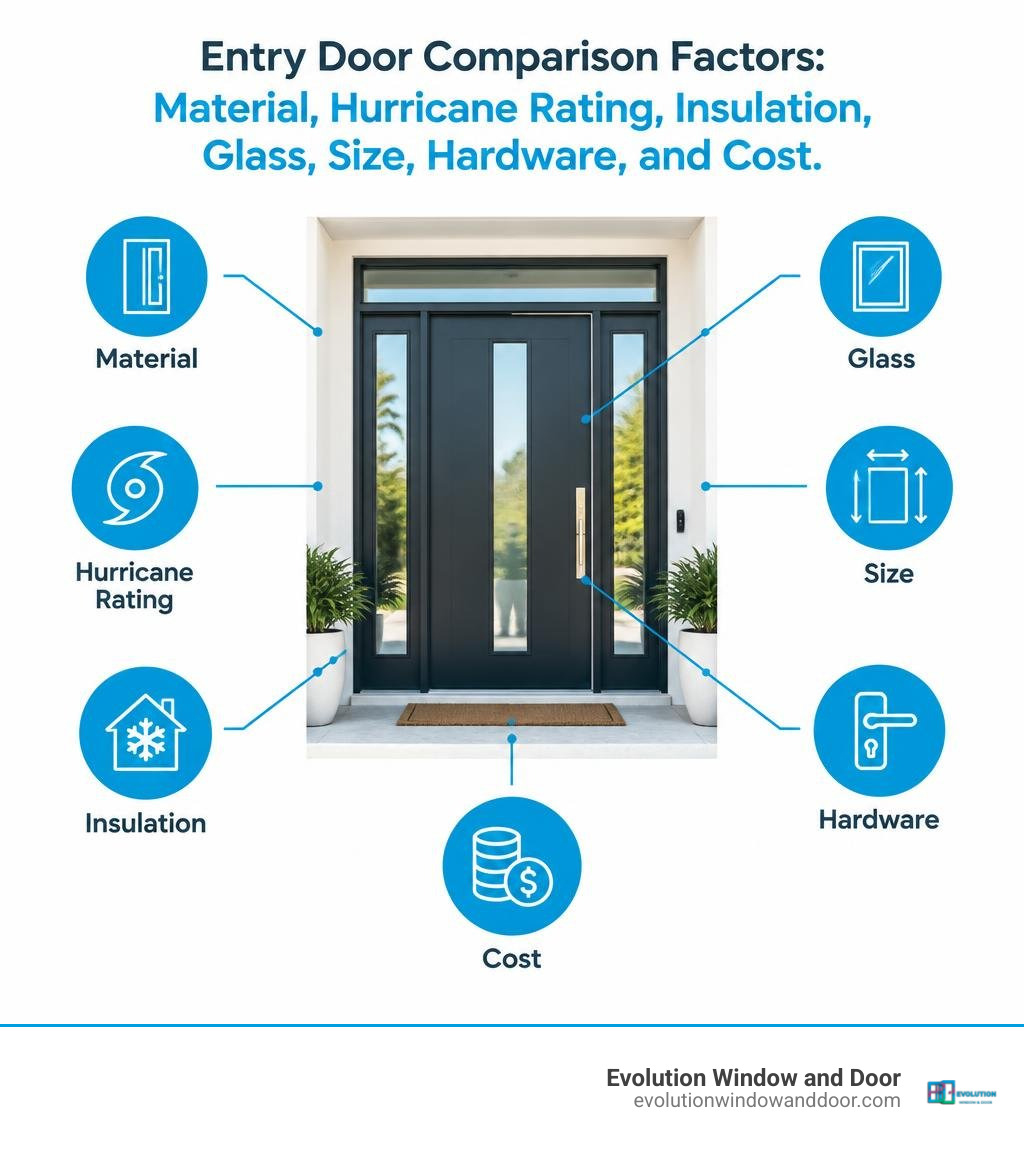
Entry doors terminology:
Comparing Exterior Door Materials: Wood, Fiberglass, and Steel
Choosing the right material is the single most important decision when shopping for an exterior door. The material determines not only how the door looks from the curb, but also how it stands up to extreme heat, relentless UV rays, tropical downpours, and potential intruders.
Why did the front door apply for a job? It wanted to get a handle on things! But joking aside, understanding the core characteristics of each material ensures you do not end up with an entryway that swells shut when humidity spikes or requires constant refinishing.
Fiberglass: The Low-Maintenance All-Rounder
Fiberglass has quickly become one of the most popular choices for modern homes. It mimics the deep, rich texture of natural timber—such as mahogany or oak—without the drawbacks of organic wood. Fiberglass doors feature durable outer skins surrounding an insulating polyurethane foam core.
They will not rot, rust, warp, or swell, making them exceptional performers in humid subtropical regions like Fort Myers, Sarasota, and Naples. You can choose a smooth finish for a sleek, contemporary aesthetic or a textured woodgrain skin that accepts traditional stains.
Wood and Engineered Wood: Classic Warmth and Architectural Prestige
Natural hardwood entry systems offer an authentic weight, rich tactile warmth, and historic elegance that synthetic materials strive to replicate. However, traditional solid wood expands and contracts in wet environments.
To overcome this, modern engineered wood doors incorporate advanced composite cores, such as rigid polystyrene and interior thermal breaks, clad in thick, natural hardwood veneers. This hybrid construction prevents the shifting, twisting, and bowing that can break weatherstripping seals during damp summers.
Steel and Aluminum: Unyielding Security and Modern Strength
If your primary goals are high structural rigidity, slim profiles, and clean lines, metal systems are tough to beat. Solid stainless steel or architectural aluminum slabs provide superior resistance against forced entry and flying debris. Homeowners who prioritize durability often select top-rated 36-inch metal exterior doors that easily withstand harsh weather cycles.
To prevent metal from conducting outdoor heat into the living room, premium steel and aluminum doors utilize thermal-break frames and dense insulating cores that deliver strong energy ratings.
Solid Wood vs. Engineered Wood vs. Fiberglass Longevity
When evaluating long-term value, consider how each material holds up across decades of exposure to scorching sunlight, driving rain, and salty sea breezes.
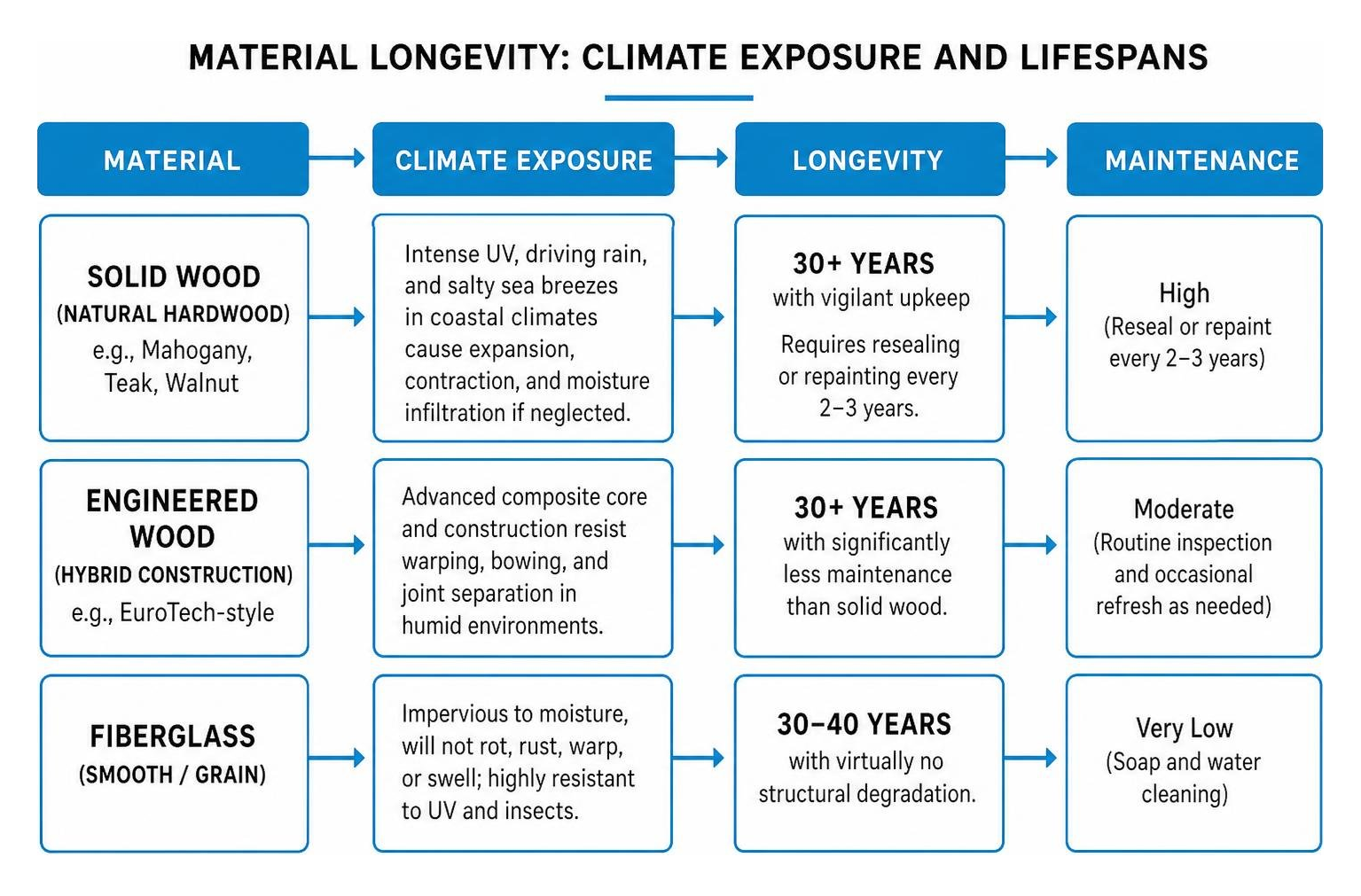
- Solid Wood Longevity: Natural solid hardwoods (such as mahogany, teak, and walnut) can last 30 years or more, but only if they receive vigilant upkeep. In coastal communities like Sanibel and Cape Coral, intense UV exposure and rain require solid wood to be resealed or repainted every two to three years. Neglect can lead to checking, moisture infiltration, rot, and sticking.
- Engineered Hybrid Wood Longevity: Engineered systems (like EuroTech-style construction) pair finger-jointed solid stiles and rails with a rigid polystyrene core and layered wood veneers. This multi-ply design distributes stress evenly, eliminating internal tension points. As a result, engineered systems resist warping and joint separation while delivering a dependable 30+ year service life with significantly less maintenance than traditional solid lumber.
- Fiberglass Longevity: Fiberglass doors are practically immune to moisture intrusion, delamination, and insect damage. With high-grade UV-resistant coatings, a fiberglass entry door can endure 30 to 40 years with virtually no structural degradation. Occasional cleaning with mild soap and water is generally all that is needed.
Whether you are swapping out a front entryway or tackling a dedicated basement entry door selection for an auxiliary ground-level entrance, picking a moisture-impervious composite or treated metal slab will protect your interior from water damage and mold.
Key Performance Ratings and Features for Entry Doors
A front door is your home’s primary barrier against outdoor elements. Beyond basic aesthetics, you should look closely at laboratory-verified engineering ratings before finalizing your choice.
Thermal Performance: U-Values and R-Values
Energy efficiency matters year-round. Heat transfer is measured by U-factor (the rate of non-solar heat flow) and R-value (thermal resistance).
- U-factor: Lower numbers indicate superior insulation. High-performance entry systems achieve U-values between 0.54 W/m²·K (roughly R-10.5) and 0.98 W/m²·K (R-5.79).
- R-value: Higher numbers mean better insulating capacity. Standard uninsulated wood slabs might only offer an R-value of R-2 to R-3, while dense-core fiberglass or thermally broken aluminum hybrid doors can reach R-10 or higher, keeping conditioned indoor air inside where it belongs.
Hurricane Impact Ratings and Structural Integrity
For homes across Southwest Florida—including Punta Gorda, Port Charlotte, and Bonita Springs—impact ratings are not optional; they are a vital safety requirement and a critical building code mandate.
High Velocity Hurricane Zone (HVHZ) certification verifies that the entire door assembly—including slab, hinges, reinforced composite framing, and glass lites—has survived large-missile impact testing (such as an eight-foot 2×4 shot from an air cannon at 50 feet per second) followed by thousands of cycles of positive and negative wind pressure.
Before starting any replacement project, check local permitting rules, as covered in discussions about building permit requirements for door replacement. Installing a certified hurricane impact entry door ensures your home complies with state building standards and can qualify you for substantial discounts on homeowner insurance premiums.
Acoustic Insulation and Multi-Point Locking
If you live near busy roads, golf courses, or waterways, acoustic dampening is another key consideration. Multi-chambered door slabs and laminated glass packages can significantly reduce outdoor sound transmission, providing sound transmission class (STC) ratings above 32 to 38 dB.
For structural security, multi-point locking mechanisms are essential. Unlike standard deadbolts that secure the door at a single point, multi-point systems throw heavy-duty steel bolts into the frame at three distinct points: top, middle, and bottom. This resists crowbar attacks and keeps weatherstripping tightly compressed against storm-driven rain.
Glass Inserts, Privacy, and Energy Efficiency
Adding glass to your entry system introduces welcoming natural sunlight into your foyer without compromising structural security or thermal performance.

- Clear Impact Glass: Triple-pane insulated laminated glass offers maximum daylight and views while filtering up to 86% of harmful UV rays to prevent foyer flooring from fading.
- Frosted and Satin Glass: Acid-etched or frosted finishes diffuse sunlight evenly across the interior while blocking clear visibility from the exterior, making them ideal for high-density suburban neighborhoods.
- Cathedral and Textured Glass: Decorative textures like rain, water, Flemish, or cathedral glass obscure details while letting soft, shimmering light pass through. A single entry door with sidelites and cathedral glass strikes an elegant balance between traditional architectural character and privacy.
- Reflective and Low-E Glass: Low-emissivity (Low-E) coatings reflect infrared heat away from the home during sunny afternoons, cutting cooling costs during warm summer months.
Architectural Styles, Sizing, and Entry Configurations
The architectural style of your front entry sets the design narrative for your entire home. Whether you are building a coastal retreat or remodeling a mid-century home in Sarasota, matching door geometry to your home’s exterior elevations creates immediate curb appeal.

Modern Door Styles
- Pivot Doors: Instead of mounting on standard side hinges, pivot doors rotate on heavy-duty top and bottom pins set into the floor and header. This allows for massive, dramatic slabs exceeding 48 to 60 inches in width, creating an unforgettable architectural focal point.
- Flush Slabs with Horizontal/Vertical Grooves: Flush doors feature a seamless, flat profile accented by precision-machined CNC grooves or inlaid stainless steel bands. These designs complement modern, minimalist façades.
- Narrow-Stile & Multi-Lite Contemporary: Featuring wide glass panels held by slim perimeter stiles, multi-lite configurations (such as 3-lite, 4-lite, and 5-lite horizontal layouts) provide clean geometric sightlines and maximize natural light.
Smart Locks and Connected Hardware
Integrating keyless entry, motorized deadbolts, and biometric handles provides modern convenience without sacrificing protection. Pairing keypad access with weather-sealed smart deadbolts is just as popular for front foyers as it is when creating a welcoming back door entryway.
Sizing Configurations for Modern Entry Doors
Door openings vary widely, from standard suburban entries to soaring two-story entryways.
If you are replacing an existing unit, understanding standard framing dimensions is essential. Check our detailed guide on finding the perfect fit for 30, 36, and 42-inch exterior doors before placing your order.
Many homeowners choose to widen their rough openings. Moving up from a standard 36-inch slab by upgrading to a 42-inch wide exterior door creates a more inviting entrance and makes moving furniture easier.
For grand entrances with vaulted ceilings, going big with a 48-inch front door delivers unmatched architectural impact.
Finishes and Colors for Bold Curb Appeal
Your door’s color and surface finish can transform your home’s exterior palette.
- Factory Pre-Finishing: Always select factory-applied paint and stain systems. Factory coatings are cured in temperature-controlled environments with electrostatic precision, providing superior adhesion and UV protection compared to field painting.
- Rich Wood Stains: Deep espresso, warm mahogany, walnut, and golden oak stains highlight natural grain patterns, adding timeless warmth to coastal Mediterranean and transitional architecture.
- Modern RAL Color Palettes: Architectural aluminum and steel doors offer expansive color choices using the international RAL color matching system. Popular exterior colors include anthracite grey, metallic silver, deep navy, and crisp white.
- Statement Accents: A bold front door creates an eye-catching focal point. Explore design tips for choosing a black front entry door that pops to see how high-contrast tones pair with stone, stucco, or siding.
Budgeting and Ordering: Costs, Lead Times, and Installation
Upgrading an exterior door is an investment that yields measurable returns in curb appeal, energy savings, and structural protection.
Average Cost and Pricing Factors for Entry Doors
The total cost of a new front entryway spans a wide range depending on materials, custom dimensions, glass packages, and structural hardware:
- Entry-Level Single Doors ($900 – $1,800): Basic unglazed smooth fiberglass or standard steel slabs in standard 36″x80″ dimensions.
- Mid-Range Systems ($1,800 – $4,500): Premium woodgrain-textured fiberglass, engineered hybrid wood with multi-lite glass inserts, or insulated steel doors with impact-rated laminated glass.
- High-End Architectural Systems ($4,500 – $8,000+): Custom double entry doors with arch-top glass, oversized pivot doors, or thermally broken European aluminum hybrid systems with integrated multi-point security hardware.
Key cost factors include:
- Material and Construction: Thick engineered cores and stainless steel skins cost more than basic hollow-core or uninsulated metal units.
- Glass Type: Multi-layer hurricane impact glass, Low-E energy coatings, and custom decorative textures add to upfront costs but offer long-term energy savings and storm protection.
- Rough Opening Modifications: Expanding a single opening to accommodate double doors, sidelites, or an overhead transom requires structural framing, drywall, and stucco work.
To plan your budget accurately, you can request a project quote tailored to your specific measurements and architectural style.
Why Professional Pre-Hung Installation Matters
Never underestimate the importance of precision installation. Even the highest-rated impact door will fail to seal or pass building inspection if the pre-hung jamb is out of square.
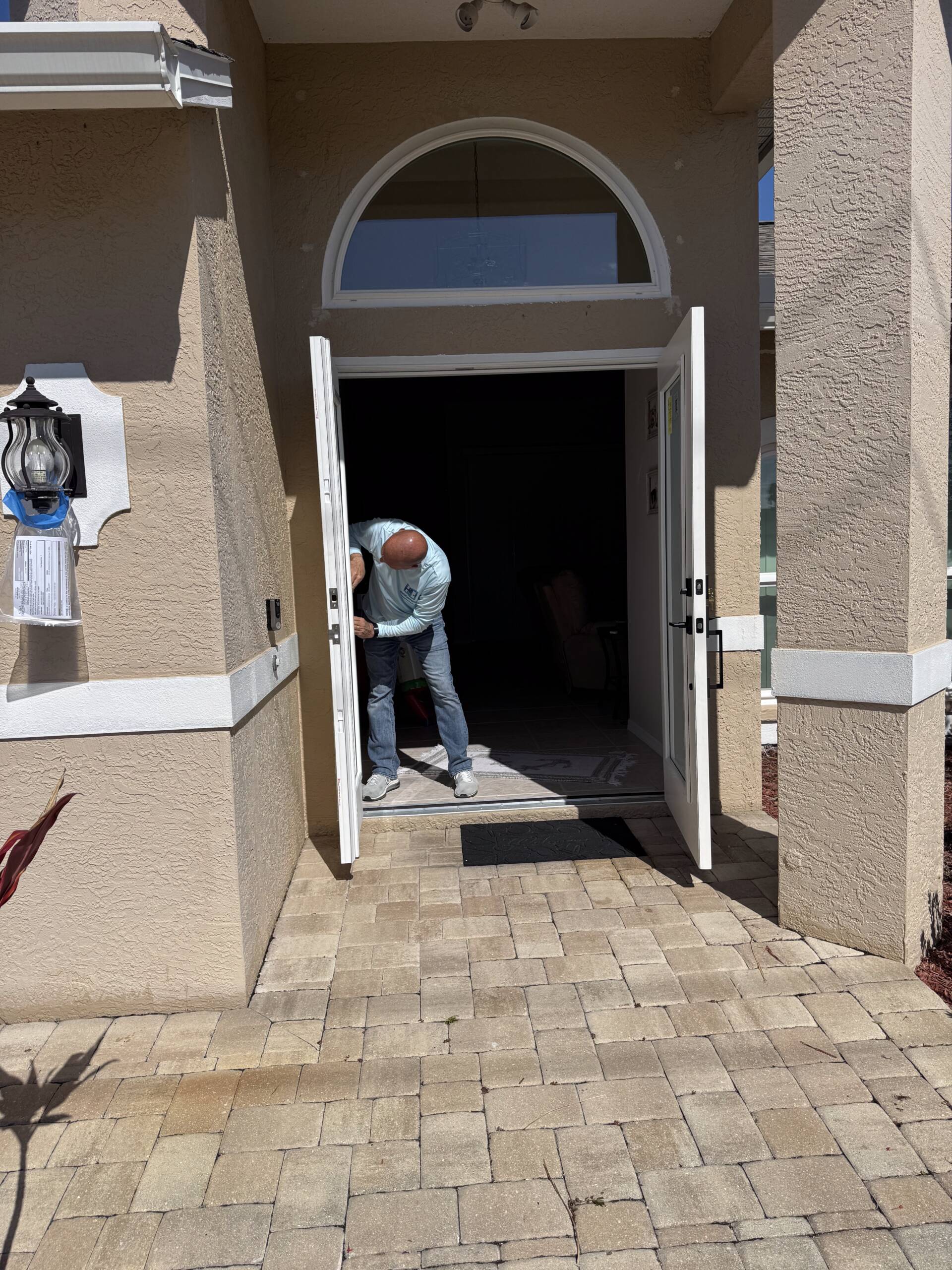
Professional installation ensures the frame is properly secured to structural wall framing using code-compliant fasteners, flashing pans are installed to divert water, and weatherstripping is compressed evenly. To ensure lasting performance, work with factory-trained professionals through dedicated interior and exterior door installation services.
Frequently Asked Questions About Front Doors
How do I determine the correct door swing direction?
Stand on the outside of your home looking at the door:
- Inswing vs. Outswing: An inswing door opens inward into your foyer, which is common in standard residential construction. An outswing door pushes outward toward your porch. In hurricane-prone coastal regions, outswing doors provide superior wind and water resistance because high positive wind pressures push the door tighter against the weatherstripped frame.
- Handing (Left-Hand vs. Right-Hand): If the hinges are on your left side as you face the door from the exterior, it is a Left-Hand door. If the hinges are on your right, it is a Right-Hand door. Verify that your chosen swing direction will not strike interior walls, furniture, or exterior light fixtures.
What is the difference between stock and custom lead times?
- In-Stock / Quick Ship: These units are assembled using pre-manufactured components (standard sizes like 36×80 or 72×80 inches with standard glass styles) and typically ship from regional distribution centers within 2 to 5 weeks.
- Custom Fabrication: If your entryway requires unique architectural sizing (such as 96-inch heights or 48-inch single widths), custom RAL powder coating, or specialized art glass, custom manufacturing typically takes 10 to 14 weeks for engineering, manufacturing, and delivery.
How long do modern front entry systems typically last?
With proper installation and minimal routine care, modern fiberglass, stainless steel, and engineered hybrid wood entry doors routinely last 30 years or more. To maximize longevity:
- Wash door skins twice yearly with mild soap and water to clear away airborne salt and dirt.
- Lubricate hinge pins, pivot bearings, and multi-point lock mechanisms annually with silicone-based lubricant.
- Inspect perimeter caulk lines, sill pans, and weatherstripping every two years to ensure moisture seals remain intact.
Conclusion
Your front door plays a central role in your home’s appearance, energy efficiency, and security. By comparing core materials—from low-maintenance fiberglass and rich engineered hardwoods to ultra-strong stainless steel and aluminum—you can find the right balance of style, thermal insulation, and coastal weather performance.
At Evolution Window & Door, we guide Southwest Florida homeowners across Naples, Fort Myers, Cape Coral, Sarasota, and surrounding communities through every step of the process. We deliver pressure-free advice, hurricane-rated products, and precision installations designed to protect your home.
Explore our full collection of high-performance entry doors or contact our team today to find the perfect entryway for your home!


