

A Back Door Entryway That Feels Welcoming and Stays Secure
A well-designed back door entry should make daily life easier while protecting a part of the home that often gets less attention than the front entrance. Start with three essentials: a durable, well-sealed exterior door, organized storage for shoes and bags, and layered security such as a reinforced deadbolt, smart lock, good lighting, and a strong frame.
For Florida homes, hurricane-rated doors and impact-resistant glass can also help defend against wind-driven rain and debris while improving comfort and energy efficiency. Inside, white shiplap, a simple bench, wall hooks, and baskets can turn a busy transition space into a clean, welcoming mudroom.
The goal is not just a prettier rear entrance. It is a practical space that supports indoor-outdoor living, keeps clutter out of main rooms, and gives you more control over who enters your home.
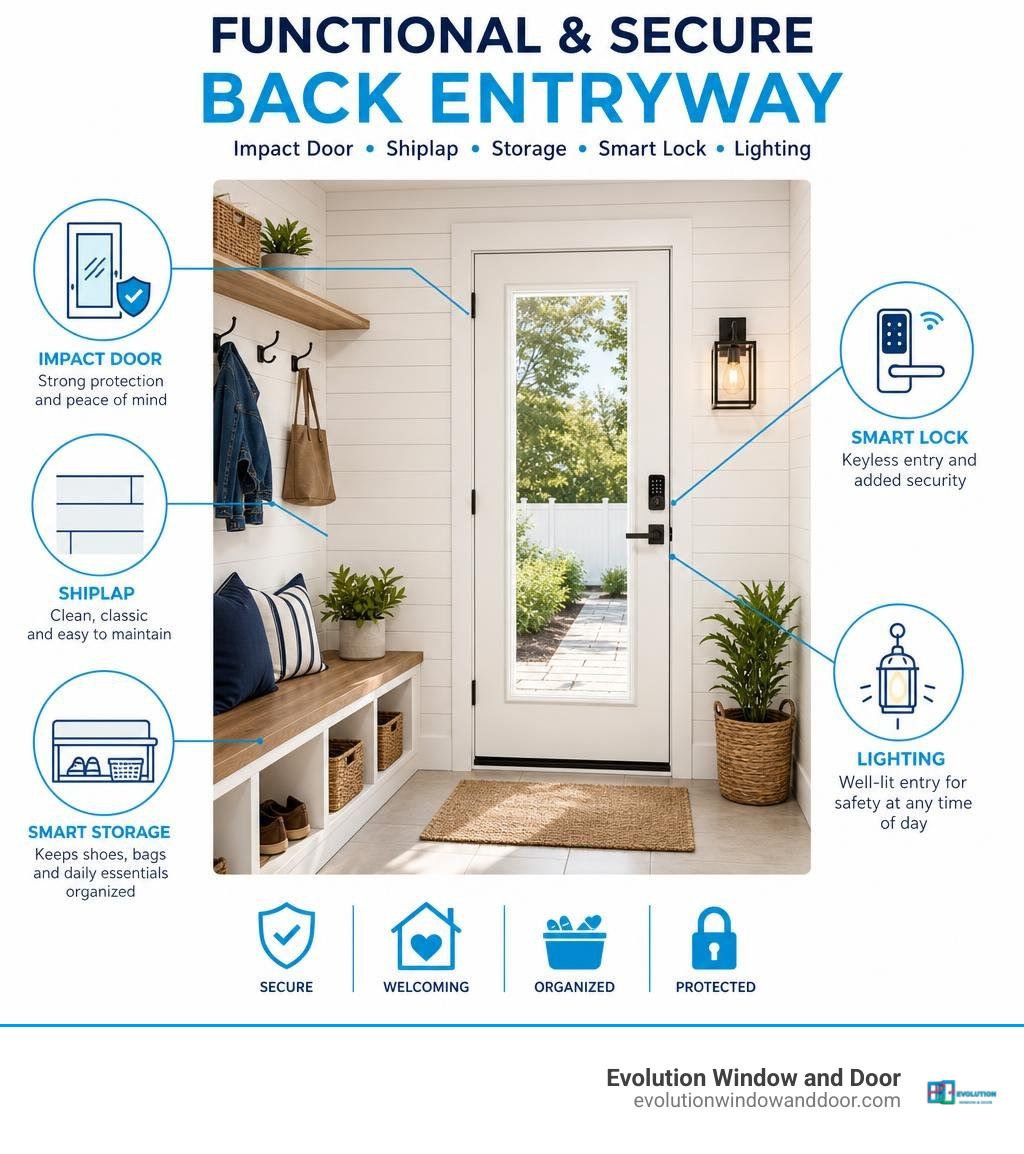
Quick back door entry terms:
Understanding Back Door Entry: Architectural Design vs. Digital Security
When we talk about an entrance at the rear of a structure, the phrase takes on two distinct meanings depending on the context: residential architecture or modern information technology. Architecturally, a back door serves as a secondary egress for homeowners, service personnel, family pets, and daily utility. According to the Cambridge Dictionary definition of a back door, it refers literally to a door at the back or side of a building, or figuratively to an indirect or covert route to gain access.
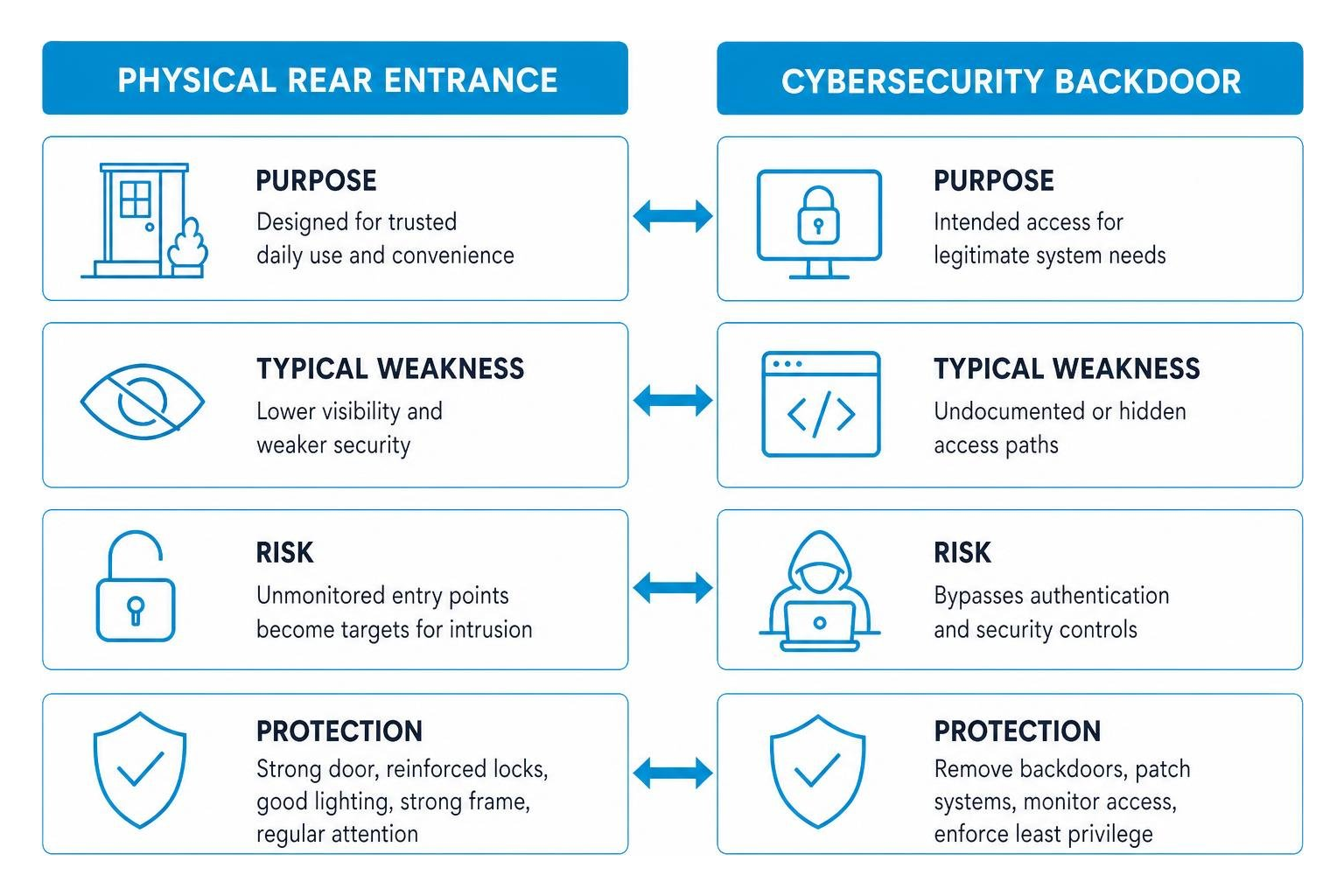
In cybersecurity, the terminology is borrowed directly from physical security weaknesses. An architectural back entrance is designed for trusted household members but often suffers from low visibility and weaker locking mechanisms. Similarly, digital systems face major threats when undocumented access paths bypass standard authentication controls. Both concepts share a fundamental truth: unmonitored entry points quickly turn into primary targets for unwanted intrusion.
Literal vs. Figurative Meanings of Back Door Entry
The literal rear door evolved as a functional service portal. Historically, formal residences separated public arrivals at the front door from practical domestic deliveries, gardening, and kitchen access at the back. In contemporary architecture across Southwest Florida—from Cape Coral and Fort Myers to Naples—rear doors connect interior spaces directly to lanais, swimming pools, detached garages, and backyards.
In figurative language and popular culture, entering through the back door suggests an unmonitored, informal, or illicit method of getting inside. The phrase reflects a basic reality of human behavior: if the front entrance is heavily guarded, visitors seek an easier, less visible alternative.
Cybersecurity Implications of Backdoor Vulnerabilities
In computing environments, understanding backdoor attacks reveals how digital threats mirror physical vulnerabilities. A software backdoor is a clandestine bypass around standard access-control workflows, authentication protocols, or cryptographic safeguards.
Digital backdoors emerge through various threat vectors:
- Maintenance Hooks: Developers sometimes leave hard-coded debugging accounts or administrative bypasses in code, which threat actors discover and exploit.
- Covert Channels: Intruders manipulate standard communication channels—such as embedding data in packet headers—to exfiltrate sensitive files without raising alarms.
- Compiler Backdoors: As demonstrated in classic computer science literature, compromised compilers can secretly inject malicious routines into downstream executables without altering source code.
- AI Model Poisoning: In modern machine learning pipelines, latent-space vulnerabilities can be introduced with less than 0.1% poisoned training data, altering how neural networks process security decisions.
The real-world fallout from digital backdoors can be devastating. The direct cost of the SolarWinds breach to the company was around $40 million USD, demonstrating how compromised update infrastructure allowed attackers to laterally access enterprise and government networks. Similarly, federal investigations in 2024 uncovered major infrastructure tapping campaigns where state-sponsored threat actors maintained unmonitored network footholds for months. Whether securing a residential patio or enterprise server architecture, unauthorized bypass routes demand continuous monitoring and defense-in-depth protection.
Choosing the Right Door Style for Functionality and Efficiency
Selecting the ideal back entrance requires balancing floor space, interior traffic, natural lighting, and weather resistance. Exploring professional interior & exterior doors provides solutions tailored to your floor plan and architectural style.
| Door Style | Space Requirements | Natural Light | Security Strengths | Best Application |
|---|---|---|---|---|
| Hinged Single Door | Requires standard interior or exterior swing clearance | Moderate (with glass insert or solid panel) | Exceptional frame rigidity; easily accepts multi-point locks | Utility entries, narrow mudrooms, side yards |
| Sliding Glass Door | Zero interior swing clearance needed; slides along a fixed track | Maximum light transmission | Impact-rated glass; internal deadbolt foot locks | Lanais, patio transitions, compact dining areas |
| French / Double Hinged | Requires wide swing clearance for both door slabs | High light transmission | Center astragal locking; expansive entryway width | Formal garden entries, wide back porches |
| Stable / Dutch Door | Requires standard swing clearance | Moderate | Independent top/bottom operation; pet containment | Breezeway entries, country kitchens, laundry rooms |
Knowing the signs it’s time to replace your doors or windows—such as recurring draftiness, wood rot around the sill, or a door slab that sticks in humid weather—will help you upgrade before structural integrity is lost.
Material Durability and Weather Protection
Exterior doors in coastal Southwest Florida face relentless sun, high humidity, and driving rain. Choosing the right slab material ensures long-lasting performance:
- Fiberglass Composite: Engineered to resist moisture absorption, warping, rotting, and insect damage. Fiberglass mimics natural wood grain while offering superior thermal insulation.
- Heavy-Duty Aluminum: Ideal for large sliding panels and French doors. Modern thermal breaks prevent heat transfer, while powder-coated finishes resist corrosion from salty coastal air.
- Solid Hardwood: Classic aesthetic appeal, but requires regular maintenance, marine-grade sealants, and deep porch overhangs to prevent swelling and moisture rot.
Proper installation ensures how doors and windows work together for energy efficiency by pairing multi-fin weatherstripping, thermal-break thresholds, and low-E insulated impact glass to keep cooling costs low during hot Florida summers.
Ventilation and Screen Integration
Allowing fresh air to circulate without inviting insects inside is essential for any functional rear entryway. High-traffic doors benefit from versatile sliding screen door options or retractable screen cassettes that hide away when not in use. Stable doors also provide controlled ventilation by allowing the top leaf to remain open while the lower leaf stays securely latched.
Designing an Organized Mudroom with Shiplap and Built-Ins
A dedicated transition zone prevents outdoor dirt, sandy footwear, and damp towels from reaching your living spaces. Vertical wall treatments like shiplap add texture, visual depth, and durability to high-traffic mudrooms.
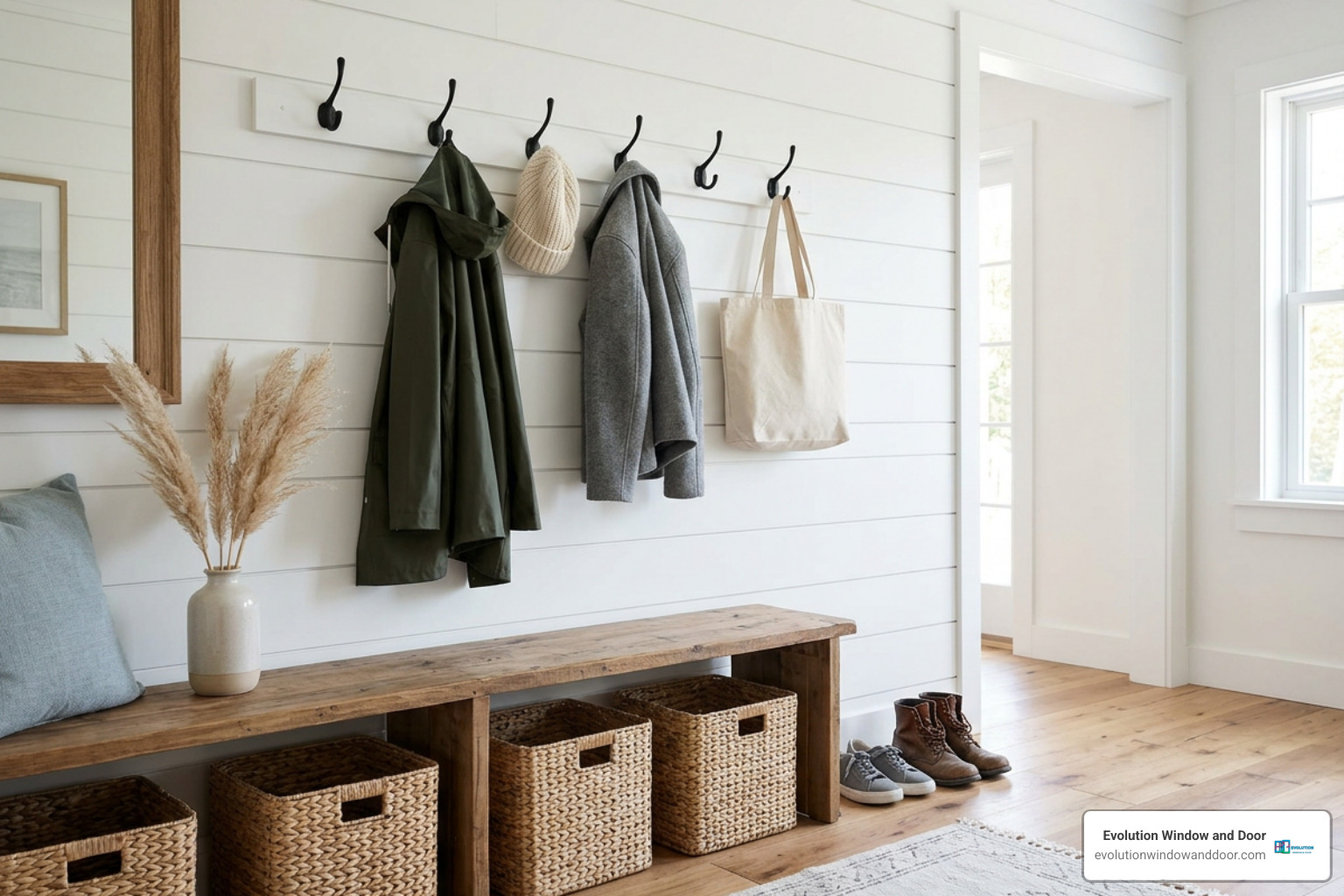
Shiplap boards create clean horizontal or vertical lines that protect drywall from dings, scrapes, and moisture. Pairing painted white shiplap with a warm wood bench top creates a balanced coastal farmhouse look that withstands daily family use.
Maximizing Storage in a Narrow Back Door Entry
Even narrow entryways can become organized drop zones with smart vertical storage solutions:
- Wall-Mounted Peg Rails and Double Hooks: Install heavy-duty matte black or antique brass hooks at staggered heights to hold backpacks, hats, dog leashes, and jackets.
- Slim-Profile Shoe Benches: Choose a built-in or freestanding bench with a depth of 12 to 14 inches, complete with open cubbies or slide-out baskets underneath.
- Floating Overhead Shelves: Utilize vertical wall space above head height to store seasonal items, pool towels, and storage bins.
- Durable Runner Rugs: Place an indoor-outdoor polypropylene or natural jute runner to catch debris while tying together the aesthetic of the space.
- Dedicated Drop Trays: Add a small floating ledge with catchalls for keys, sunglasses, and mail right beside the door lock.
Farmhouse and Coastal Aesthetic Finishes
In coastal Florida communities like Sanibel, Pine Island, and Sarasota, combining rustic textures with light, breezy tones produces a welcoming entry. Use semi-gloss or satin moisture-resistant paints on shiplap paneling to make wiping down surfaces easy. Incorporate matte black door hardware, brushed nickel accents, and natural wood tones to ground the bright white walls, creating an inviting transition between outdoor living spaces and home interiors.
Physical Security Upgrades: Fortifying Your Rear Entrance
While front entryways receive the most decorative attention, rear doors are prime targets for forced entry. Recent crime statistics show that a majority of burglars look to the backdoor as their entrance of choice because privacy fences, landscaping, and back patios conceal them from street view.
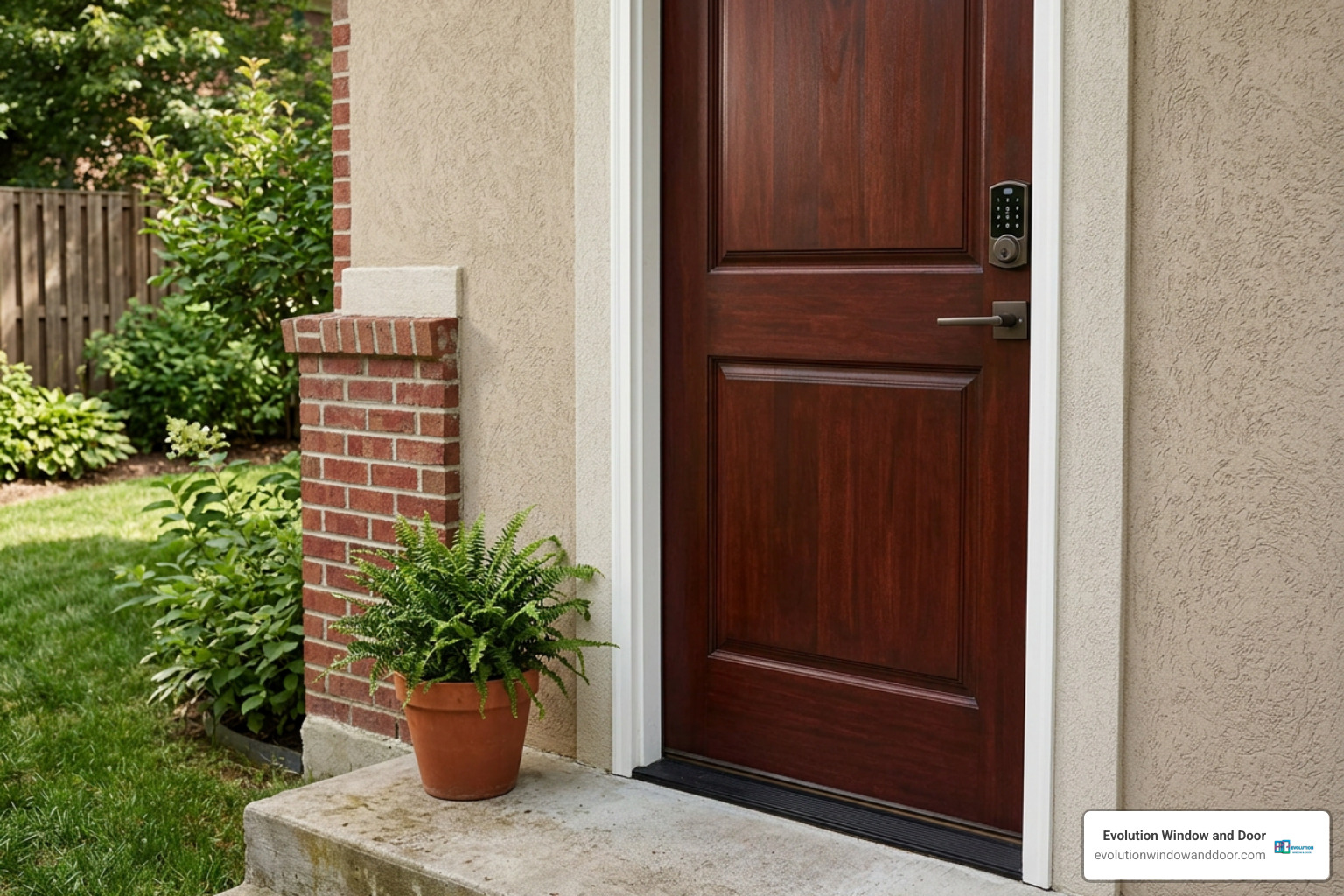
Securing your rear door requires treating the slab, lock, frame, and fasteners as a single interconnected defense system. Installing high-quality hardware ensures that high-impact forces are evenly distributed across the wall framing rather than concentrated on a single latch bolt.
Smart Locks and Keyless Access Control
Modern electronic access control eliminates the security risks of hidden spare keys. Keypad deadbolts, biometric fingerprint readers, and smartphone-enabled locks offer practical conveniences:
- Custom User Access Codes: Assign unique codes to house cleaners, pet sitters, or guests, and expire them whenever needed.
- Real-Time Activity Logs: Track exactly when the door is unlocked or opened via mobile push notifications.
- Auto-Locking Schedules: Ensure the deadbolt automatically engages after 30 seconds or at designated evening hours.
- Geofencing Integration: Automatically unlock the door as you approach carrying groceries, and lock it behind you as you leave.
Structural Reinforcement and Glass Protection
Even the most advanced smart deadbolt will fail if the door frame gives way under physical impact. Fortify the opening using these proven installation practices:
- Reinforced Strike Plates: Replace standard 1-inch strike plate screws with 3-inch, case-hardened steel screws that penetrate deep into the wall’s structural 2×4 framing studs.
- Multi-Point Locking Systems: Install mechanisms that secure the door slab into the top jamb, bottom sill, and strike side simultaneously with a single turn of the deadbolt.
- Impact-Resistant Glazing: Use laminated glass panels featuring a durable polyvinyl butyral (PVB) or SentryGlas interlayer. If the glass breaks, the interlayer holds the fragments intact, preventing an intruder from reaching through to unlock the handle.
- Heavy-Duty Hinge Screws: Ensure hinge leaves are anchored with long structural screws into the rough opening framing to prevent the door from being kicked inward or pried loose.
Frequently Asked Questions About Back Door Entryways
What are the best materials for a high-traffic back door?
Fiberglass composite and heavy-gauge aluminum are the top performers for high-traffic back entrances, particularly in coastal climates like Southwest Florida. Fiberglass resists rot, denting, and humidity-induced swelling, while aluminum frames provide structural rigidity for large glass panels and sliding doors. When paired with impact-rated, low-E glass, both materials offer excellent durability, insulation, and break-in protection.
How do I maintain and protect interior shiplap in a humid entryway?
To protect interior shiplap in humid climates or near swimming pool access doors, use moisture-resistant MDF or primed pine sealed with high-quality interior acrylic latex paint in a satin or semi-gloss finish. Avoid flat or matte paints, which absorb moisture and hold dirt. Leave a slight 1/16-inch nickel-gap between boards during installation to allow natural expansion and contraction, and wipe down surfaces periodically with a dry microfiber cloth.
Why are rear doors targeted more frequently by intruders?
Rear doors are targeted more often than front entrances because they offer visual concealment. Backyards are typically shielded by privacy fences, overgrown foliage, or patio enclosures, allowing intruders to test locks or use force without being seen from the street. Older rear doors also tend to feature lower-grade hardware, worn wooden frames, or thin, non-impact glass panels that are easily compromised.
Conclusion
A well-planned rear entrance balances everyday convenience, clean interior organization, and reliable physical security. By pairing weather-resistant door construction with custom shiplap storage and modern smart deadbolts, you transform a cluttered back hallway into an inviting drop zone that protects your home.
Whether you are updating a home in Bonita Springs, Punta Gorda, or Port Charlotte, we provide precision craftsmanship and code-compliant solutions built to last. Take the first step toward a beautiful, secure rear entrance and explore custom exterior doors and professional installations with our team at Evolution Window & Door.

