

How to Compare Glass Front Doors
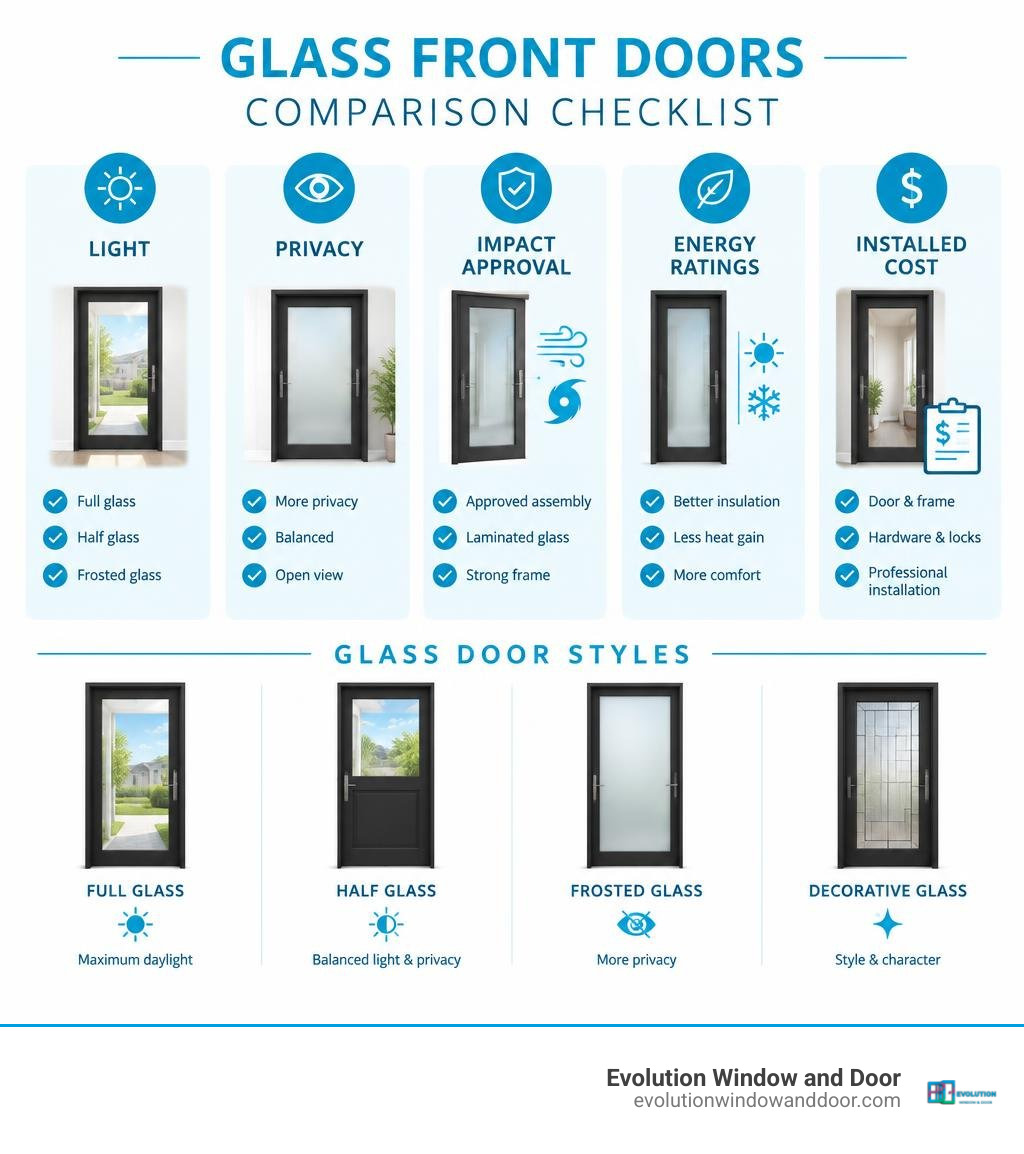
Start with the whole door, not just the glass. Compare glass front doors by how much light and privacy they offer, then check the frame, locks, energy ratings, and installed price. In Florida, ask whether the complete door assembly has the impact and wind-pressure approvals required for your address. Laminated impact glass and a strong frame matter more than a label that simply says “toughened glass.”
A full-glass door brings in the most daylight. Half-glass or frosted designs offer more privacy. Whichever style you like, get a quote that includes installation and confirm the door’s approval before you buy. For a broader look at how glazed entries compare with other configurations, the U.S. Department of Energy’s guide to energy-efficient doors explains how frame materials and glazing affect home performance.
Key Styles and Design Variations for Glass Front Doors
Choosing the right architectural style transforms your home’s facade while defining the balance between welcoming daylight and everyday seclusion. When evaluating different entry configurations, reviewing a practical guide to comparing exterior doors can help clarify how aesthetic lines align with structural performance.
| Glass Door Style | Natural Light Transmission | Interior Privacy Level | Typical Application |
|---|---|---|---|
| Full-Lite Glass | Maximum (85% – 95%) | Low (unless tinted/obscured) | Contemporary facades, scenic entryways |
| Half-Lite Panel | Moderate (40% – 50%) | High | Traditional homes, high-traffic entries |
| Frosted / Obscured | High (70% – 80% diffused) | Maximum | Urban residences, private foyers |
| Pivot System | Maximum (Variable) | Moderate to High | Grand architectural luxury entrances |
Full-Lite, Half-Lite, and Frosted Glass Configurations
Full-lite doors feature an edge-to-edge glazed panel that floods dark hallways with natural light. Standard replacement kits for 6’8″ entries can use 66-inch glass panels in 22-inch or 24-inch widths, with cutouts engineered one inch smaller than the frame exterior. If you want to compare entry door options, half-lite units offer a grounded compromise, placing durable raised or flat panels on the lower half to resist pet scratches and kicks while maintaining upper illumination.
For homeowners wanting total visual discretion without losing brightness, frosted, acid-etched, sandblasted, or Lacobel painted finishes diffuse incoming light softly. Modern decorative variations incorporate transparent horizontal stripes, leaf patterns, or fused glass accents to give the entrance unique character.
Architectural Pivot and Modern Sidelight Designs
For expansive entryways, oversized systems such as 48-inch exterior doors installed on offset pivot hinges create a dramatic focal point. Pivot hardware distributes weight evenly along the top and bottom plates rather than wall-mounted butt hinges, allowing massive panes of glass to open effortlessly.
Pairing glazed panels with matching transom windows and sidelights expands your visual field. Framing these glass configurations in bold finishes—such as modern black front entry door styles—delivers crisp architectural contrast suitable for both contemporary builds and historic revivals.
Material Selection, Glazing Systems, and Thermal Performance
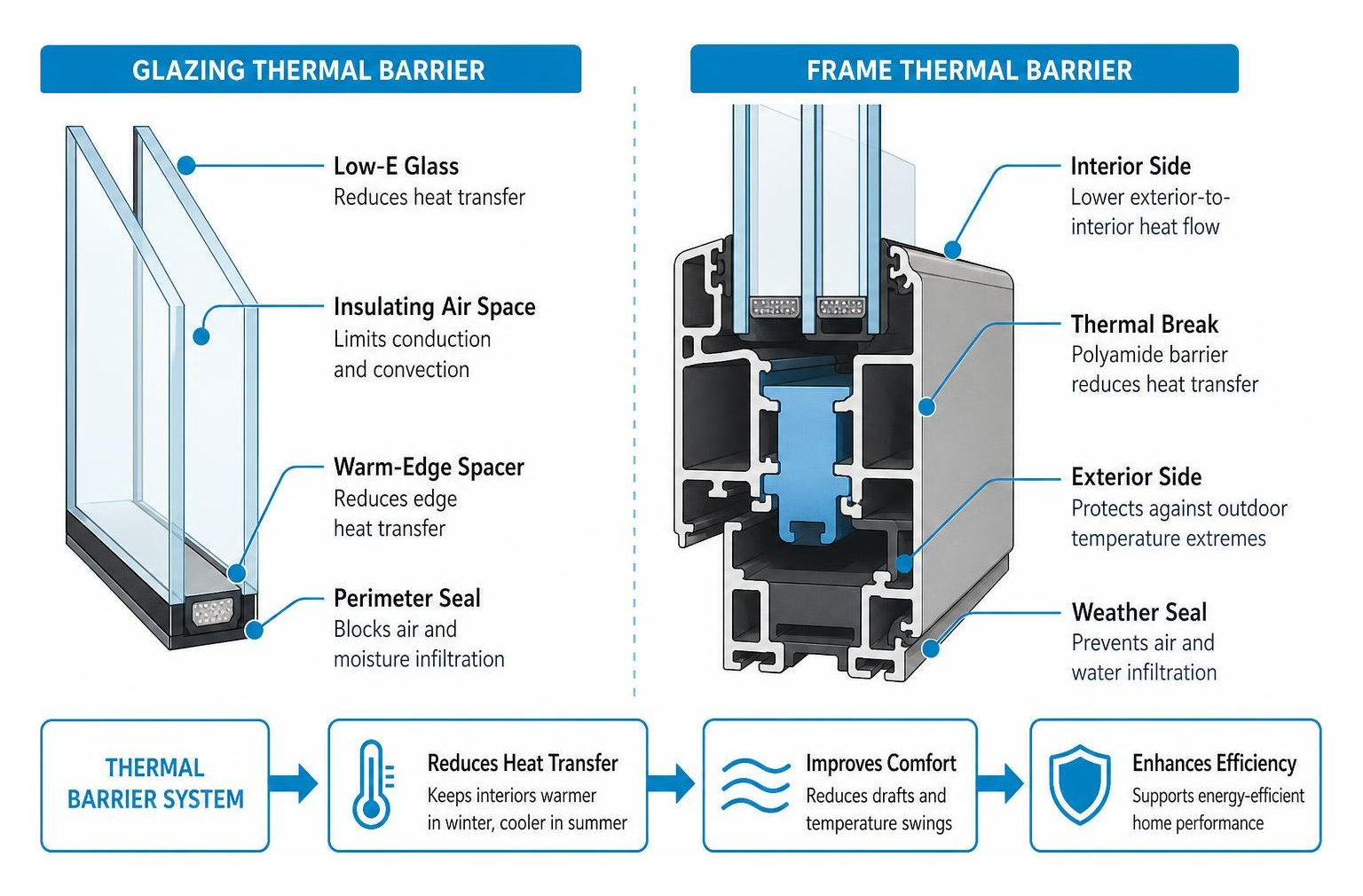
Understanding how doors and windows work together for energy efficiency ensures your entrance acts as a continuous thermal barrier rather than a point of heat loss or infiltration.
Aluminum, Steel, and Wood-Aluminum Frame Constructions
The frame material determines structural rigidity, weather resistance, and thermal conductivity:
- Thermally Broken Aluminum: High tensile strength allows for ultra-slim sightlines. Thermal breaks prevent exterior heat transfer.
- Galvanized Steel: Unmatched perimeter rigidity and forced-entry deterrence, though requiring proper powder coatings to prevent corrosion.
- Wood-Aluminum Hybrids: Combines natural interior wood (such as spruce, larch, or oak) with exterior-facing extruded aluminum cladding. Standard spruce blanks offer a core heat transfer coefficient of 0.96 W/m²K, dropping to 0.77 W/m²K in low-energy designs, and reaching 0.59 W/m²K in certified passive constructions.
Energy Efficiency Ratings, U-Values, and Insulated Glass
Under 2026 standards, replacement exterior glazed doors must achieve a maximum U-value of 1.4 W/m²K (with side doors for uninhabited spaces reaching up to 1.8 W/m²K). Advanced multi-pane insulating glass units (IGUs) maintain comfort and code compliance:
- Double Glazing: Standard configurations achieve U-values between 1.1 and 1.4 W/m²K when combined with Low-E coatings.
- Triple Glazing: High-performance units filled with inert argon or krypton gas achieve center-of-glass values as low as 0.7 W/m²K (overall door Ud values down to 0.9 W/m²K).
Structural Safety, Durability, and Maintenance Requirements
| Feature | Solid-Core Composite Door | Glazed / Full-Glass Door |
|---|---|---|
| Natural Daylight | None (requires sidelights) | High to Maximum |
| Thermal Performance (U-value) | 0.9 – 1.2 W/m²K | 1.0 – 1.4 W/m²K |
| Impact / Security Standard | PAS 24 / Multi-Point Locking | PAS 24 / Laminated-Toughened Unit |
| Average Installed Cost | £1,000 – £1,400 | £1,800 – £2,500+ |
| Acoustic Insulation | High solid mass damping | High (enhanced by acoustic PVB/triple panes) |
| Maintenance Needs | Low (occasional wipe down) | Moderate (glass polish & seal care) |
Security Standards and Impact Ratings for Glass Front Doors
Safety glazing is legally required for residential doors. Understanding the distinction between glass types is vital:
- Toughened Safety Glass (BS EN 12150-1): Heat-treated to crumble into small, blunt fragments under impact. While safe against accidental injuries, a direct blow from a heavy tool can shatter it quickly.
- Laminated Security Glass (BS EN 14449): Composed of two glass sheets bonded by a polyvinyl butyral (PVB) interlayer. When cracked, the interlayer holds fragments securely in place, resisting forced entry and severe wind-borne debris.
Building standards (such as Part Q) require laminated glass with a minimum thickness of 6.4mm on accessible ground-floor openings. For premier security, high-end systems use a laminated-toughened combination (toughened exterior pane paired with a laminated interior pane) secured with multi-point hook locks and certified to PAS 24:2022 standards.
Long-Term Cleaning, Maintenance, and Glass Care
Maintaining clarity and hardware longevity requires straightforward preventative care:
- Clean glass panels with a streak-free diluted vinegar solution (1 part white vinegar to 4 parts water) or a light baking soda paste for stubborn mineral deposits.
- Wipe frames with non-abrasive microfiber cloths to protect powder-coated or anodized finishes.
- Apply a few drops of mineral oil or baby oil along exterior glass panes using a clean rag; this micro-barrier keeps fine airborne dust and pollen from adhering.
- Lubricate multi-point locking mechanisms, pivot hinges, and cylinders annually using a dry PTFE or graphite spray.
- Check perimeter compression gaskets and weatherstripping seasonally for signs of wear.
Cost Analysis and Professional Installation Checklist
When planning your entryway renovation, reviewing specialized interior and exterior door services ensures proper framing calculations and seamless installation.
Cost and Pricing Drivers for Glass Front Doors
A glass front door typically costs roughly 40% more than a standard solid-core composite door due to specialized safety glazing, reinforced framing, and precision manufacturing:
- Half-Glass Models: £1,200 to £1,800 fully installed.
- Frosted / Obscured Glass: £1,300 to £1,900 installed.
- Full-Glass High-Performance Units: £1,800 to £2,500+ installed.
- Architectural Glazed Aluminum & Pivot Systems: Custom high-end designs, architectural pivot configurations, and double-door systems range from $4,820 to over $12,940 depending on glass treatments, decorative fusing, and size specifications.
Installer Certifications and Building Regulations Compliance
A high-performance door is only as good as its installation. To ensure full compliance with building regulations and maintain manufacturer warranties, confirm your installer meets these benchmarks:
- Competent Person Schemes: Registration with FENSA, CERTASS, or BSI to self-certify installation compliance with thermal (Part L) and structural safety standards.
- Quality Endorsements: TrustMark registration confirming vetted technical competence, trading standards, and financial protection.
- Product Markings: UKCA or CE certification labels clearly affixed to the door assembly.
If you are ready to explore your options, you can request an installation quote for a detailed architectural assessment.
Frequently Asked Questions About Glass Front Doors
Are glass front doors safe against forced entry?
Yes, provided they incorporate certified laminated safety glass of at least 6.4mm thickness and carry PAS 24:2022 certification. Laminated glass features a tear-resistant PVB interlayer that holds the pane rigid even when cracked, preventing intruders from creating an opening. When paired with multi-point locking systems and reinforced aluminum or steel frames, modern glass entry doors match the forced-entry resistance of solid-core alternatives.
What is the maximum compliant U-value for glass exterior doors in 2026?
Under current 2026 Part L building standards, the maximum allowable U-value for replacement exterior doors is 1.4 W/m²K. High-performance triple-glazed assemblies easily outperform this requirement, reaching overall values between 0.9 and 1.2 W/m²K.
How do glass front doors compare to solid doors in maintenance and privacy?
Solid doors require less frequent cleaning and offer inherent privacy. However, modern glass doors achieve comparable privacy levels through sandblasted, acid-etched, or frosted finishes without sacrificing natural light transmission. Glass doors require regular surface polishing to keep panes streak-free, but they do not warp, swell, or rot over time.
Conclusion
Upgrading to a modern glass entry door enhances curb appeal, illuminates interior living spaces, and delivers modern thermal and structural performance. By matching your aesthetic preferences with certified laminated safety glass, thermally broken frames, and accredited professional installation from Evolution Window & Door, you can build an entrance that is secure, efficient, and welcoming for years to come.

