

Choose a Craftsman Front Door That Fits Your Home
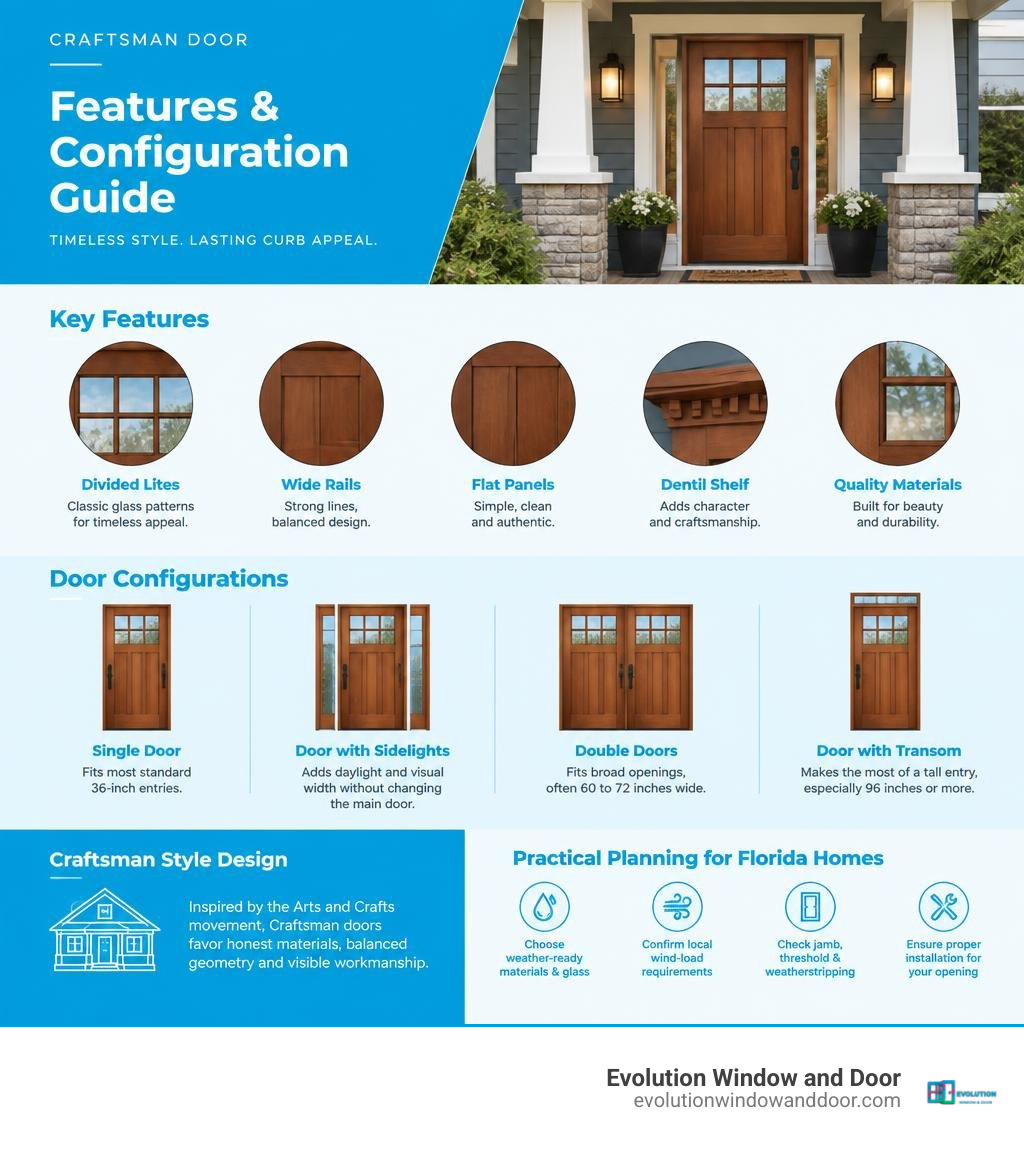
Craftsman style front doors work best when their simple lines, glass pattern, and size match the proportions of your entryway. For a classic bungalow or Arts and Crafts-inspired home, start with a solid lower panel and a three- or six-lite glass section at the top. Then choose a configuration that fits the opening:
- A single door suits most standard 36-inch entries.
- Sidelights add daylight and visual width without changing the main door.
- Double doors fit broad openings, often 60 to 72 inches wide.
- A transom can make the most of a tall entry, especially at 96 inches or more.
Inspired by the early-1900s Arts and Crafts movement, Craftsman doors favor honest materials, balanced geometry, and visible workmanship rather than elaborate decoration. Details such as divided lites, wide rails, flat panels, and a dentil shelf create warmth and curb appeal without making the entry feel busy.
For Florida homes, appearance should come with practical planning: select weather-ready materials and glass, confirm local wind-load requirements, and make sure the jamb, threshold, weatherstripping, and installation suit the opening.
Handy craftsman style front doors terms:
Architectural Hallmarks of Craftsman Style Front Doors
The architectural philosophy behind the Craftsman aesthetic emerged in the early 1900s as a direct rebellion against the mass-produced, overly ornate styles of the Victorian era. Craftsman architecture champions simplicity, structural transparency, and the inherent beauty of natural materials. When exploring traditional Craftsman front doors, you immediately notice how clean structural lines take precedence over decorative scrollwork.
Every authentic Craftsman front door is organized around geometric symmetry and deliberate vertical and horizontal framing:
- Stiles and Rails: Broad vertical stiles and horizontal rails frame the structure, emphasizing solid joinery and clean right angles.
- Solid Lower Panels: The lower half or two-thirds of the door traditionally features flat, recessed wood panels or raised V-groove detailing that grounds the visual weight of the entryway.
- Upper Lite Glass: Daylight enters through the top third of the slab, balancing privacy with illumination.
- Dentil Shelf Molding: Mounted directly beneath the glass, this small horizontal shelf supported by decorative, tooth-like blocks acts like a classic architectural crown across the door’s midsection.
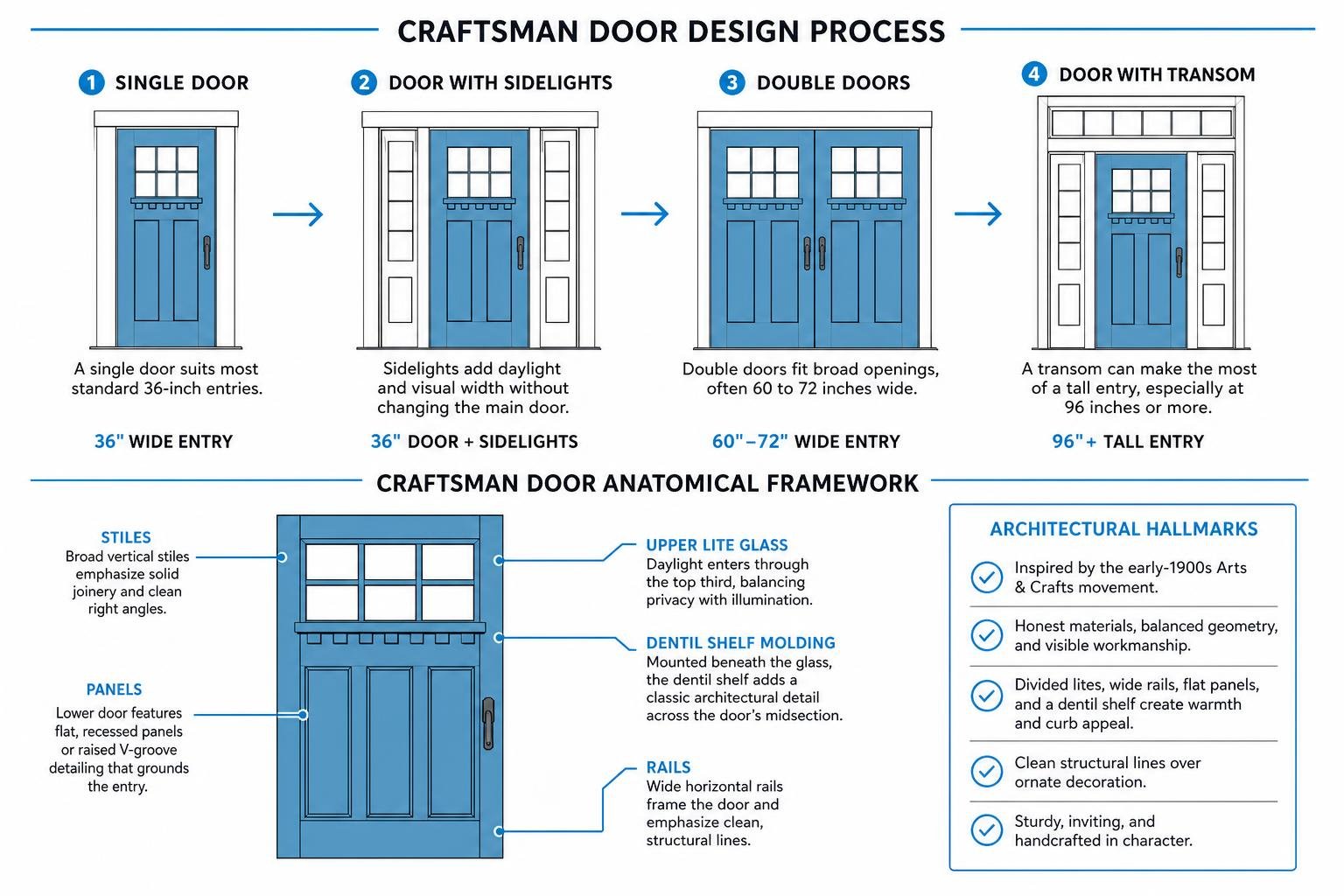
These elements work together to create an entryway that feels sturdy, inviting, and handcrafted.
Glass Configurations and Decorative Lite Options
The glass in a Craftsman entryway sets the tone for your entire front facade. Rather than expansive, uninterrupted panes, Craftsman glass uses true or simulated divided lites that echo the window architecture across the home.
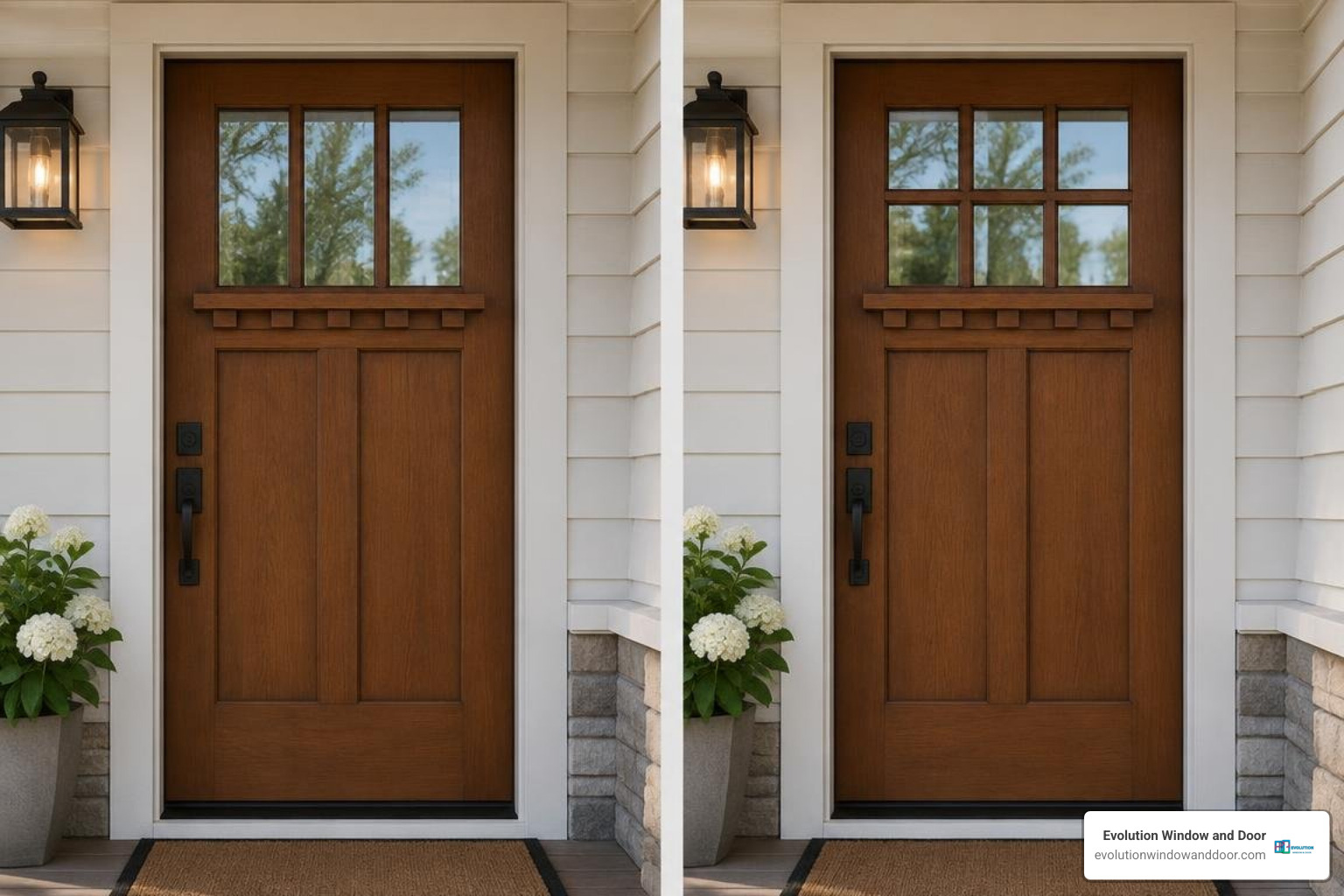
The most popular arrangements include:
- Three-Lite Patterns: Three vertical rectangular panes provide a clean, elongated aesthetic that accentuates vertical door height. Three balanced vertical panes lend a transitional, open feel to the entryway.
- Six-Lite Grids: Arranged in two rows of three, the six-lite grid delivers classic bungalow charm. Combining this grid with beveled glass scatters natural light inside the foyer.
- Decorative and Leaded Accents: Prairie-inspired leaded patterns, Frank Lloyd Wright-inspired geometric glass, or textured privacy glass offer visual depth while keeping your interior private from street view.
Thermal performance matters just as much as appearance. High-grade insulated tempered safety glass treated with a Low-E coating reduces solar heat gain, protecting interior temperatures and preventing sunlight from fading your foyer floors.
Selecting Materials, Finishes, and Hardware
Choosing the right materials ensures your entry stands up to daily use and environmental exposure. While composite and fiberglass materials exist, natural solid timber remains the gold standard for period-accurate character, weight, and authentic grain texture.
To complement natural wood, hardware should reflect simple geometric shapes. Rectangular backplates, hammered finishes, and oil-rubbed bronze or matte black mortise locksets match the Arts and Crafts aesthetic. Modern smart locks and Wi-Fi video doorbells also integrate cleanly into these entryways when finished in dark, non-reflective patinas. You might even pair your entryway renovation with fresh patio accents, like knowing how to Find the Perfect Sliding Screen Door for Your Home for seamless outdoor transitions.
| Wood Species | Grain Pattern | Natural Coloration | Density & Durability | Best Aesthetic Fit |
|---|---|---|---|---|
| Honduran Mahogany | Tight, straight, uniform | Rich reddish-brown | Exceptionally high; naturally rot and decay resistant | Formal Craftsman, historic restorations, elegant estates |
| Knotty Alder | Pronounced grain with natural knots | Light honey to warm tan | Medium density; stable with authentic rustic texture | Cozy bungalows, rustic lodges, modern farmhouses |
| Hemlock / Douglas Fir | Straight, fine, even grain | Pale cream to light amber | High strength-to-weight ratio; highly rot resistant | Painted entries, clean contemporary Craftsman builds |
Premium Wood Species for Craftsman Style Front Doors
The wood species you choose defines the character and maintenance requirements of your door:
- Mahogany: Prized for its natural resistance to moisture, swelling, and warping. Its rich reddish-brown tone deepens naturally with age.
- Knotty Alder: Celebrated for visible knots, swirls, and earthy character. Distinctive knotting makes every entry one of a kind.
- Hemlock and Douglas Fir: Deliver tight, uniform grain patterns that take stains smoothly and provide an even surface for high-durability painted finishes.
Staining vs. Painting Craftsman Entryways
Deciding between a rich wood stain and an exterior paint finish depends on your architectural style and personal preference.
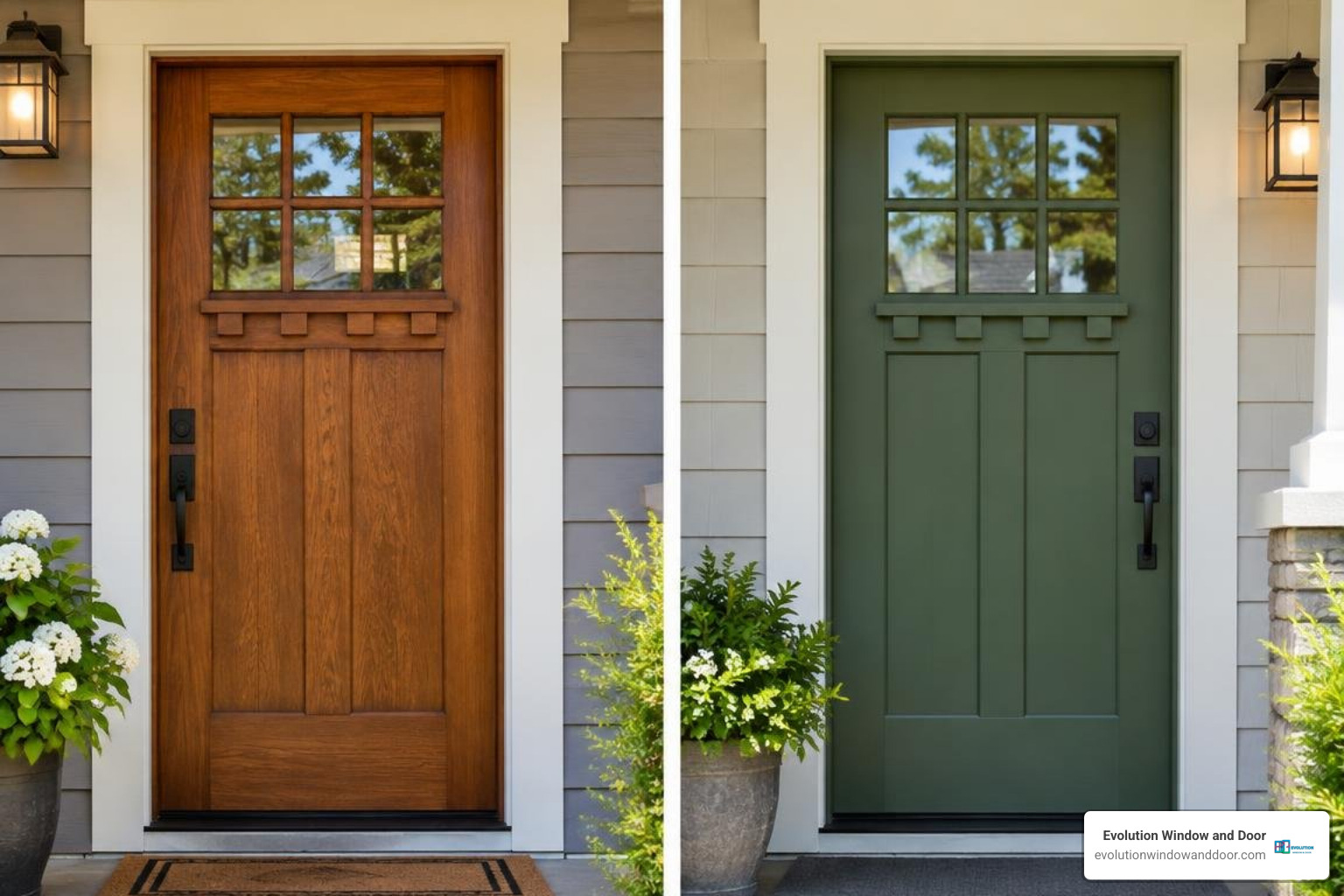
- Staining: Highlights authentic grain patterns, knots, and natural color variations. Warm stains like walnut, chestnut, and amber reinforce organic Craftsman warmth.
- Painting: Creates a tailored, updated appearance. Earth tones such as deep olive, forest green, warm charcoal, and classic navy add visual contrast while protecting the wood underneath.
Regardless of your finish choice, wood doors must be completely sealed on all six sides (front, back, and all four edges) to block moisture intrusion and preserve the manufacturer’s warranty.
Entryway Configurations and Architectural Styling
Craftsman doors adapt easily to various entryway dimensions. Selecting the right setup ensures balanced visual weight across your home’s facade. Explore our wide variety of doors to find the right configuration for your project.
- Single Door: The standard 36″ × 80″ single door remains the classic choice for welcoming porches and traditional bungalow entries.
- Single Door with Sidelights: Sidelights flank the door with matching glass lites, expanding narrow entryways and flooding dark hallways with natural light.
- Double Doors: Ideal for grand entryways between 60 and 72 inches wide, double doors deliver symmetry and a spacious opening for entertaining.
- Transom Configurations: In entryways with 96-inch or taller ceilings, adding a rectangular transom window above the door draws the eye upward and highlights tall architectural proportions.
Pairing Craftsman Style Front Doors with Bungalow and Traditional Homes
While Craftsman doors are natural centerpieces for 1920s California bungalows, Prairie homes, and modern farmhouses, they also complement traditional architecture.
On Colonial, Federal, or transitional homes—which often favor raised panels and strict symmetry—a Craftsman door can bridge architectural styles when styled intentionally. Opting for a painted finish in charcoal or navy rather than a rustic stain softens the informal look. Flanking the door with symmetrical divided-lite sidelights balances the entryway and harmonizes with the surrounding facade.
Sizing, Jamb Systems, and Weather Protection
A long-lasting installation depends on precise measurements and protective jamb components:
- Rough Opening Measurements: Accurately measure the width, height, and wall depth of the rough opening before ordering to avoid uneven gaps.
- Pre-Hung Jamb Systems: Choose matching wood or primed exterior jamb kits with pre-drilled hardware holes for reliable alignment.
- Weatherstripping and Thresholds: High-performance weatherstripping paired with an adjustable inswing threshold blocks drafts, wind-driven moisture, and debris.
- Porch Overhang Requirements: To protect wood finishes from weather exposure and maintain warranty coverage, apply the standard overhang formula:
$$\text{Required Overhang Depth } (X) = \frac{1}{2} \times \text{Distance from Door Base to Overhang } (Y)$$
If the distance from the bottom of your threshold to the roofline is 10 feet, the porch overhang must extend at least 5 feet outward. For complete peace of mind, our team provides full-service installation through our dedicated services.
Frequently Asked Questions About Craftsman Doors
How do I calculate the required porch overhang to protect a wood Craftsman door?
Use the formula $X = \frac{1}{2}Y$, where $Y$ represents the vertical distance from the threshold to the base of your porch ceiling or roof overhang. The resulting number, $X$, is the minimum horizontal projection required to shield the door from direct sun and heavy rain.
Can a Craftsman door look appropriate on a traditional or Colonial home?
Yes. A Craftsman door fits traditional homes well when painted in classic neutrals like black, crisp white, or deep navy. Pairing the door with matching divided-lite sidelights preserves the formal symmetry expected on traditional facades.
How do wood Craftsman doors compare to fiberglass alternatives in durability?
Solid wood offers unmatched grain depth, authentic weight, and historically accurate joinery, but requires periodic resealing depending on sun and moisture exposure. Fiberglass mimics wood grain with less routine surface maintenance, but cannot replicate the natural hand-feel and distinct grain character of genuine mahogany or knotty alder timber.
Conclusion
A Craftsman front door brings lasting character, balance, and warmth to any entryway. By choosing the right wood species, glass configuration, and protective hardware, you create an inviting entrance that stands the test of time.
At Evolution Window and Door, we guide homeowners throughout Southwest Florida—including Naples, Fort Myers, Cape Coral, Sanibel, Pine Island, Port Charlotte, Punta Gorda, Sarasota, and Bonita Springs—in selecting and installing the ideal entryway. Whether you need custom timber guidance, professional jamb fitting, or hurricane-rated impact solutions, explore our complete selection of doors or contact our local team today for an expert design consultation.


