

Why a Black Front Entry Door Instantly Elevates Curb Appeal
To choose a black front entry door that stands out and performs reliably, select a structural material suited to your climate—such as heavy-gauge iron, steel, or rot-resistant fiberglass—and ensure sun-exposed entries include a thermal break with UV-inhibited finishes to prevent heat transfer and fading. Complete the design by pairing the dark finish with contrasting warm hardware (like satin brass or brushed nickel) and privacy glass panels that balance natural daylight with personal security.
Choosing black creates an immediate, high-contrast anchor against lighter building exteriors, such as pale stucco, crisp white board-and-batten siding, warm brick, or natural stone masonry. Industry design surveys indicate that over 42% of homeowners view a black front door upgrade as a high-impact renovation, while 70% perceive a notable increase in overall home value after installation. On design platforms like Houzz, entryways featuring black doors appear in thousands of curated designer portfolios, representing a sustained 12% rise in popularity over recent years.
Beyond aesthetics, black finishes offer everyday practical benefits:
- Visual Contrast: Dark tones pull the entryway forward visually, making recessed front porches feel grounded and intentional.
- Architectural Versatility: Black acts as a neutral canvas that adapts seamlessly whether your home leans toward modern minimalism, transitional, or classic Mediterranean architecture.
- Concealment of Everyday Wear: Unlike pure white or pastel entries, dark exterior finishes naturally disguise minor surface smudges and daily dust between cleanings.
- Timeless Elegance: A deep charcoal or jet-black entry mimics classic architectural tailoring—much like a formal suit, it never goes out of style.
Material Comparison: Selecting the Best Build for Your Home
Choosing the correct structural material determines how well your door withstands daily operation, temperature extremes, and seasonal coastal weather.
| Material | Durability Rating | Insulation (R-Value) | Maintenance Level | Relative Price Range |
|---|---|---|---|---|
| Wrought Iron / 12-Gauge Steel | Exceptional (resists forced entry & warping) | Moderate to High (with thermal break & foam core) | Low to Moderate (annual seal check) | High ($2,600 – $5,500+) |
| Fiberglass | High (dent-resistant, won’t rot) | High (dense polyurethane core) | Low (occasional wash) | Moderate ($1,200 – $2,800) |
| Solid Mahogany Wood | Moderate to High (dense hardwood) | Moderate (natural wood cellular density) | Moderate to High (periodic UV topcoat) | Mid to High ($1,400 – $3,500) |
| Standard Steel | High (structural strength) | High (foam insulation) | Low (check for scratch protection) | Budget to Mid ($800 – $1,800) |
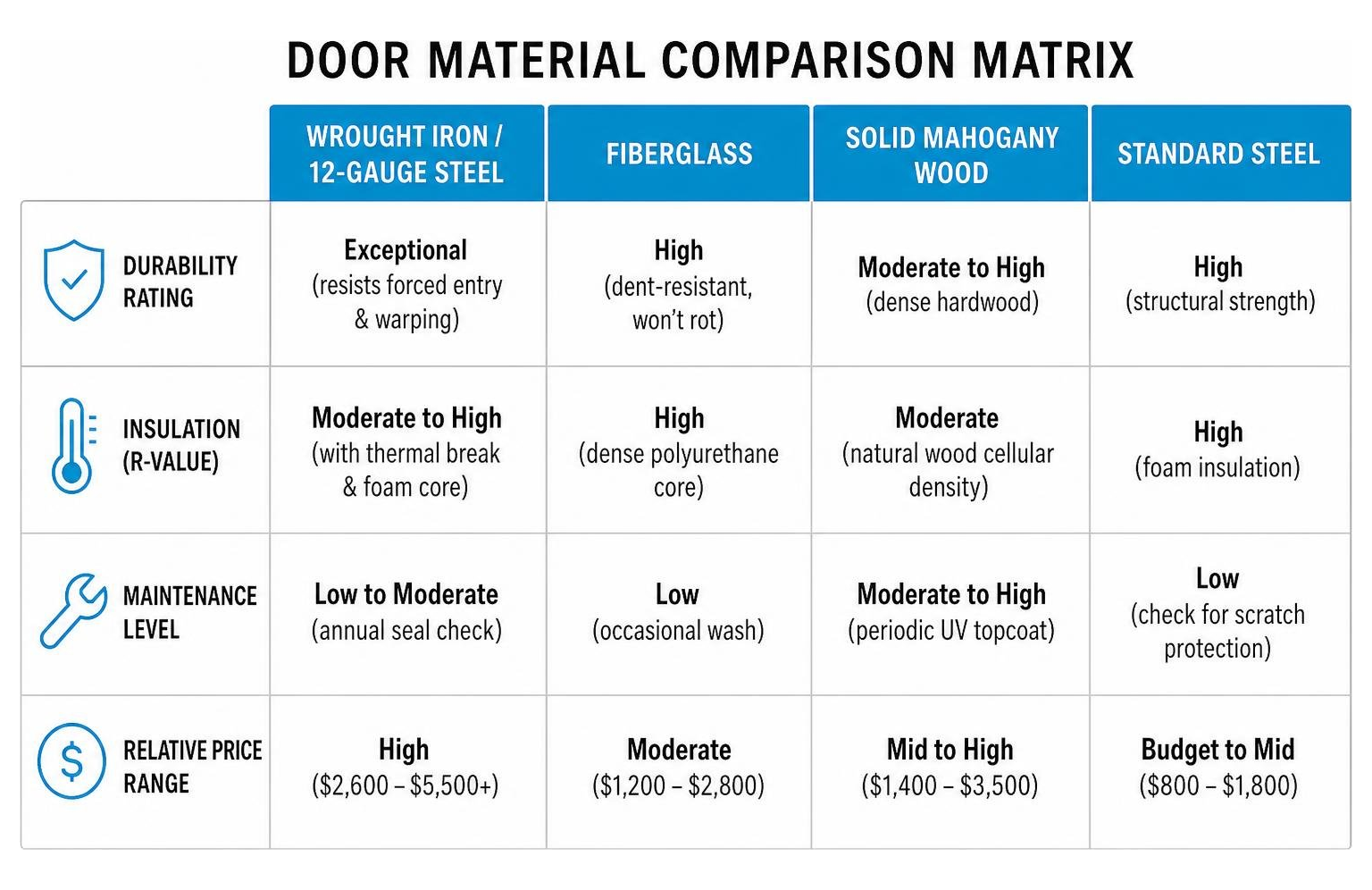
High-grade wrought iron doors—such as heavy-duty models crafted with 12-gauge steel tubing—provide exceptional resistance against forced entry and structural warping. For homeowners who favor the rich grain of natural hardwood, options like a contemporary 4-lite matte black mahogany door deliver an authentic organic texture with factory-sealed design pressure ratings.
Customizing Your Black Front Entry Door Finish and Glass
Personalizing the glass and surface texture allows you to balance natural daylight with personal privacy.
- Surface Finishes: Matte black offers a smooth, glare-reducing modern look, while multi-step zinc-galvanized powder coating provides maximum resistance to salt spray and humidity.
- Glass Configurations: Double-pane tempered glass is standard for impact protection. Textures such as reed glass, frosted glass, or rain glass allow natural illumination into your foyer while blurring the interior view from the street.
- Operable Glass Panels: Select iron doors incorporate independent interior glass panels that swing open on separate hinges, allowing cross-breezes without disengaging the primary security locks.
- Expansive Framing: If your entryway permits, upgrading to a 42-inch wide exterior door for better curb appeal or framing a standard door with matching black sidelights and transoms turns a standard entry into an expansive architectural feature.
Structural Strength and Weather Performance
For homes in coastal areas like Southwest Florida, exterior doors must meet strict building standards to withstand extreme weather. High-performance units undergo rigorous testing for:
- Design Pressure (DP): Structural ratings (often 50 PSF or higher) indicate how much positive and negative wind force the door assembly can endure without permanent frame deflection.
- Wind Load Resistance: Certified impact units are engineered to remain secure in wind speeds reaching up to 173 mph.
- Corrosion Resistance: Marine-grade primers, zinc-rich undercoats, and heavy-duty bullet hinges with integrated grease fittings prevent salt air from seizing moving parts.
To explore heavy-duty construction options, review our guide on top-rated 36-inch metal exterior doors that stand up to any weather.
Essential Performance Features: Security, Climate, and Energy Efficiency
A high-performing entry door must safeguard your home while preventing conditioned interior air from escaping.
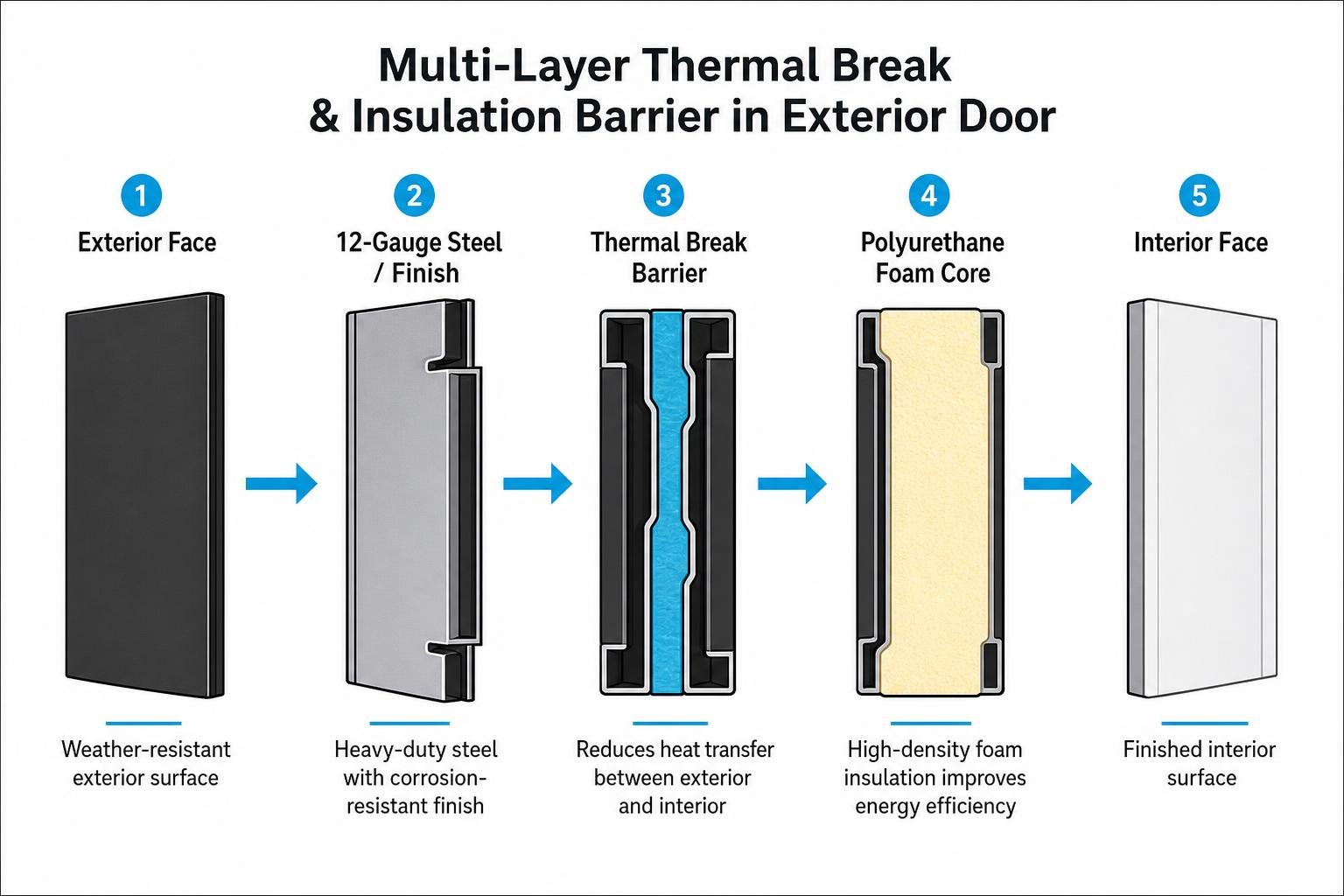
Key hardware and weatherproofing elements to look for include:
- Multi-Point Locking Systems: These engage heavy steel bolts at the top, center, and bottom of the door jamb simultaneously, distributing security loads evenly and resisting pry attempts.
- Heavy-Duty Bullet Hinges: Industrial hinges equipped with internal ball bearings carry the heavy weight of solid steel or iron doors without sagging over time.
- Compression Weatherstripping and Composite Sills: Dual-bulb perimeter seals combined with adjustable composite thresholds block wind-driven rain and air infiltration. Understanding how doors and windows work together for energy efficiency ensures your entryway envelope reduces strain on your home’s air conditioning system.
When to Choose a Thermal Break for a Black Front Entry Door
Because black finishes naturally absorb solar radiation, metal doors without thermal isolation can transfer heat directly into the interior foyer.
A thermal break is a non-conductive barrier (typically a reinforced polyamide or polyurethane insulator) placed directly between the exterior and interior sections of the metal frame and door slab. This thermal barrier prevents exterior surface heat from conducting through to the interior living space.
If your entryway receives prolonged direct sunlight during the afternoon, upgrading to a thermally broken door slab and frame prevents interior condensation and lowers cooling costs.
Sizing, Sidelights, and Architectural Style Pairings
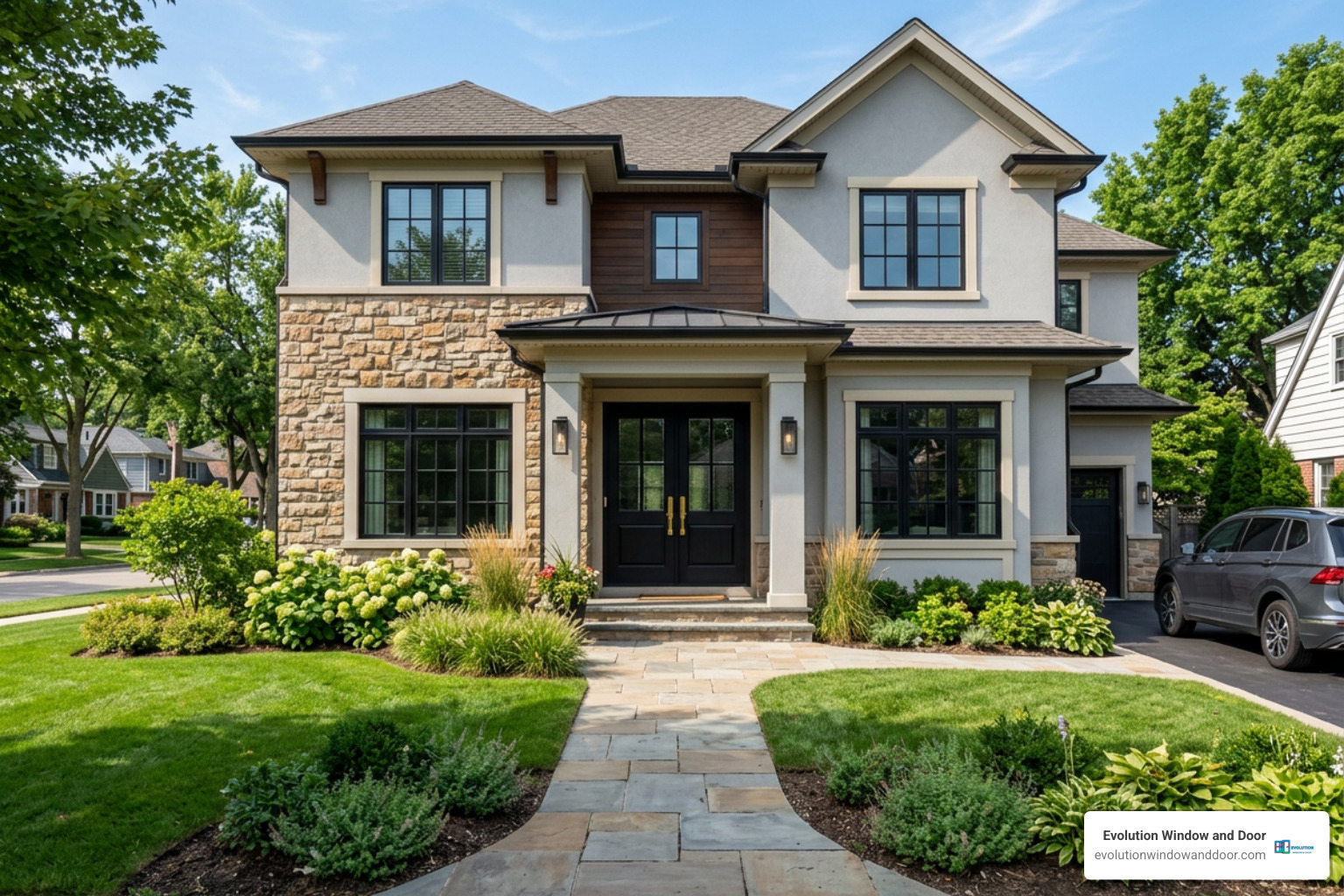
A black door pairs naturally with a variety of residential styles when matched with the appropriate hardware and trim details:
- Modern Farmhouse: Pairs flat matte black finishes with clear low-E glass grids, framed by crisp white board-and-batten siding.
- Coastal Contemporary: Utilizes wide pivot designs or slim-profile stiles with reed or textured glass, paired with natural stone pavers.
- Mediterranean / Spanish Revival: Complements warm stucco using hand-forged wrought iron scrollwork and dark oil-rubbed bronze accents.
- Transitional: Blends clean four-lite vertical glass designs with satin brass or brushed nickel handles for warm visual contrast.
Sizing and Rough Opening Calculation
When planning a replacement, accurately measuring the rough opening ensures your pre-hung frame fits square and plumb:
- Width: Measure the distance between the structural studs at the top, middle, and bottom of the opening; use the smallest measurement and subtract 1/2 to 3/4 inch for shimming clearance.
- Height: Measure from the subfloor to the underside of the header on both sides.
- For standard sizing conversions and framing allowances, consult our comprehensive guide to finding the perfect fit: a guide to 30, 36, and 42 inch exterior doors.
Sizing, Cost Analysis, Maintenance, and Common Mistakes
Investment and Price Tiers
Entry door pricing varies based on raw materials, thermal engineering, and custom glazing:
- Entry-Level (Fiberglass / Standard Steel): $800 to $1,800 (slab and standard pre-hung frame).
- Mid-Range (Solid Hardwood / Designer Fiberglass): $1,400 to $3,200 (factory-finished matte mahogany with impact glass).
- High-End Custom (Hand-Forged Iron / Thermally Broken Steel): $2,600 to $5,500+ (includes operable dual-pane glass, sidelights, and multi-point security hardware).
Maintenance Routine for Dark Exterior Finishes
To maintain the depth of a dark finish in sun-drenched and coastal environments:
- Wash the frame and glass quarterly with warm water and mild, non-abrasive soap.
- Inspect perimeter weatherstripping every autumn to ensure compression seals remain pliable.
- Apply a marine-grade automotive paste wax or manufacturer-recommended UV protectant once a year to preserve gloss retention and shed salt deposits.
- If you notice daylight creeping through the frame edges or moisture pooling at the sill, check these signs it’s time to replace your doors or windows.
Common Mistakes to Avoid
- Skipping UV-Rated Finishes: Standard interior black paints will chalk and fade quickly under direct sunlight; always verify factory-applied, UV-inhibited finishes.
- Ignoring Thermal Breaks on Full Metal Doors: Installing non-thermally broken steel on unshaded south-facing elevations can cause significant interior heat transfer.
- Improper Flashing Installation: Neglecting a waterproof pan underneath the threshold allows wind-driven rain to reach structural framing.
Frequently Asked Questions About Black Entry Doors
Do black front doors fade or overheat in direct sunlight?
Dark colors absorb more thermal energy than light shades. However, modern factory finishes utilize UV-reflective pigments and protective clear topcoats designed to prevent chalking. For unshaded south- or west-facing entryways, choosing a fiberglass door with a polyurethane core or an iron door with a thermal break prevents heat from transferring indoors.
How much does a quality black exterior door cost?
Quality pre-hung doors range from $1,200 for basic fiberglass models to upwards of $5,000 for custom hand-forged iron units with integrated sidelights and impact-rated glass. Professional installation, structural framing adjustments, and coastal permitting typically add $500 to $1,500 depending on project complexity.
What hardware finishes look best with a black door?
Satin brass and brushed gold hardware provide warm, striking contrast against black doors. Brushed nickel and matte chrome deliver a crisp, contemporary aesthetic, while matte black hardware creates an understated monochromatic style.
Conclusion
A well-crafted black front entry door delivers lasting curb appeal, dependable security, and essential weather protection. Whether your home calls for the structural presence of hand-forged iron, the warmth of matte black mahogany, or the energy efficiency of insulated fiberglass, selecting the right materials and hardware ensures your entryway stands out for years to come.
Homeowners across Southwest Florida—including Cape Coral, Fort Myers, Sanibel, Venice, and Naples—rely on Evolution Window and Door for expert guidance, precision installation, and Florida impact-rated products. Ready to transform your entryway? Explore high-performance exterior doors with our team today.

