

Replacement Windows: A Smarter Upgrade for Florida Homes
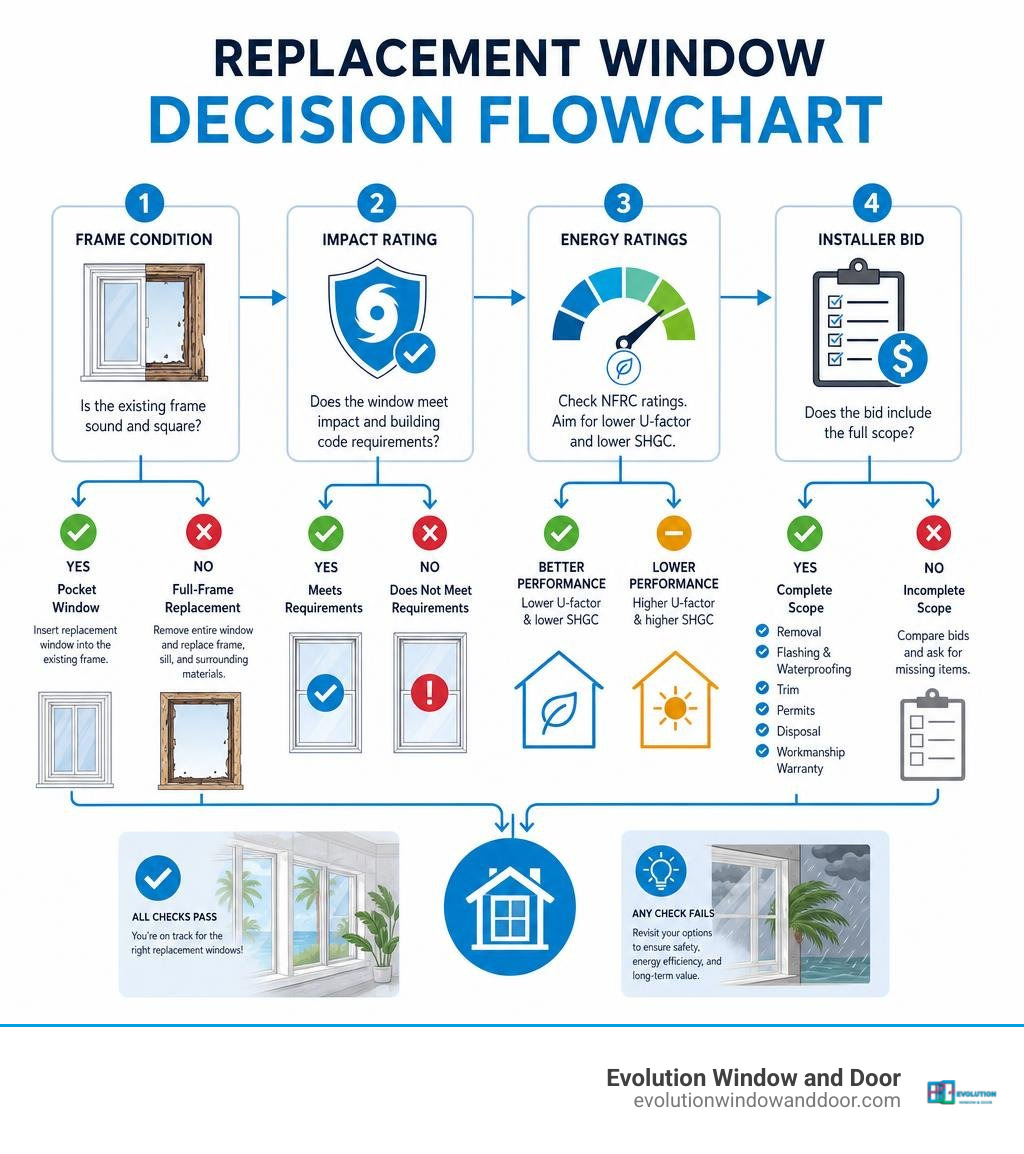
The right replacement windows can make your home safer in storms, less drafty, quieter, and easier to cool. Start by choosing the installation type your home needs: pocket windows can fit into sound existing frames, while full-frame replacement is the better choice when frames, sills, or surrounding materials show rot, water damage, or other failure.
For a Florida home, compare each option on these essentials:
- Impact protection: Look for windows rated to meet local wind-borne debris and building-code requirements.
- Energy performance: Compare NFRC U-factor and Solar Heat Gain Coefficient (SHGC), then look for Energy Star certification where applicable.
- Frame material: Vinyl offers low upkeep, wood brings a traditional look, and composite frames can provide added strength and stability.
- Installation scope: Ask whether the bid includes removal, flashing, waterproofing, trim, permits, disposal, and a workmanship warranty.
Professional replacement commonly averages about $800 per window nationwide, although the real cost can range from roughly $300 to $3,000 based on size, style, glass, frame, impact rating, and installation needs. Energy Star-certified windows may also lower a home’s energy bills by about 13 percent on average.
The best choice is not always the least expensive unit. It is the window system that fits your home’s condition, Florida climate, safety needs, and long-term budget.
Glossary for replacement windows:
Key Types and Styles of Replacement Windows
Upgrading your home’s envelope begins with understanding the physical anatomy of a window opening. When evaluating your property, we often find that homeowners know their current units are failing—whether through recurring drafts, foggy glass, or stuck sashes—but are unsure which installation pathway makes the most sense. Learning to recognize the signs it’s time to replace your doors or windows will help you determine whether you need a minor retrofit or a complete structural overhaul.
Pocket vs. Full-Frame Replacement Windows
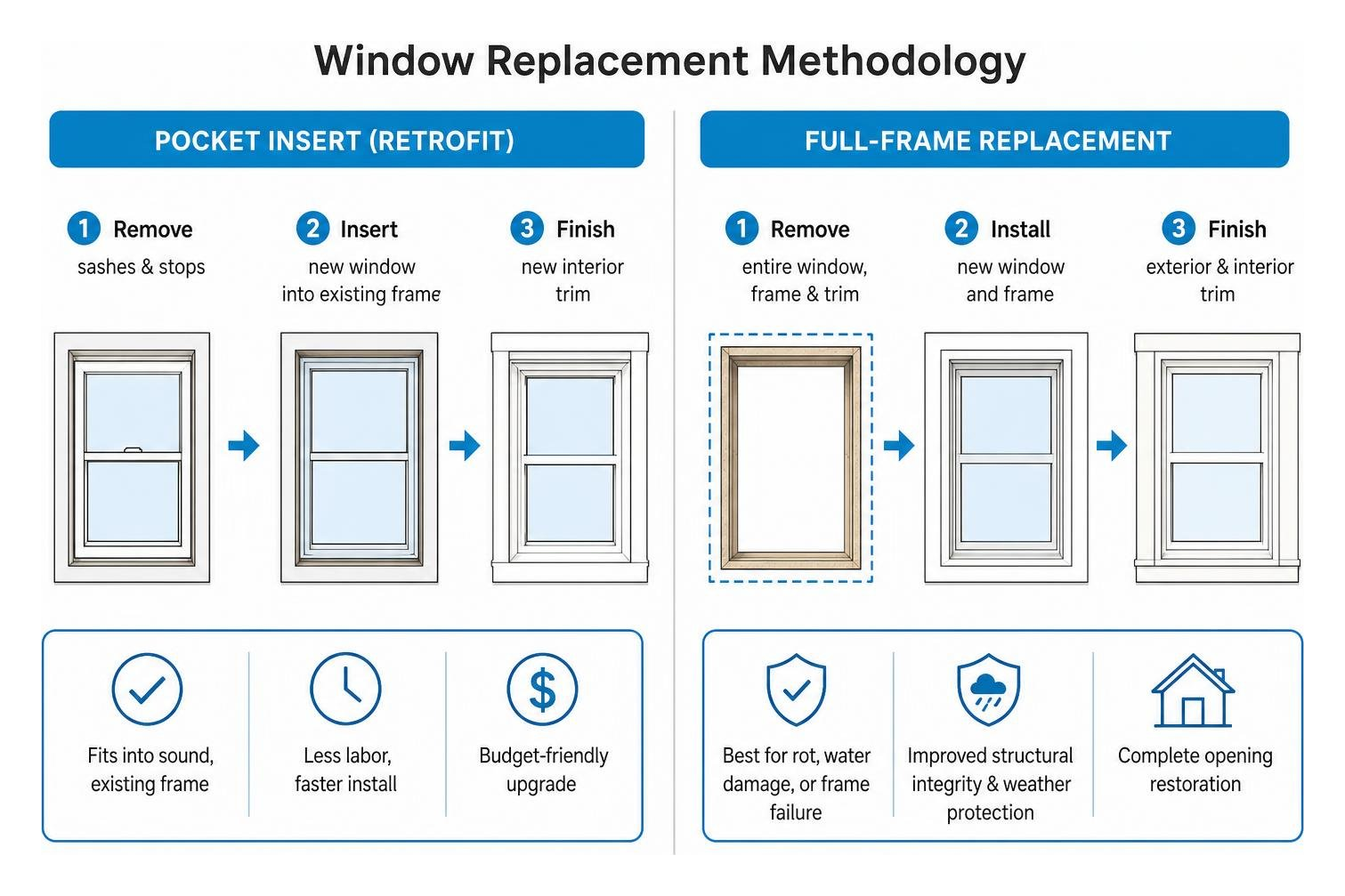
The two primary installation methods are pocket (or insert) replacements and full-frame replacements. Each serves a distinct purpose depending on the physical integrity of your existing structure:
- Pocket Replacement Windows: Also known as retrofit windows, these units are designed to slide directly inside your existing, structurally sound window frame. The contractor leaves the exterior casing, interior trim, and structural studs untouched, only removing the old sashes and stops. Because pocket installations require significantly less labor and avoid interior drywall or trim repair, they represent a budget-friendly way to upgrade efficiency and noise reduction quickly.
- Full-Frame Replacement Windows: This approach is essentially new construction installation applied to an existing home. The entire window unit—including the master frame, sashes, interior trim, exterior brickmould, and sill—is completely torn out down to the rough opening studs. While full-frame replacements carry higher labor and material costs, they are non-negotiable if your existing sills have rotted, moisture has penetrated the wall cavities, or you wish to maximize the clear glass viewing area.
Popular Architectural Window Styles
Selecting an operational style impacts your day-to-day ventilation, sightlines, and ease of cleaning. When choosing the right window style for your home, consider how the room is used and how much airflow you desire:
- Double-Hung Windows: Featuring two operable sashes that move up and down vertically, double-hung units are timeless classics. Modern designs feature tilt-in sashes, allowing you to clean both the interior and exterior glass surfaces safely from inside your living room without climbing tall ladders.
- Casement Windows: Hinged at the side and operated with a folding hand crank, casements swing outward like a door. When closed, the sash presses firmly against the frame, creating an exceptionally tight compression seal that provides outstanding air-infiltration resistance.
- Awning Windows: Hinged at the top and opening outward from the bottom, awning windows allow you to enjoy fresh air even during a light rain shower, deflecting precipitation away from the interior.
- Sliding Windows: Operating along horizontal tracks, sliders are ideal for wider openings and contemporary spaces where you want expansive glass without mechanical cranks.
- Fixed and Architectural Shapes: Non-operable picture windows, geometric shapes, and custom arches deliver maximum light and unobstructed panoramic views with superior structural integrity.
Comparing Window Frame Materials
A window’s thermal insulation, longevity, and structural rigidity depend heavily on its framing substrate. Choosing the right material ensures your windows withstand intense solar radiation, moisture, and high winds without warping or degrading.
| Feature | Vinyl Frames | Wood & Clad-Wood Frames | Composite Frames |
|---|---|---|---|
| Maintenance Level | Virtually Zero (Wipe down occasionally) | High (Requires staining/sealing every 3–5 yrs) | Low to None (No painting required) |
| Thermal Efficiency | Excellent (Multi-chambered insulation) | Natural Insulator (Very Low Conductivity) | Superior (Stable across temperature swings) |
| Structural Rigidity | Moderate (May flex under heavy loads) | High (Traditional structural strength) | Very High (Twice as strong as vinyl) |
| Moisture Resistance | Impervious to water and rot | Vulnerable to rot if cladding fails | Exceptional moisture/salt-spray resistance |
| Relative Cost Tier | Budget-Friendly ($) | Premium ($$$) | Moderate to Premium ($$) |
Vinyl Frames
Vinyl remains one of the most widely used materials because it delivers exceptional energy efficiency at an accessible price point. Premium vinyl extrusions utilize multi-chambered hollow cavities often injected with insulating foam to prevent thermal transfer. They are impervious to moisture, will not rot, rust, or corrode, and never require sanding, painting, or staining. High-grade vinyl compounds also feature UV stabilizers to maintain color stability against constant sun exposure.
Wood and Clad-Wood Frames
Wood provides organic warmth, architectural depth, and authentic historic character that is difficult to replicate with synthetic materials. However, exposed bare wood demands vigilant upkeep to prevent rot and peeling paint. To solve this, manufacturers produce clad-wood windows, wrapping the exterior surfaces in heavy-gauge extruded aluminum or resilient vinyl cladding while leaving fine natural wood visible on the interior. Homeowners researching traditional joinery often look into how much you should pay for double glazed wooden sash windows when balancing historic preservation guidelines with modern thermal requirements.
Composite and Impact-Resistant Frames
Composite frames combine the aesthetic appeal and structural stiffness of wood with the maintenance-free ease of vinyl. Blending thermoplastic polymers with reclaimed wood fibers, proprietary composites produce frames that are up to twice as strong as standard vinyl. This rigidity gives composite frames superior dimensional stability, meaning they will not expand, contract, or warp during rapid temperature shifts. For coastal environments subject to heavy storms, salt spray, and extreme heat, composite and reinforced impact-rated frame systems offer rugged, long-lasting durability.
Energy Efficiency Metrics and Glass Technologies
Modern window units do far more than let daylight into your living spaces; they function as a primary component of your home’s thermal insulation envelope.
NFRC Ratings and Energy Star Guidelines
To objectively compare performance across brands, check the label certified by the National Fenestration Rating Council (NFRC):
- U-Factor: Measures the rate of non-solar heat transfer through the entire window assembly. U-factor ratings typically range from 0.20 to 1.20. The lower the number, the better the window insulates against heat loss or gain.
- Solar Heat Gain Coefficient (SHGC): Measures how much radiant heat from the sun passes through the glass, expressed on a scale from 0 to 1. In warm, sunny regions, a low SHGC (often 0.25 or lower) is essential to block incoming heat and reduce your air conditioning loads.
- Visible Transmittance (VT): Indicates the fraction of visible light transmitted through the glass (from 0 to 1). A higher VT lets in more natural daylight without bringing unwanted heat along with it.
- Air Leakage (AL): Reflects the volume of air that infiltrates around the sashes and seals in cubic feet per minute per square foot of window area. Lower values indicate a tighter draft-free unit.
Windows meeting strict regional Energy Star criteria are independently tested to deliver meaningful utility bill reductions based on specific climate dynamics.
Low-E Coatings, Gas Fills, and Glazing Options
High-performance insulated glass units (IGUs) combine multiple technologies to control heat and light transfer:
- Low-E (Low-Emissivity) Coatings: These are microscopic, spectrally selective metallic layers applied directly to the interior glass surfaces. They reflect long-wave infrared heat back to its source—keeping interior heat inside during cooler nights and reflecting radiant outdoor heat away during hot days—while allowing visible light to pass through.
- Dense Insulating Gas Fills: Replacing the standard air trapped between panes with non-toxic, odorless, inert gases like Argon or Krypton drastically cuts convective thermal transfer.
- Warm-Edge Spacers: Advanced composite or structural foam spacer bars separate the glass panes along the perimeter, replacing older conductive aluminum spacers to minimize edge condensation.
- Glazing Options: Exploring the engineering behind everything you need to know about double glazed window glass demonstrates why dual-pane construction has become the modern standard. While triple-glazed units add a third pane for maximum acoustic and thermal damping in extreme northern climates, double-glazed units equipped with premium Low-E coatings offer the sweet spot of value and efficiency for most homes. If older dual-pane units fail and develop interior fogging, evaluating how much resealing double glazed windows costs in 2026 can help you decide between sash repair and complete window replacement.
Investment Analysis and Pricing Breakdown
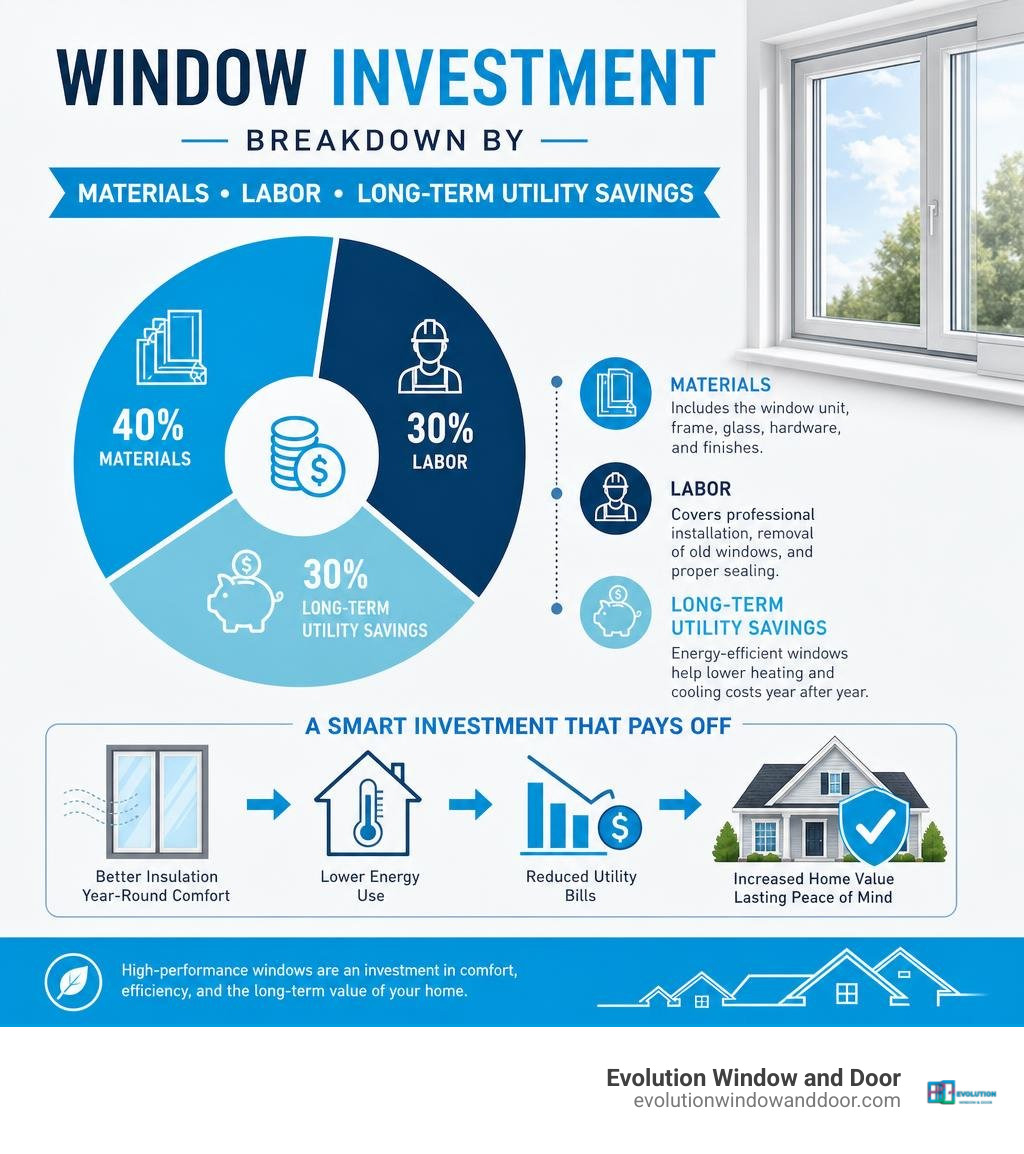
Understanding replacement window budgeting helps you make an informed financial decision. While national installation averages hover around $800 per window, total project costs depend heavily on the home’s architecture, window sizes, and material choices.
Factors Influencing the Cost of Replacement Windows
The final invoice for window replacement reflects several key components:
- Framing Material: Basic vinyl represents the lowest upfront cost, composites occupy the mid-to-upper tier, and premium clad-wood sits at the top of the price range.
- Glass Packages & Impact Ratings: Standard double-pane Low-E glass is more budget-friendly than laminated, impact-rated storm glass engineered to resist heavy wind-borne debris. Storm windows are typically 20 to 40 percent more expensive than non-impact standard replacements due to reinforced laminated interlayers and heavy-duty frame extrusions.
- Installation Complexity & Labor: Labor generally runs between $100 and $300 per window for straightforward pocket installations, but can climb higher if your project requires structural framing repairs, scaffolding for multi-story accessibility, custom exterior trim capping, or historic architectural preservation. To avoid surprises, review what you will actually pay for the cost of double glazed windows to see how custom sizing, permits, and finishing details factor into your estimate.
- Hardware & Custom Finishes: Upgrades such as internal grid patterns between the glass, simulated divided lites (SDL), architectural hardware finishes, and custom exterior paint colors incrementally adjust the per-unit expense.
Long-Term Savings, ROI, and Energy Rebates
Installing new Energy Star-certified windows can save the average homeowner roughly 13 percent on annual home heating and cooling bills. In heating-dominant regions, replacing ten inefficient single-pane windows with new Energy Star models saves an average of $568 per year in utility costs (about a 12 percent reduction), while replacing older double-pane units still yields an average annual savings of $282 (around 6 percent).
Beyond month-to-month utility savings, quality windows deliver an excellent return on investment at resale:
- Homeowners recoup approximately 67% of their project costs on vinyl replacement windows when selling their home.
- Wood window replacements recoup approximately 63% of their total cost in added home equity.
- Major industry surveys also indicate that 3 out of 4 real estate agents agree that premium brand window replacements can increase a home’s perceived market value by at least 10%.
Federal and regional energy incentives further improve project economics. Through the end of 2025, homeowners could claim a 30 percent federal tax credit on qualifying Energy Star Most Efficient windows (up to $600), with many local utility programs offering ongoing cash-back rebates for verified thermal envelope improvements.
Hiring Qualified Installers and Evaluating Warranties
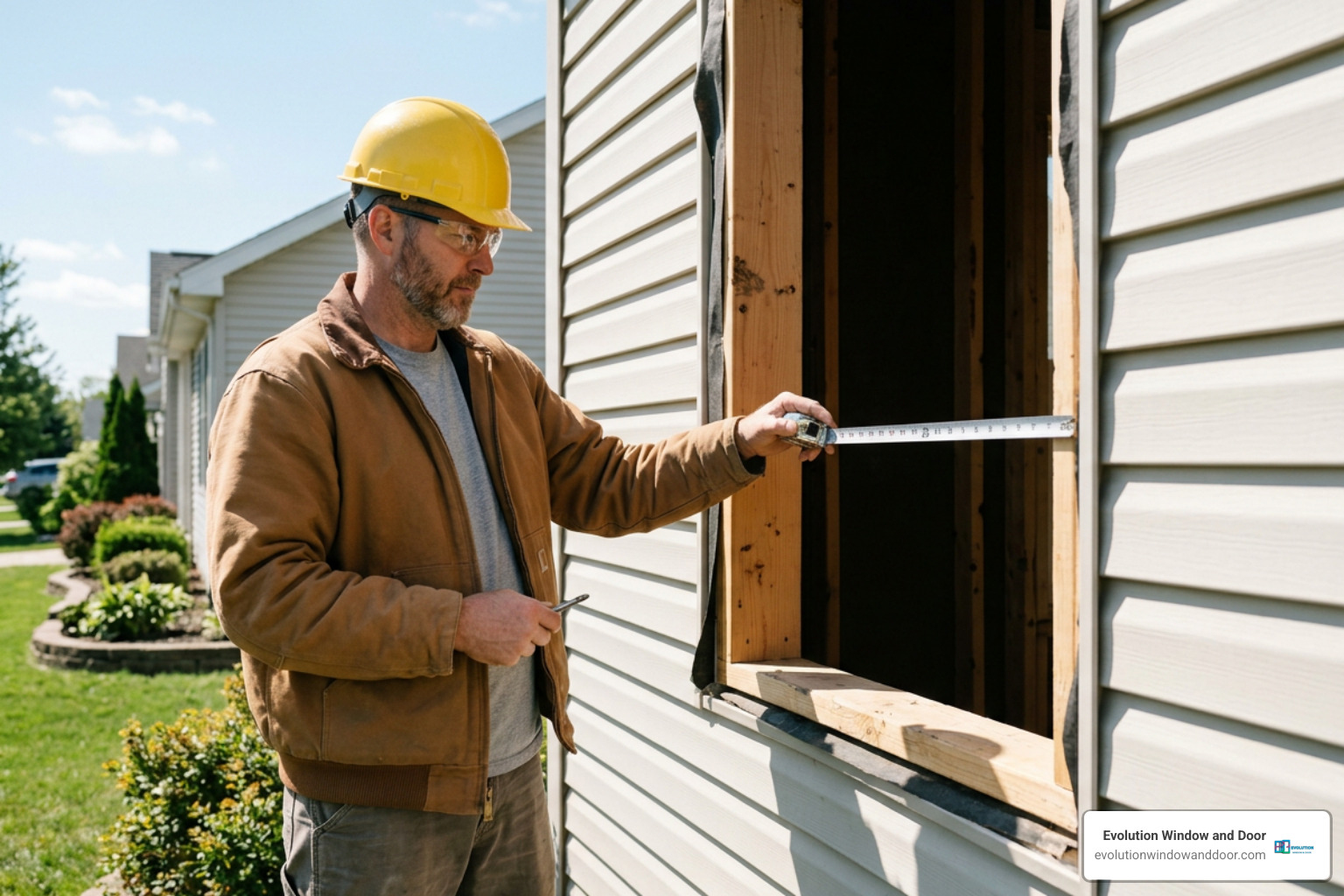
Even the highest-rated window system will leak air, let in water, and underperform if installed improperly. Selecting a dedicated, certified installation contractor is just as critical as choosing the right window model.
Installer Certifications and Contractor Bids
When vetting potential contractors, look for teams certified by recognized trade organizations such as the American Window and Door Institute (AWDI) or Installation Masters. Furthermore, homes built before 1978 require EPA Lead-Safe certified contractors to handle old paint and trim without contaminating your living space.
When requesting competitive bids, ensure each contractor provides an itemized proposal that clearly details:
- The exact manufacturer, product series, frame material, and custom dimensions.
- Specific NFRC glass package ratings (U-factor and SHGC values).
- A clear scope of labor detailing tear-out, rough opening waterproofing, self-adhering flashing membranes, insulation foam, and exterior trim capping.
- Municipal building permit fees, debris haul-away, and job site cleanup.
If you are looking for reliable local expertise, explore our comprehensive services for stylish quality windows to see how precision craftsmanship protects your home’s structural framing.
Understanding Product and Installation Warranties
A typical manufacturer’s replacement window warranty lasts about 10 years, though many high-end brands offer terms extending to 20 years or limited lifetime warranties on primary components. For example, leading industry manufacturers frequently offer 20-year coverage on insulated glass assemblies against seal failure, paired with 10-year coverage on non-glass hardware components and factory frame finishes.
Crucially, distinguish between the manufacturer’s product warranty and the contractor’s workmanship warranty:
- Product Warranty: Covers factory material defects, glass seal failure resulting in condensation between panes, peeling frame finishes, and mechanical hardware failures.
- Workmanship Warranty: Provided directly by your installer to cover labor errors, faulty flashing, and improper sealing. Workmanship warranties typically range from 1 to 5 years, though elite certified installers often back their work for longer. Always confirm whether warranties are fully transferable to the next homeowner if you plan to sell your property in the future.
Frequently Asked Questions About Window Upgrades
Is It Better to Replace All Home Windows at Once?
For most homeowners, completing a whole-home window replacement in a single project phase is far more cost-effective than replacing a few windows each year. Contractors can offer volume discounts on materials and streamline labor logistics, requiring only one permitting fee, a single delivery charge, and one setup for staging and scaffolding. Replacing all units at once also ensures uniform exterior curb appeal, consistent indoor comfort, and balanced natural lighting throughout every room in your home.
How Long Does a Professional Window Replacement Take?
A professional installation crew of two to three certified technicians can typically install 8 to 12 pocket replacement windows per day. Full-frame replacements take slightly longer—averaging 4 to 6 units per day—because they require careful removal of interior trim, inspection and repair of rough openings, custom flashing, and new interior woodwork. Most standard single-family residential projects are completed within 1 to 3 business days, with sealants and caulking requiring roughly 24 hours to cure fully.
Can Replacement Windows Help Lower Home Insurance Rates?
Yes. In coastal and severe storm regions, upgrading to certified impact-resistant replacement windows can qualify homeowners for windstorm mitigation insurance discounts. When all exterior openings—including windows, patio doors, and entryways—are protected with code-compliant impact glass and heavy-duty reinforced frames, insurers face significantly lower risk of catastrophic interior water damage or pressure blowouts during tropical storms, passing those savings along to you in reduced annual premiums.
Conclusion
Upgrading your home with modern replacement windows is one of the most rewarding home improvements you can undertake. From reducing unwanted drafts and outdoor noise to lowering monthly cooling bills and elevating curb appeal, the right window systems deliver measurable value for decades.
At Evolution Window and Door, we specialize in helping homeowners throughout Southwest Florida—including Cape Coral, Fort Myers, Sanibel, Pine Island, Port Charlotte, Punta Gorda, Bonita Springs, Naples, and Sarasota—select the ideal window systems for their homes. Whether you need heavy-duty hurricane-rated impact protection or high-performance energy-efficient upgrades, our pressure-free expert team provides precise installations and guidance navigating regional grants and building codes. Take the next step toward a safer, more comfortable home by investing in high-performance replacement windows tailored specifically to your architectural vision.


