

Essential Features of Energy Efficient Sunroom Windows
When designing a sunroom, understanding performance labels is the first step toward lasting comfort. Every window comes with a label from the National Fenestration Rating Council (NFRC) detailing its thermal behavior. Navigating these values helps ensure your sunroom remains an inviting oasis rather than a greenhouse.
The most critical metrics include:
- Solar Heat Gain Coefficient (SHGC): Ranging from 0 to 1, SHGC measures how much solar radiation passes through the glass. In sunny, warm regions like Southwest Florida, a lower SHGC (typically under 0.25) is vital to keep solar heat out.
- U-Factor: This measures the rate of non-solar heat transfer through the entire window assembly. Lower numbers mean better insulating ability. High-performance units often achieve U-factors from 0.20 down to 0.13.
- Visible Transmittance (VT): Ranging from 0 to 1, VT indicates how much natural daylight passes through. An optimal sunroom window balances low SHGC with a higher VT (usually between 0.50 and 0.70) to ensure brightness without excessive radiant warmth.
- Air Leakage (AL): Measured in cubic feet per minute per square foot (cfm/sq ft), a rating of ≤ 0.30 cfm at 25 mph wind speeds ensures drafts and humidity stay outside.
- Condensation Resistance (CR): Rated from 1 to 100, higher numbers signify greater resistance to moisture buildup along the frame and glass edges.
To make an informed purchase, start by comparing replacement window performance ratings across different glazing configurations.
| Glazing Package | Typical U-Factor | Typical SHGC | Relative Energy Efficiency Gain | Noise Reduction (STC) | Best Application |
|---|---|---|---|---|---|
| Standard Dual-Pane Clear | 0.45 – 0.55 | 0.60 – 0.75 | Baseline | Baseline (26–28 dB) | Basic enclosed porches |
| Dual-Pane High-Performance Low-E | 0.24 – 0.28 | 0.21 – 0.25 | ~71% more efficient | ~34% reduction | Year-round living spaces |
| Triple-Pane Thermal U-Plus | 0.18 – 0.20 | 0.18 – 0.22 | ~79% to 83% more efficient | ~52% reduction (up to 45 dB) | Maximum energy savings & quiet |
| Composite Multi-Chamber Ultra-Glaze | Down to 0.13 | 0.17 – 0.20 | 85%+ more efficient | Up to 45 dB | Net-zero and high-exposure rooms |
How Glass Packages Drive Energy Efficient Sunroom Windows
The glass package accounts for up to 90% of a sunroom’s exterior wall area. Modern high-efficiency sunroom glass incorporates microscopic metallic layers known as Low-E (low-emissivity) coatings. These coatings act as invisible thermal mirrors: they reflect infrared heat and block damaging ultraviolet rays while allowing visible light to illuminate your living space.
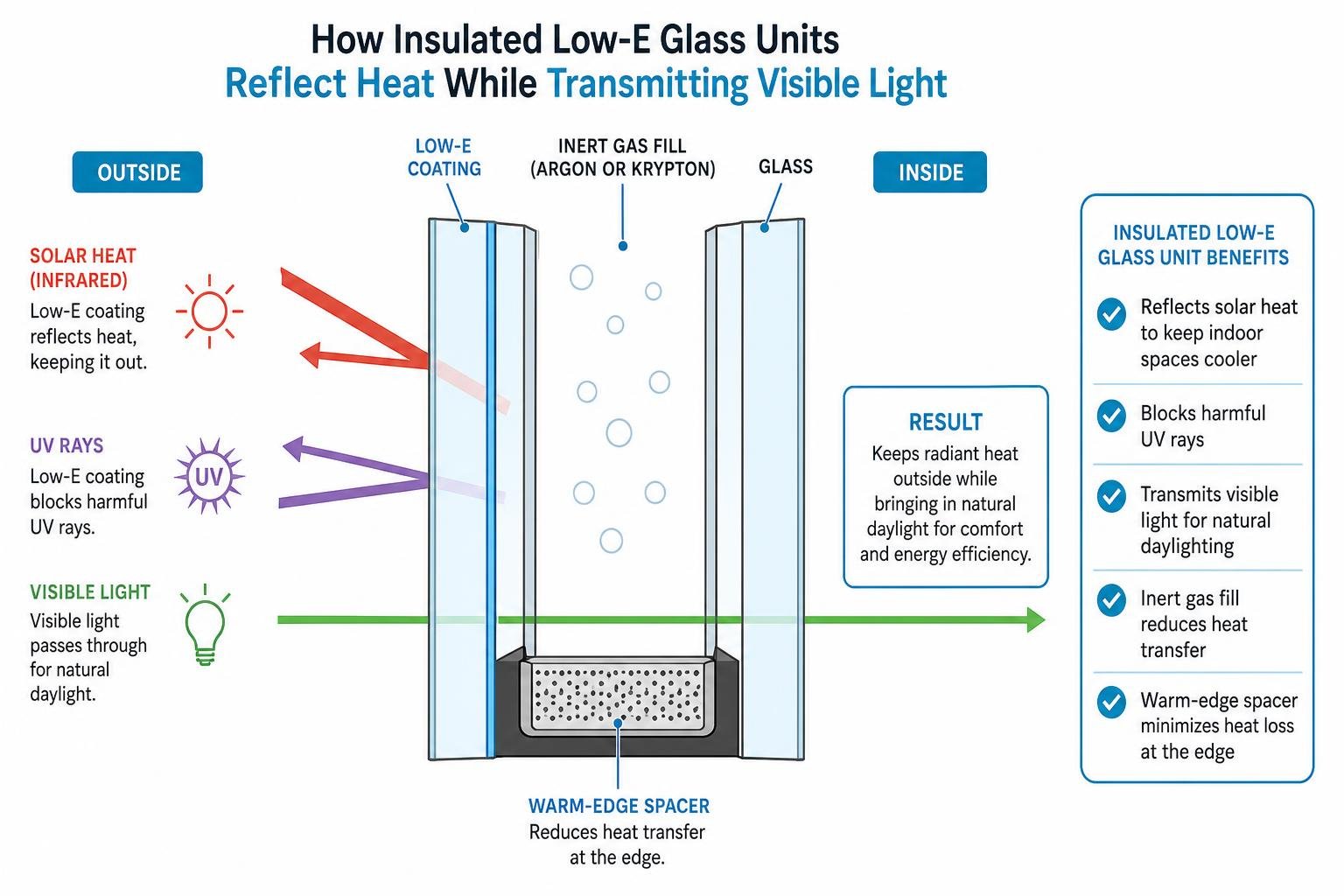
Dual-pane and triple-pane setups replace single sheets of glass with sealed Insulating Glass Units (IGUs). The spaces between the glass are filled with non-toxic, slow-moving inert gases—such as argon or krypton—which conduct significantly less heat than standard air.
Furthermore, advanced warm-edge spacer systems, such as reactive thermoplastic spacers, chemically bond to the glass. This reduces thermal bridging around the sash perimeter and prevents seal failure over decades of thermal expansion and contraction. High-performance glass packages can make windows up to 79% to 83% more energy efficient than baseline single-pane options while reducing outside noise by up to 52%.
Selecting Frame Materials for Energy Efficient Sunroom Windows
Glass cannot perform at its peak if framed by materials that easily conduct heat. Modern frame engineering focuses on structural rigidity, low maintenance, and thermal barriers.
- Multi-Chambered Vinyl: Modern vinyl extrusions use internal air pockets that break up thermal pathways. High-grade vinyl profiles like those found in stylish quality windows provide excellent insulation and up to 27% more glass area compared to bulky traditional frames.
- Composite Core Framing: Advanced composite frames combine polymers with structural fibers, eliminating the need for heavy, heat-conducting steel reinforcements. These assemblies achieve structural ratings up to CW-PG70 and U-factors as low as 0.13.
- Thermally Broken Aluminum: Aluminum offers slim sightlines and exceptional strength. When outfitted with an insulating polyamide thermal break, it isolates exterior heat from interior room surfaces.
- Fiberglass: Boasting near-zero expansion rates and superior thermal resistance, fiberglass provides unmatched durability in harsh sun and coastal humidity.
Best Window Styles for Sunroom Daylighting and Ventilation
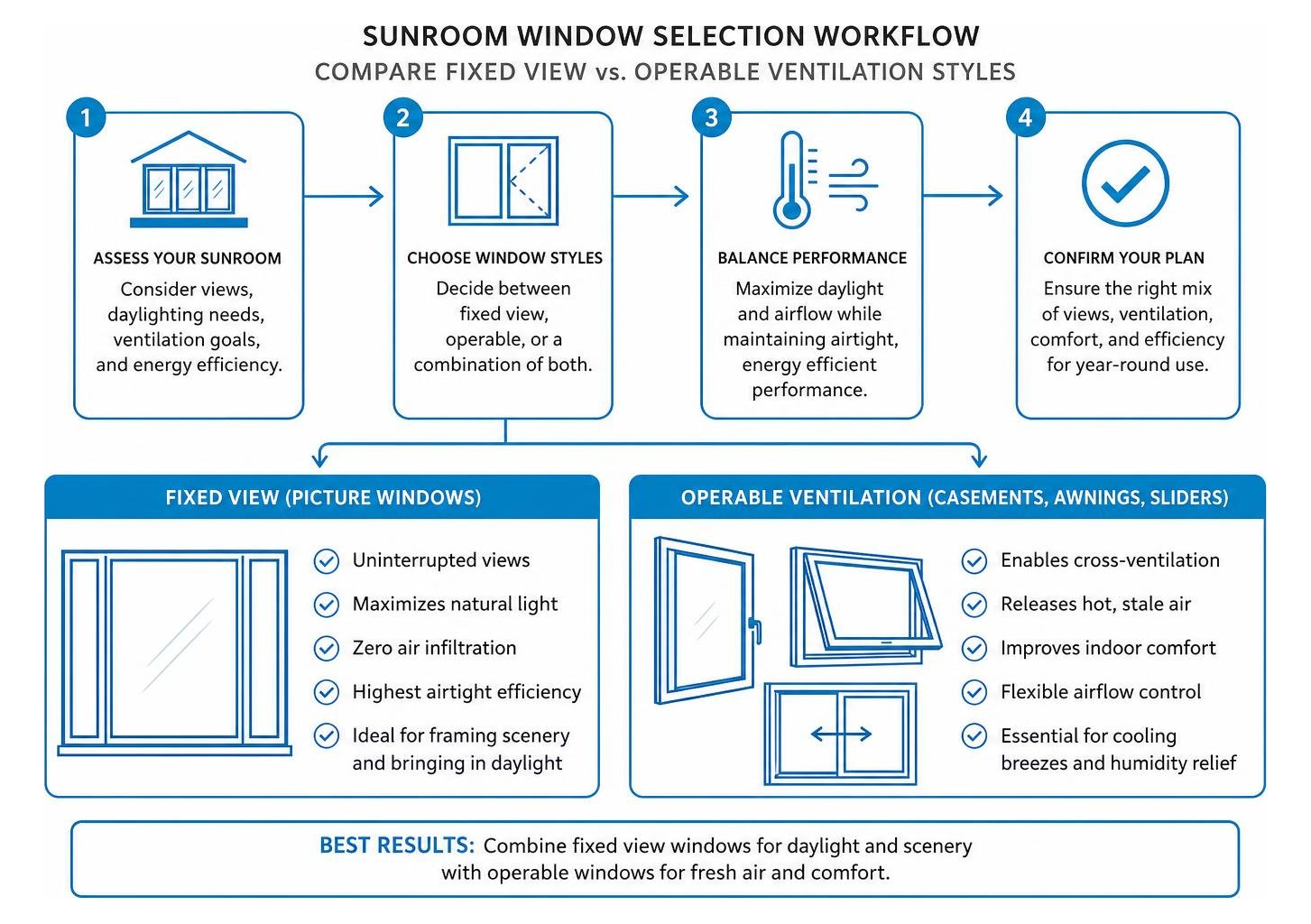
A comfortable sunroom needs both temperature control and the flexibility to catch a cooling breeze. Striking the right balance involves selecting window styles that match your lighting preferences and daily lifestyle. Homeowners can explore choosing the right window styles for sunrooms to complement architectural lines without sacrificing airtight efficiency.
Operable Windows vs. Fixed Picture Windows
Fixed picture windows deliver uninterrupted outdoor views, maximizing natural light with zero air infiltration risk. However, incorporating operable styles is crucial for cross-ventilation.

- Casement Windows: Hinged at the side and swinging outward via a hand crank, casements funnel passing breezes directly into the room. When closed, their compression seals press firmly against the frame, creating one of the tightest barriers against draft and driving rain.
- Awning Windows: Hinged at the top, awning styles open outward from the bottom, allowing for ventilation even during a sudden afternoon shower.
- Sliding Windows: Operating horizontally along a track, sliding windows offer wide openings and clean sightlines without protruding onto exterior patios or walkways.
Bay, Bow, and Architectural Glass Configurations
Projecting outward from exterior walls, bay and bow configurations capture daylight from multiple angles throughout the day. A traditional bay setup combines a central fixed picture window with two angled operable flankers, such as casements or double-hung units.
When outfitting operable sunroom units, consider high-transparency insect screens. Premium screens provide 14% more light transmittance and 8% more open airflow than standard fiberglass screens, keeping views crisp while encouraging smooth ventilation. Explore versatile options within our high-performance architectural windows collection.
Enhancing Sunroom Efficiency: Accessories, Grilles, and Shading
A truly energy-efficient sunroom relies on a complete thermal envelope. Incorporating integrated window treatments and thoughtful decorative elements helps manage solar exposure throughout the day. Homeowners can browse accessories and treatment options to tailor both room aesthetics and thermal performance.
Between-the-Glass Blinds and Low-Maintenance Shades
Traditional blinds and curtains often collect dust, absorb humidity, and bend under heavy use. Between-the-glass blinds solve these issues by sealing cordless shades inside the insulated double- or triple-pane glass unit.
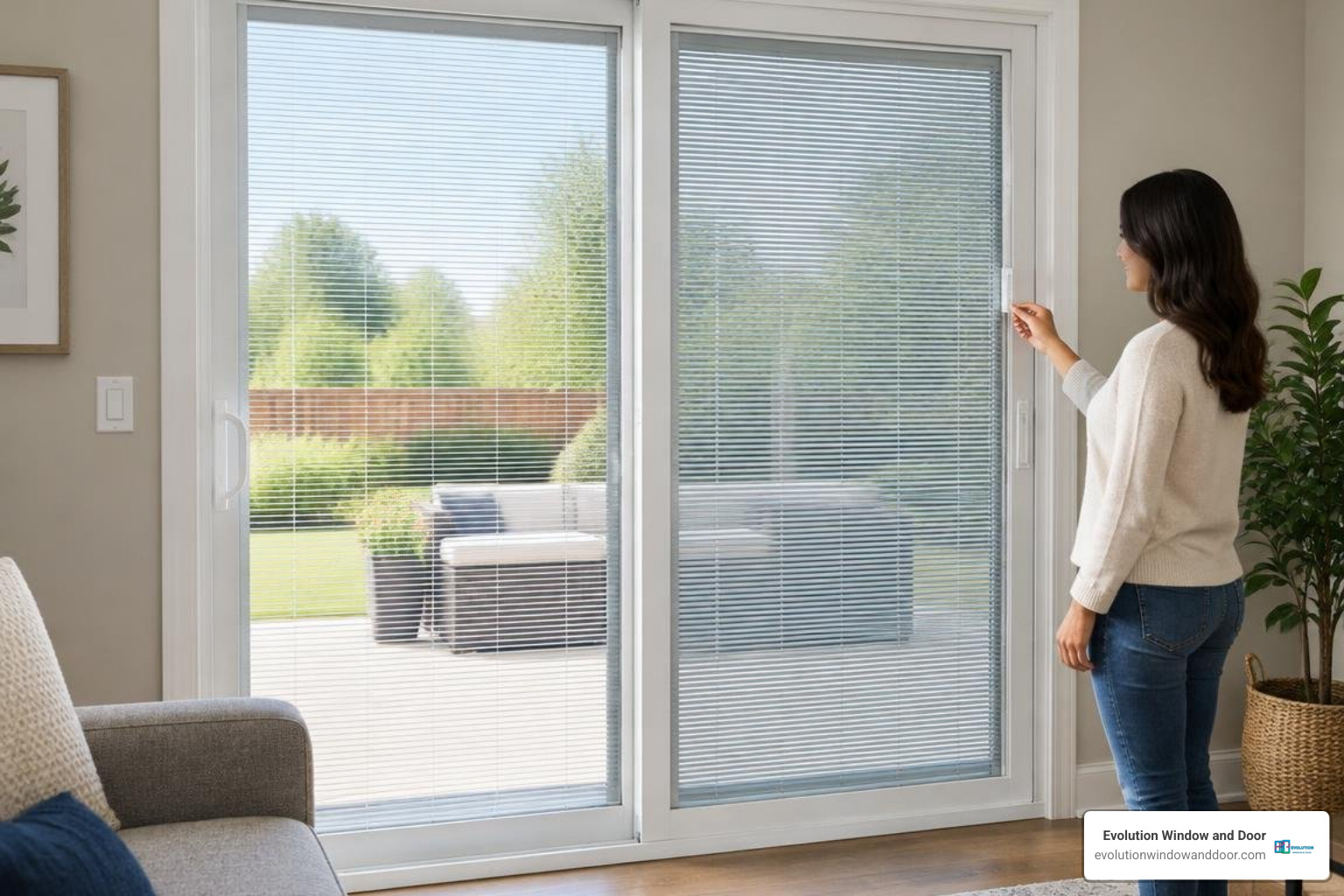
This configuration shields the window coverings from allergens, pet dander, and moisture. Operable via discreet magnetic sliders or automated motorization, integrated shades allow you to deflect direct midday sun instantly. By blocking direct radiant solar gain before it enters the interior, these built-in shades lower cooling loads and shield furniture from harmful UV exposure.
Impact of Grille Profiles and Custom Finishes
Divided lites and decorative grilles lend classic charm to sunrooms, whether your home leans toward Coastal, Modern Farmhouse, or Mediterranean architecture.
- Simulated Divided Lites (SDL): SDL grilles adhere to the exterior and interior glass surfaces with an internal spacer bar between panes, capturing the look of historic multi-pane sashes without breaking the insulated glass seal.
- Grilles-Between-the-Glass (GBG): Placed entirely within the sealed air space, internal grids offer a smooth glass surface that makes cleaning quick and effortless.
- Protective Cladding: High-grade exterior aluminum cladding meeting AAMA standards resists sun chalking, salt spray, and moisture, maintaining structural beauty with minimal upkeep.
Long-Term Benefits, Certifications, and Return on Investment
Upgrading to energy-efficient fenestration delivers measurable value beyond everyday comfort. By easing the strain on your air conditioning equipment, high-performance sunroom windows lower monthly utility bills and prolong HVAC system life.
When evaluating window models, look for these industry standards:
- ENERGY STAR® Most Efficient: Signifies products meeting the highest benchmarks for energy savings in specific climate zones.
- AAMA Gold Label: Confirms rigorous testing for air leakage resistance, water penetration, and structural load capacity under high wind pressures.
- NFRC Certification: Validates that thermal ratings (U-factor, SHGC, VT) are backed by standardized independent laboratory testing.
Homeowners planning a renovation can review window replacement costs and financing options to effectively budget their investment. Additionally, studying sustainable design and energy efficiency standards highlights how energy upgrades enhance total home value.
| Upgrade Level | Primary Features | Estimated Initial Cost Range | Annual Cooling Load Reduction | Expected Lifetime Benefits |
|---|---|---|---|---|
| Standard Replacement | Basic dual-pane vinyl, standard Low-E | Moderate | 15% – 20% | Moderate comfort gain, basic UV protection |
| Advanced High-Performance | Multi-chamber vinyl, warm-edge spacers, low-SHGC Low-E | Moderate to High | 25% – 35% | High thermal comfort, reduced AC wear, strong ROI |
| Architectural Ultra-Glaze | Composite/fiberglass frames, triple-pane or acoustic glass | Premium | Up to 40%+ | Maximum sound dampening, peak energy efficiency |
Frequently Asked Questions About Sunroom Windows
How do Low-E coatings prevent heat spikes in a sunroom?
Low-E (low-emissivity) coatings consist of ultra-thin, microscopic layers of metal oxides applied to the glass surface. These coatings reflect long-wave infrared energy (radiant heat) back toward the outside while allowing short-wave visible light to pass through. By filtering out radiant heat and destructive ultraviolet rays, Low-E glass stops the greenhouse effect before heat can build up inside your sunroom.
What is the ideal U-factor and SHGC for sunroom windows in warm climates?
In warm, cooling-dominated regions like Southwest Florida, the most crucial rating is a low Solar Heat Gain Coefficient (SHGC). Homeowners should seek an SHGC of 0.25 or lower to prevent intense solar heating. For the U-factor, aim for values of 0.30 or lower (with high-performance triple-glazed or composite systems achieving 0.20 to 0.13) to prevent outdoor ambient warmth from conducting inside.
Are triple-pane windows worth the investment for a sunroom?
Yes, particularly if your sunroom receives intense daily sun exposure or faces noisy outdoor environments. Triple-pane units introduce an additional glass pane and an extra gas-filled insulating chamber, boosting energy efficiency by up to 83% over single-pane glass and dampening outside noise by up to 52%. They provide an exceptional thermal barrier that keeps interior glass surfaces cool to the touch all afternoon.
Conclusion
A sunroom should be your favorite place to unwind, offering clear panoramic views and abundant daylight without uncomfortable heat spikes. Achieving that balance requires choosing performance-matched glass packages, airtight window styles, and thermally efficient frames tailored to your regional climate.
At Evolution Window & Door, we manufacture and install premium interior and exterior doors as well as Florida hurricane-rated impact windows designed to handle severe coastal weather while lowering cooling bills. Our team provides locally owned, pressure-free guidance across Southwest Florida—including Cape Coral, Fort Myers, Sanibel, Captiva, Naples, Bonita Springs, Sarasota, Punta Gorda, and Port Charlotte. We also assist homeowners with navigating regional window grants and energy rebates.
Ready to transform your sunroom into an efficient, comfortable year-round retreat? Explore our dedicated installation and replacement services or schedule an expert consultation with Evolution Window & Door today.
