

Choosing a Black Fiberglass Front Door with Glass
A black fiberglass front door with glass can bring daylight into your entry without giving up privacy. Choose frosted or textured glass if your doorway faces the street. Choose clear glass if your priority is an open view, and look for Low-E glass and a well-sealed frame to help manage heat.
For a Florida home, check the specific door and glass unit for the impact approval your location requires. Fiberglass is a low-maintenance choice, but decorative glass alone does not make a door hurricane-rated. The U.S. Department of Energy’s Energy Performance Ratings for Windows, Doors, and Skylights explain how U-factor and SHGC values affect home efficiency.
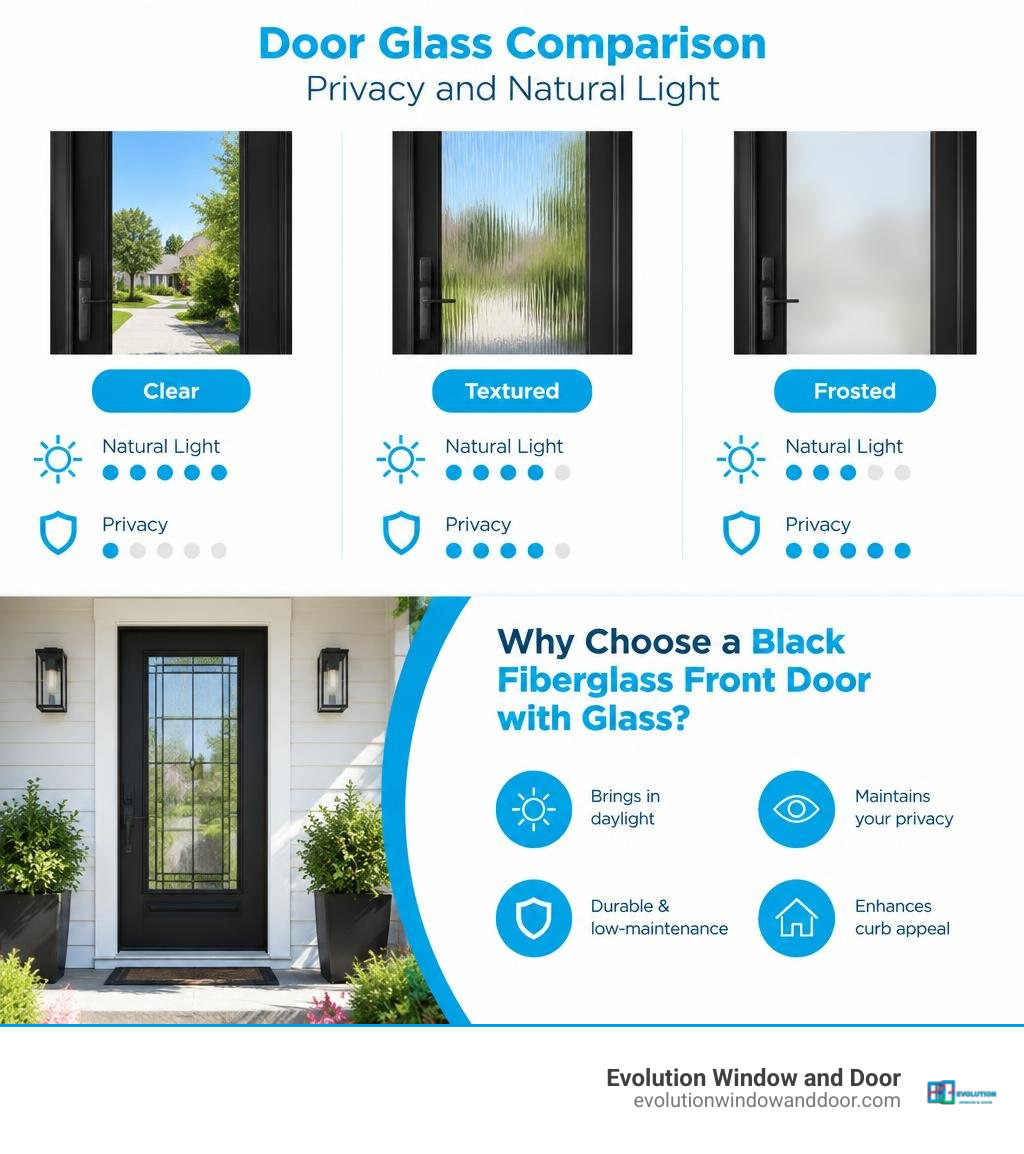
Why Choose a Black Fiberglass Front Door with Glass for Your Home?
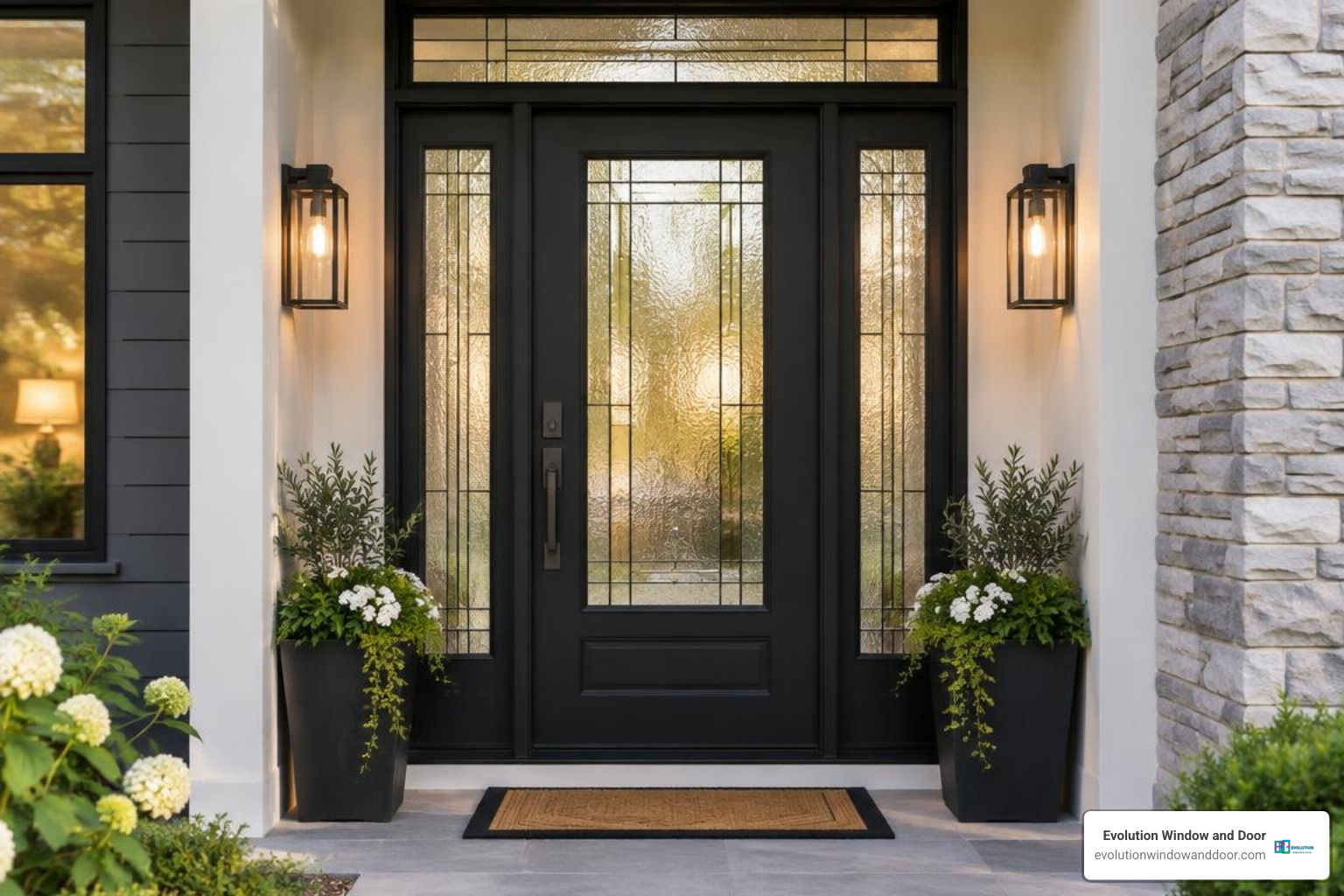
Selecting an exterior entry door means balancing curb appeal, everyday security, and weather defense. A rich black finish provides a bold statement that frames your entryway, anchoring modern architectural lines, transitional aesthetics, and coastal elevations alike. If you are exploring bold exterior door designs, fiberglass provides the ideal canvas because it holds crisp finishes without the upkeep required by painted wood.
Fiberglass entry doors excel over traditional wood and steel in several critical areas:
- Superior Thermal Insulation: Built with an internal core of high-density polyurethane foam, fiberglass slabs prevent outdoor heat from migrating into your foyer, reducing cooling demands during sweltering summers.
- Total Rot and Pest Resistance: Unlike natural timber, fiberglass composite skins do not absorb moisture, rot, split, or harbor wood-boring insects.
- Dent and Scratch Durability: Fiberglass skins resist everyday dings, pet scratches, and heavy impacts far better than hollow-core or steel alternatives.
- Low Maintenance: Modern compression-molded fiberglass with factory-applied coatings will not peel or warp under intense sun exposure. A simple wash with mild soap and water keeps it pristine.
| Feature / Metric | Fiberglass Composite | Natural Wood | Stamped Steel |
|---|---|---|---|
| Insulation Value (R-Value) | High (Polyurethane Foam Core) | Moderate to Low | Moderate (Thermal bridging at edges) |
| Moisture & Rot Resistance | Impervious (100% Rot-Proof) | Vulnerable to rot and swelling | Prone to rust if scratched |
| Dent & Scratch Resistance | High (Flexible, impact-resistant skin) | Moderate (Prone to gouging) | Low (Dents easily, hard to repair) |
| Maintenance Needs | Minimal (Occasional soap and water) | High (Periodic staining or painting) | Low to Moderate (Touch-up paint for scratches) |
| Weight for Installation | Moderate (30–40% lighter than solid wood) | Heavy (Requires heavy-duty framing) | Moderate |
Glass Styles, Privacy Levels, and Energy Performance
Natural daylighting transforms dark hallways into welcoming foyers, but letting the sun in should not compromise your privacy or thermal comfort. Modern fiberglass doors with glass combine decorative glass inserts with high-performance low-emissivity (Low-E) coatings. Low-E coatings reflect far-infrared heat energy back toward its source, keeping solar heat out while allowing visible light to filter indoors.
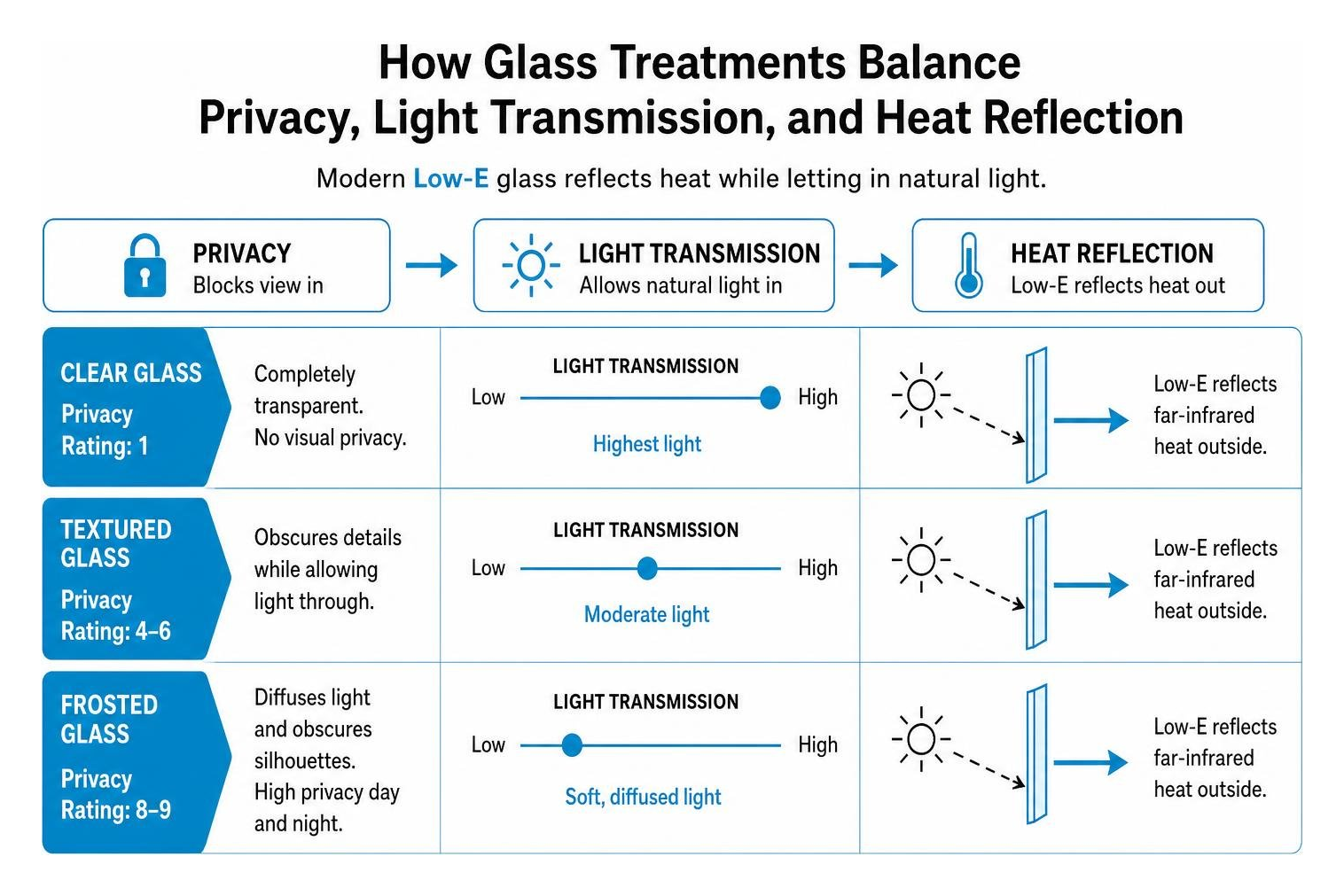
Comparing Glass Types for Your Black Fiberglass Front Door with Glass
Door glass is evaluated on a privacy scale from 1 (completely transparent) to 10 (fully opaque). When choosing the right insert, match your privacy needs with the style of your home:
- Frosted Glass (Privacy Rating: 8–9): Acid-etched or sandblasted glass diffuses incoming light smoothly. It obscures interior silhouettes day and night, making it an excellent choice for homes facing busy walkways.
- Water Wave Glass (Privacy Rating: 6–7): Designed with an undulating texture resembling flowing water, this glass distorts shapes into soft blurs while refracting daylight throughout your entryway.
- Streamed Ripple Glass (Privacy Rating: 6–8): Featuring clean, vertical linear textures, streamed ripple glass lends a mid-century modern or contemporary vibe while obscuring direct lines of sight.
- Vintage Textured / Glue-Chip Glass (Privacy Rating: 7–8): Decorative geometric patterning gives this glass a traditional, handcrafted look. It provides substantial privacy while creating sparkling highlights as sunlight shifts throughout the day.
- Clear Safety Glazing (Privacy Rating: 1–2): Best suited for private courtyards, clear insulated tempered glass offers unobstructed views and maximum daylighting.
Energy Efficiency, Thermal Break, and Impact Standards
A beautiful door must also perform well against the elements. When reviewing door specifications or conducting a comprehensive entry door comparison, pay attention to these key energy and performance ratings:
- U-Factor: Measures the rate of heat transfer through the door assembly. Lower numbers indicate better insulation; high-performing doors feature U-factors ranging from 0.24 to 0.27.
- Solar Heat Gain Coefficient (SHGC): Measures how much solar radiation enters through the glass. In warm, sunny regions, look for an SHGC between 0.14 and 0.18 to keep interiors cool.
- ENERGY STAR® Certification: Confirms that the door assembly meets strict thermal standards across specific regional climate zones.
- Triple-Pane Glass with Thermal Breaks: Incorporating three layers of glass separated by insulated spacers reduces exterior sound transmission and prevents thermal conduction.
- Hurricane Impact Resistance: In coastal areas prone to severe storms, standard tempered glass is not enough. You must confirm that your entry system utilizes laminated impact-rated glass, reinforced lock blocks, and structurally anchored composite frames that meet local building codes.
Top Configurations and Sizing Considerations
A complete entry system relies on every component working together—including the slab, frame, sill, weatherstripping, and hardware.

Popular Design Configurations for a Black Fiberglass Front Door with Glass
Black fiberglass entry doors come in layouts to match various home designs:
- Contemporary 4-Lite: Symmetrical, horizontal glass inserts create a clean look for modern coastal homes.
- Modern 3-Lite: Tall, stacked rectangular glass lites maximize natural daylighting.
- Classic Half-Lite: A traditional layout featuring glass in the top half and raised composite panels below, balancing privacy with daylight.
- Craftsman Style: Features a small decorative glass lite near the top rail, often detailed with dental shelving; check out our guide on craftsman front door styling for architectural pairings.
- Integrated Sidelites and Transoms: Matching fixed glass panels positioned on one or both sides (or above the door) expand your entryway’s visual footprint.
Sizing Specifications, Rough Openings, and Frame Selection
Selecting the correct door size ensures smooth operation and proper weather sealing. While 36 in. x 80 in. is the standard entry dimension, you can explore other widths in our guide to standard and wide exterior door dimensions.
- Prehung Systems vs. Slabs: A prehung door comes factory-mounted inside a frame with hinges, a composite threshold, and weatherstripping pre-attached. This ensures tight weather sealing compared to retrofitting a slab into an existing frame.
- Rough Opening Calculations: The rough opening in your wall framing must be wider and taller than the actual door slab to accommodate the jambs, shims, and adjustments. A standard 36″ x 80″ prehung unit typically requires a rough opening of 38″ to 38-3/4″ wide and 82″ to 82-1/2″ high.
- Composite Jambs & Brickmould: Traditional wood jambs absorb water and rot near the bottom. Modern exterior systems use full composite jambs and PVC-core sills that are impervious to moisture.
- Multi-Point Locking Systems: Black fiberglass slabs equipped with internal structural lock blocks support multi-point hardware, which secures the door at the top, center, and bottom for enhanced structural rigidity and draft prevention.
Pricing, Installation Requirements, and Maintenance
Fiberglass entry doors with glass fall across several price tiers based on glass composition, finish quality, and impact engineering:
| Price Tier | Approximate Cost | Included Features & Specifications | Glass & Frame Type |
|---|---|---|---|
| Budget / Kit | $850 – $1,100 | Ready-to-assemble knock-down frames, basic smooth finish, double-pane Low-E | Single or double-pane frosted glass, standard composite sill |
| Mid-Range Prehung | $1,200 – $1,500 | Factory-finished prehung unit, decorative privacy glass, rot-proof AuraLast or composite frame | Double or triple-pane obscure glass (ripple/water wave), standard deadbolt bore |
| High-Performance / Premium | $1,600 – $2,500+ | Pre-painted composite jambs, high-performance triple-pane or impact-rated glass, reinforced lock blocks | Multi-lite decorative vintage glass, full composite sill, multi-point lock readiness |
Installation Complexity
Installing a glass front door requires precise leveling, plumb alignment, and proper sealing:
- Level the Subfloor: Ensure the subfloor under the sill is clean, level, and waterproofed with flashing tape.
- Dry-Fit and Shim: Insert the prehung frame, shimming behind hinge locations to keep the reveals even and prevent sagging.
- Fasten and Seal: Drive structural screws through the hinge plates into the rough framing studs, and apply high-grade polyurethane sealant beneath the sill and behind the brickmould.
Maintenance Tips
- Clean the fiberglass surface twice a year with a soft sponge, warm water, and mild dish soap. Avoid abrasive scrubbers.
- Clean decorative glass with standard ammonia-free glass cleaner and a microfiber towel.
- Inspect weatherstripping and door sweeps annually, replacing any worn components to keep drafts and moisture out.
Frequently Asked Questions About Glass Entry Doors
How do I maintain privacy with a glass front door?
Choose obscure glass styles such as frosted, streamed ripple, or water wave, which achieve privacy ratings of 7 to 9. These styles allow natural daylight to pass through while blurring objects into unrecognizable shadows. Avoid placing bright interior lights directly behind the door line at night, as backlighting can create visible silhouettes against certain textured glass patterns.
Are black fiberglass doors prone to fading or warping in extreme heat?
Quality fiberglass entry doors use heat-reflective pigments and UV-resistant topcoats designed to withstand direct sun exposure. Unlike wood, which warps from uneven moisture loss, or steel, which conducts heat and can bow, high-density fiberglass skins resist thermal expansion and maintain their structural integrity across extreme temperature swings.
What rough opening size is needed for a standard 36×80 exterior door?
A standard 36 in. x 80 in. prehung exterior unit generally requires a rough opening of 38-1/4 inches to 38-3/4 inches in width and 82 inches to 82-1/2 inches in height. This extra space allows room for the door jamb thickness, leveling shims, structural anchor adjustments, and low-expansion insulating foam around the perimeter.
Conclusion
A black fiberglass front door with glass offers a refined entryway that balances daylighting, dependable privacy, and long-lasting durability. By pairing textured or frosted glass with an insulated fiberglass core and rot-proof composite frames, you can enjoy elevated curb appeal without the maintenance headaches of traditional wood.
At Evolution Window & Door, we take the guesswork out of entryway upgrades. Serving homeowners throughout Southwest Florida—including Naples, Fort Myers, Cape Coral, Sanibel, Pine Island, Bonita Springs, Punta Gorda, Port Charlotte, and Sarasota—our team delivers expert, pressure-free guidance and precision installations tailored to local climate demands. Ready to elevate your home? Contact us today to explore high-performance exterior doors and request your custom quote.
