

Fix Double Glazing Window Seal Problems Before Leaks Spread
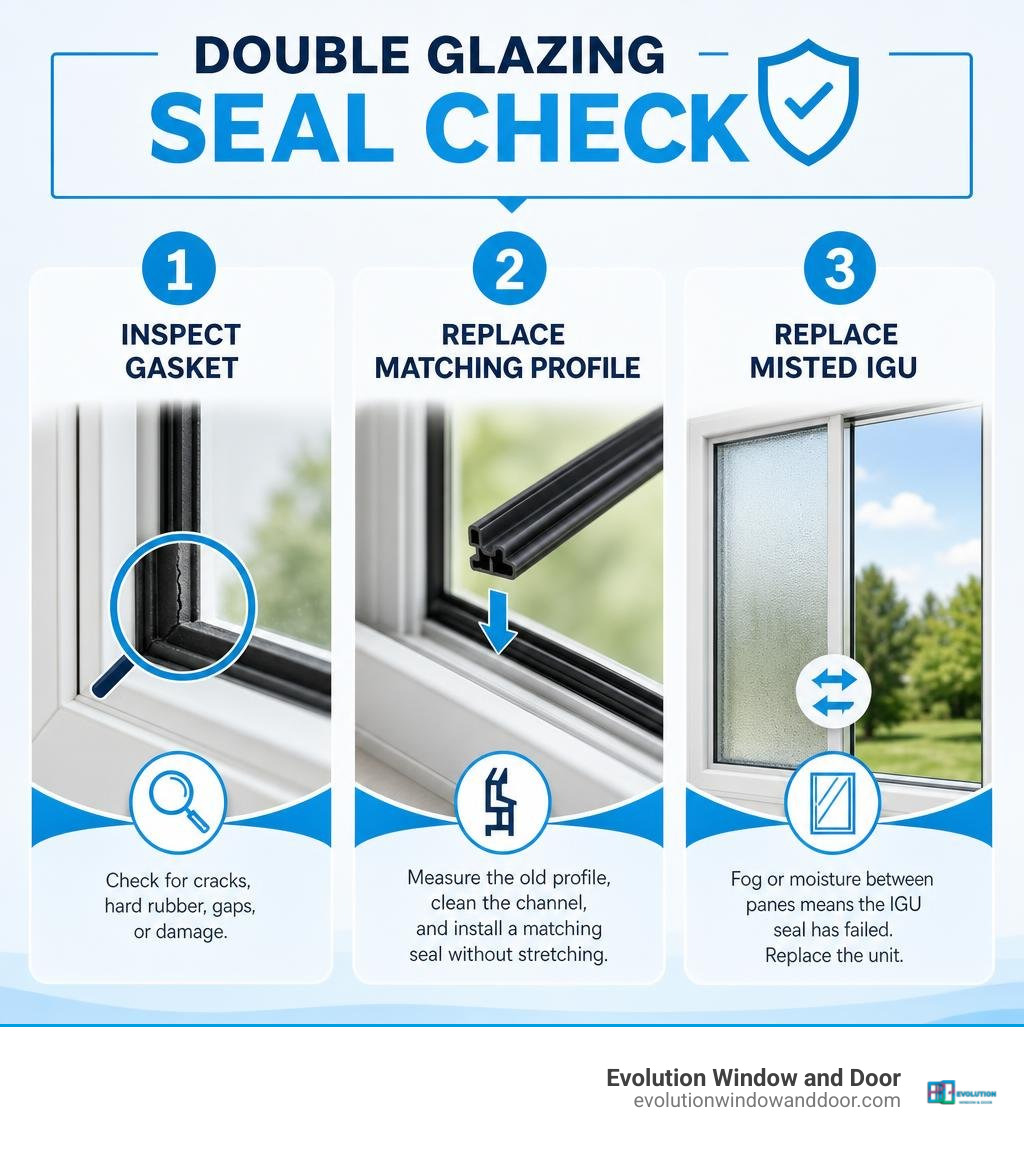
A damaged double glazing window seal can often be fixed by replacing the outer gasket or weatherseal. Look for cracks, hard rubber, gaps, draughts, water around the frame, or a loose seal. Measure the old profile carefully, clean the channel, and fit a matching replacement without stretching it.
If you see fog or moisture between the two glass panes, the insulated glass unit’s internal edge seal has failed. Replacing an exterior gasket will not remove that misting. The glass unit usually needs professional replacement to restore its insulating gas layer and clear view.
For Florida homes, prompt seal care matters. Intense UV, heat, wind-driven rain, and humidity can wear down exposed gaskets faster. A sound seal helps keep conditioned air inside, blocks rain, limits condensation, and supports the performance of hurricane-rated windows and doors.
Terms related to double glazing window seal:
Understanding Your Double Glazing Window Seal and Why It Matters
A double-glazed window is an engineered barrier designed to protect your living space from outdoor elements. At the core of this system sits the seal assembly, which forms an airtight and watertight shield around the glass and frame. When these seals function properly, they prevent conditioned indoor air from escaping and stop moisture, humidity, and wind-driven drafts from penetrating your home.
In high-performance fenestration, windows rely on an unbroken thermal barrier. Between the glass panes, factory-sealed chambers contain inert gases such as argon, which provide significantly better thermal resistance than standard air. The primary boundary holds this gas in place while locking moisture out. If air infiltration occurs around the perimeter, your HVAC system is forced to run continuously to offset the constant temperature exchange. This added strain drives up power bills and accelerates mechanical wear on your cooling equipment.
Maintaining proper perimeter seals and weatherstripping directly impacts household efficiency. Understanding how doors and windows work together for energy efficiency helps ensure your home maintains a stable indoor climate regardless of outdoor temperatures.
Anatomy of a Double Glazing Window Seal: Gaskets vs. IGU Edge Seals

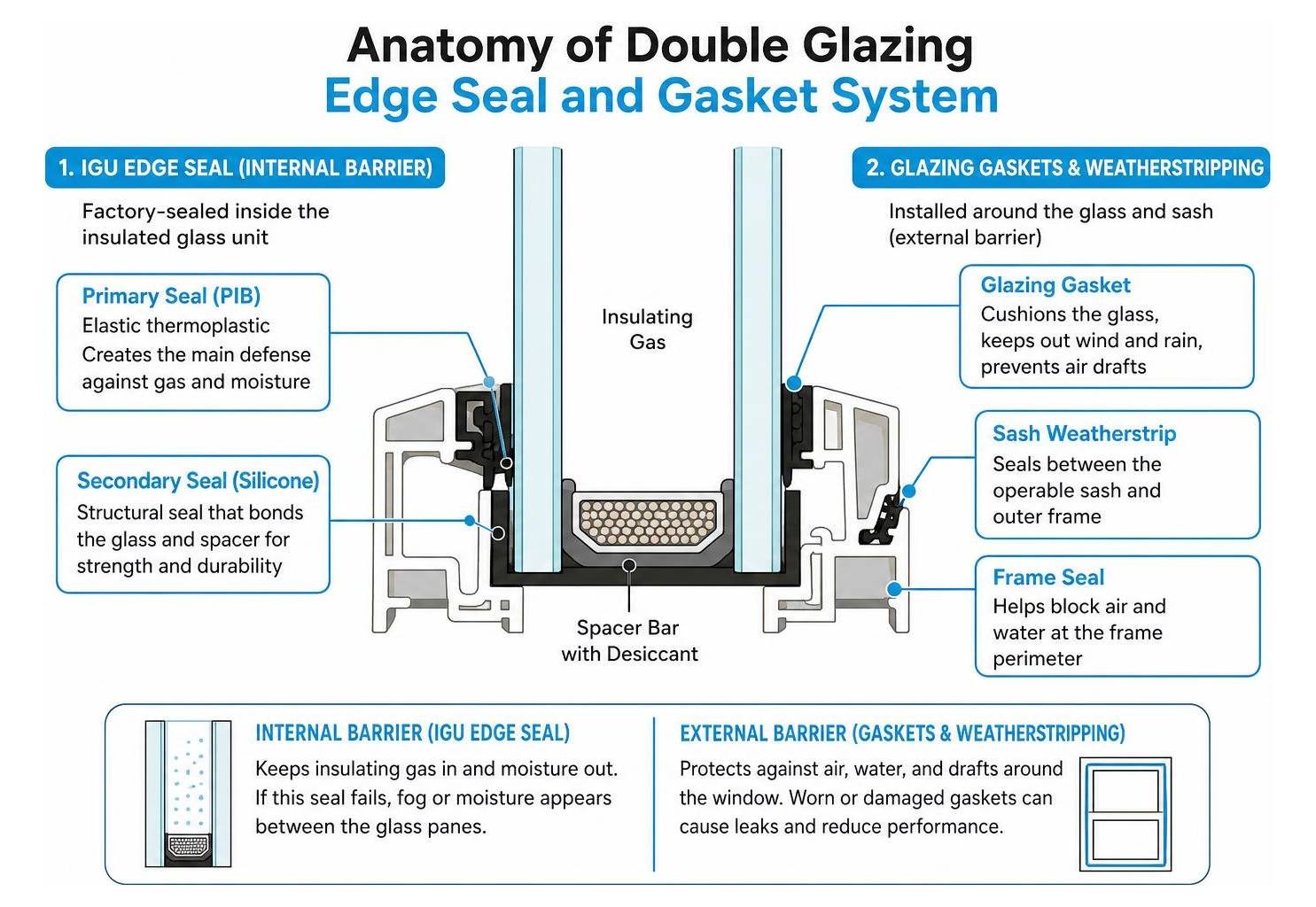
To diagnose and resolve window issues correctly, you must understand the two distinct sealing systems in every double-glazed assembly: the Insulated Glass Unit (IGU) edge seal and the perimeter glazing gaskets.
- The IGU Edge Seal (Internal Barrier): The insulated glass unit itself consists of two glass lites separated by a spacer bar filled with moisture-absorbing desiccant. To create a hermetic seal, manufacturers use a dual-seal approach. The primary seal is typically extruded polyisobutylene (PIB), an elastic thermoplastic applied at 120°C to 150°C to both sides of the spacer bar. PIB has an exceptionally low water vapor transmission rate (around 0.1 g/m²·d) and an argon permeation rate near 2·10⁻³ g/(m²·h), making it the main defense against gas loss. Behind the PIB, a structural secondary seal—usually a high-strength, neutral-cure silicone such as DOWSIL™ 3363 or a polysulfide/polyurethane compound—is applied to mechanically bond the glass lites and spacer into a rigid unit. For more on how these panes are constructed, explore our guide on everything you need to know about double glazed window glass.
- Glazing Gaskets and Weatherstripping (External Barrier): These are the visible flexible rubber, vinyl, or thermoplastic elastomer (TPE) strips installed between the glass and the window sash, as well as between the sash and the outer frame. Gaskets cushion the glass against mechanical shock, seal out wind-driven rain, and stop air drafts around the operable sashes.
Extensive industry literature, including technical research on dual-sealed insulating glass units, demonstrates that the primary PIB seal provides the vapor and gas barrier, while the secondary silicone seal delivers mechanical resilience against wind loads and frame movement.
Common Types of Glazing Gaskets, Splines, and Sealants
Different window frames—such as uPVC, aluminum, and composite—use specific gasket profiles to maintain pressure against the glass. The most common profiles include:
- Wedge Gaskets: Tapered rubber strips pressed into the gap between the glass and the frame bead after the glass is positioned. They exert continuous lateral pressure to lock the pane firmly in place.
- Bubble (O-Ring) Seals: Hollow, circular-profile seals that compress flat when the window sash closes against the frame, forming a tight barrier against air and water infiltration.
- E-Gaskets: Shaped like the letter “E”, these multi-fin gaskets slide into pre-extruded frame channels, using flexible fins to seal uneven gaps along the glass surface.
- Flipper Gaskets: Feature an extended flexible blade or lip that deflects when closed, providing smooth operation with low closing resistance on casement and awning sashes.
- Push-In Glazing Splines: Rigid-backed flexible splines commonly used in commercial and storefront window profiles, providing a snap-in dry-glazing seal.
- Compression Weather Seals: Foam-filled or TPE weatherstripping installed along the perimeter of sliding or hung sashes to stop drafts.
When wet sealing or secondary bonding is required, specialized products like SikaLastomer® IG-105 or high-modulus double glazing sealant provide the necessary UV resistance and adhesion.
| Gasket Profile | Primary Placement | Common Material | Key Function |
|---|---|---|---|
| Wedge Gasket | Glazing bead to glass face | EPDM / TPE | Locks glass in frame via lateral compression |
| Bubble Seal | Sash-to-frame perimeter | EPDM / Cellular Rubber | Compresses on closure to block wind and rain |
| E-Gasket | Internal sash groove | Flexible Vinyl / EPDM | Multi-fin barrier for varying channel widths |
| Flipper Gasket | Operable sash edges | TPE / Silicone | Low-friction dynamic seal for easy latching |
| Push-In Spline | Commercial / Storefront frames | Rigid/Flexible PVC | Dry-glazing retention in aluminum channels |
Signs Your Window Seals Have Failed and Why They Degrade

Window seals degrade gradually. Catching failure early prevents structural moisture damage, interior mold growth, and high energy bills. If you notice deteriorating components, reviewing the signs it’s time to replace your doors or windows will help you determine whether a simple gasket repair or a full unit replacement is necessary.
Recognizing Fogging, Draughts, and Frame Damage
The most common indicators of seal failure include:
- Internal Condensation and Blown Units: If mist, fog, or water droplets form between the two glass panes that cannot be wiped away from either side, the internal IGU seal has blown. The desiccant within the spacer bar has reached maximum moisture saturation, allowing humid air to condense on the interior glass faces during temperature shifts.
- Perimeter Drafts and Cold Spots: Feeling air movement around the edges of a closed window indicates that the perimeter gaskets have shrunk, flattened, or cracked, breaking contact with the sash.
- Acoustic Bridging: A sudden increase in outdoor noise transmission often points to degraded bubble or flipper gaskets, as acoustic insulation relies on an airtight seal.
- Distorted Glass Panes: In dual-sealed units that lose inert gas rapidly without air equalization, negative pressure can cause the glass panes to bow inward, creating visual distortion across the pane.
- Frame Rot and Mold: Water pooling in bottom rebates due to failed exterior gaskets can rot timber substrates or cause mold behind uPVC and aluminum cladding.
Evaluating whether to restore individual seals or replace the entire window assembly often comes down to cost. Reviewing how much resealing double glazed windows costs in 2026 can help guide your budget.
Weather Extremes, UV Exposure, and Thermal Movement
Window seals endure continuous environmental stress. In coastal and subtropical climates, high ambient temperatures, relentless UV radiation, and severe storms accelerate the aging of glazing materials.
Polymer degradation follows the Arrhenius principle: chemical reaction and degradation rates rise as temperatures climb. Research on water vapor permeability indicates that moisture diffusion through edge seals at 60°C is 6 to 8 times higher than at 20°C. Dark-colored frames exposed to direct solar radiation can easily reach surface temperatures of 70°C to 80°C. Under these conditions, standard rubber loses plasticizers, turns brittle, shrinks, and cracks.
Furthermore, aluminum frames and glass panes expand and contract at different rates under thermal cycling. Studies highlight that aluminum spacers can experience thermal expansion mismatches resulting in significant seal strain under elevated temperatures. Over time, this cyclic movement causes primary PIB seal deformation, allowing moisture to reach the desiccant matrix and leading to premature unit failure.
How to Measure, Choose, and Replace Window Seals
Properly repairing perimeter window seals starts with precise measurements. Installing an incorrect gasket profile will either leave air gaps if it is too small, or place excessive stress on the glass and frame if it is too large. When updating older units, consulting professionals who provide stylish quality window services ensures code-compliant, weather-tight installations.
Sizing Profiles, Channel Depths, and Material Selection
Glazing gaskets are sized according to glass thickness, channel depth, and the width of the frame retention groove. Using digital calipers, measure the following dimensions:
- Glass Pane Thickness: Standard single glass lites often range from 2mm to 6mm, while double-glazed insulated units generally span 1/2″ (12.7mm), 19mm (3/4″), or 25mm (1″) in overall thickness.
- Channel Depth and Width: Measure the frame rebate depth. Gaskets for 5mm to 6mm glass typically require channel depths such as 3/8″, 9/32″, 11/32″, or 9/16″. For 5mm glass specifically, channel depths of 7/32″ and 11/32″ are standard. Thin glass profiles (2–3mm) require narrow gaskets sized at 5/32″, 11/64″, or 1/16″ (2mm), while 3–4mm glass uses 15/64″ widths. Window glazing vinyl gaskets frequently utilize a 19/32″ width for 4mm–5mm glass applications. Commercial push-in splines often feature a 3/8″ profile compatible with standard architectural systems.
When selecting materials, prioritize EPDM (Ethylene Propylene Diene Monomer) rubber or TPE. EPDM offers superior resistance to UV radiation, ozone, and temperature swings (-40°C to +120°C), outlasting standard vinyl (PVC) gaskets by several years in demanding climates.
How to Replace a Double Glazing Window Seal Step-by-Step
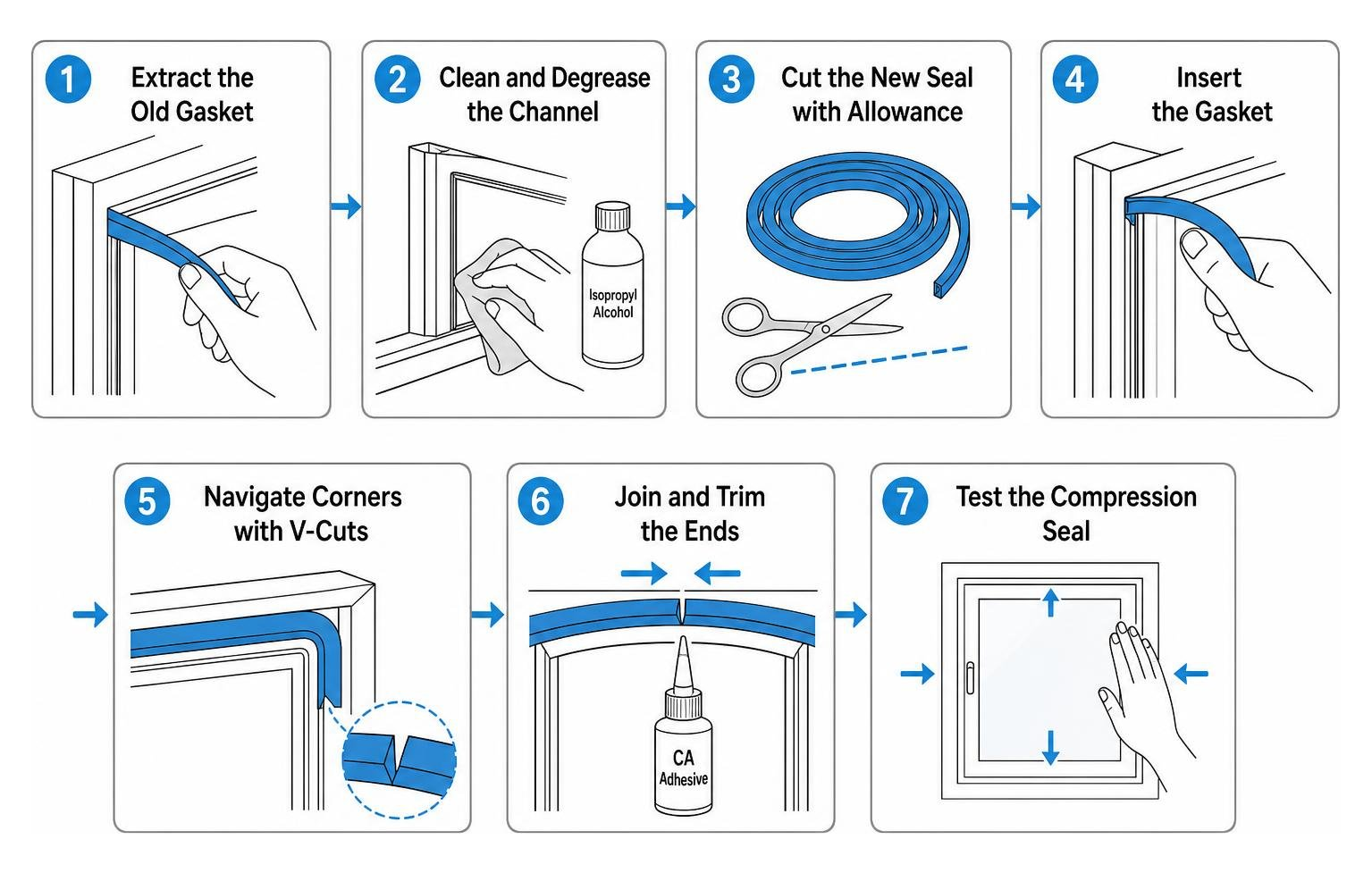
Replacing an exterior or interior push-in gasket is a straightforward project that restores draft-free comfort.
- Extract the Old Gasket: Locate the joint seam of the degraded gasket. Use a plastic pry tool or your fingers to gently pull the old rubber strip free from the frame channel. Avoid metal screwdrivers that could scratch the glass or frame coating.
- Clean and Degrease the Channel: Dirt, moss, and degraded rubber residue will prevent the new gasket from seating evenly. Vacuum out loose debris and clean the entire perimeter channel with isopropyl alcohol and a clean lint-free cloth. Ensure the rebate is completely dry.
- Cut the New Seal with Allowance: Measure the perimeter of the window frame and cut your new EPDM or TPE gasket with an extra 1 to 2 inches of length. Rubber naturally contracts slightly over time; never stretch a gasket during installation.
- Insert the Gasket: Start at a top corner. Press the gasket barb firmly into the frame channel using your thumb or a nylon roller tool. Work your way evenly around the perimeter.
- Navigate Corners with V-Cuts: To run a single continuous gasket around sharp 90-degree corners without bunching, make a small 90-degree V-notch in the rear insertion leg of the gasket at the bend point, taking care not to cut through the front facing seal.
- Join and Trim the Ends: Bring the two ends together at the top center of the frame. Cut the ends slightly oversized so they push tightly against each other in compression, then apply a tiny drop of cyanoacrylate adhesive at the seam to permanently bond the joint.
- Test the Compression Seal: Close and latch the window sash. Run a hand around the perimeter to verify that drafts are eliminated, and check that the window latches smoothly without excessive force.
Frequently Asked Questions About Double Glazed Window Seals
Can I reseal a blown insulated glass unit myself or do I need full replacement?
If condensation, fogging, or white calcium deposits have formed inside the two panes of glass, the internal edge seal has failed and the desiccant is saturated. You cannot fix this simply by applying external silicone or replacing outer gaskets. While some defogging services drill small holes to drain moisture and coat the interior with anti-fog chemicals, this is a temporary cosmetic fix that does not restore the insulating gas barrier or original thermal performance. The standard, lasting solution is to have a glazing professional replace the sealed IGU while retaining your existing frame.
What is the difference between rubber, EPDM, and vinyl glazing gaskets?
Standard natural rubber degrades and hardens quickly when exposed to sunlight and outdoor heat. EPDM rubber is a synthetic elastomer engineered specifically for weather resistance, providing excellent recovery after compression, high UV tolerance, and a typical lifespan of 15 to 20 years. Vinyl (PVC) gaskets are cost-effective and easy to install, but they tend to lose plasticizers over time, causing them to stiffen and shrink in hot conditions. For coastal environments and high sun exposure, EPDM or high-grade TPE is the preferred choice for long-term durability.
What is a push-in glazing spline and when is it required?
A push-in glazing spline is an extruded vinyl or rubber strip with a barbed backing designed to lock into an aluminum or uPVC frame channel. It is used in dry-glazing systems, common in commercial storefronts and modern residential windows. The spline applies continuous pressure against the glass to secure it firmly without messy wet sealants, simplifying future glass pane replacements.
Maintain Seal Integrity for Year-Round Efficiency
Maintaining your window seals protects your home’s thermal envelope, prevents moisture damage, and keeps indoor spaces quiet and comfortable. Inspect your exterior gaskets annually for signs of shrinkage, cracking, or hardening, and keep frame drainage weep holes clear of dirt and debris.
When frames age or persistent seal failures lead to drafty rooms and foggy panes, upgrading to modern, high-performance fenestration is the most effective long-term investment. At Evolution Window and Door, we provide pressure-free expert guidance and precision installation of premium, energy-efficient solutions designed to withstand severe weather. Explore our full range of Florida-engineered replacement windows to protect your home with lasting comfort and efficiency.


