

What Does Resealing Double Glazed Windows Cost in 2026?
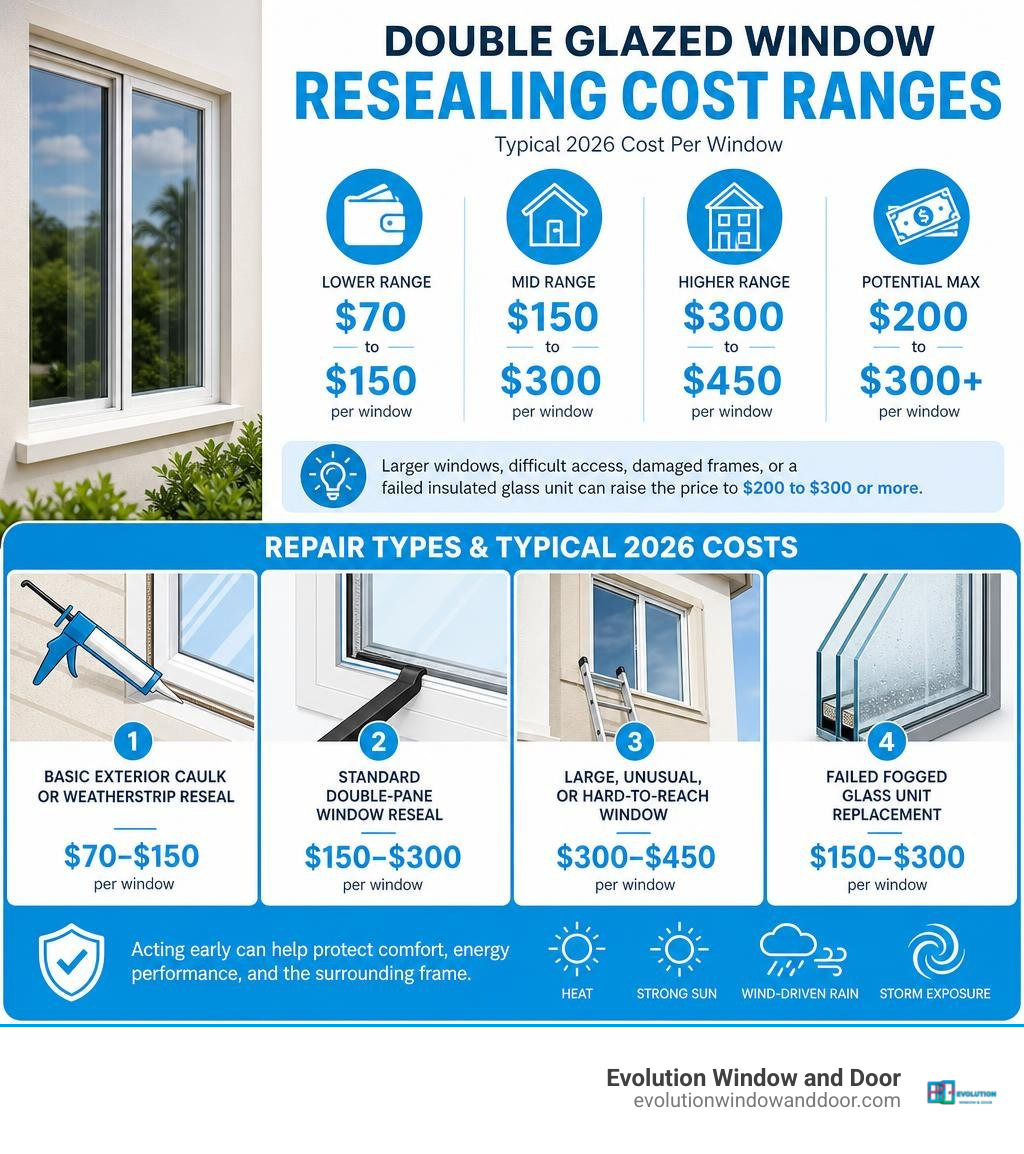
The cost of resealing double glazed windows is usually about $70 to $150 per window for a straightforward professional reseal. Larger windows, difficult access, damaged frames, or a failed insulated glass unit can raise the price to $200 to $300 or more per window.
| Repair scope | Typical 2026 cost |
|---|---|
| Basic exterior caulk or weatherstrip reseal | $70-$150 per window |
| Standard double-pane window reseal | $150-$300 per window |
| Large, unusual, or hard-to-reach window | $300-$450 per window |
| Failed fogged glass unit replacement | $150-$300 per window |
For Florida homeowners, the key question is which seal has failed. A cracked exterior seal around the frame may be a modest repair. But fog or moisture trapped between the panes usually means the sealed glass unit has failed, not simply that the outside caulk needs replacing.
Heat, strong sun, wind-driven rain, and storm exposure can all wear down window seals over time. Acting early can help protect comfort, energy performance, and the surrounding frame.
Average Cost of Resealing Double Glazed Windows
When we look at window maintenance across Florida and nationwide in 2026, understanding the financial investment starts with breaking down what a professional service call actually entails. The total price you pay usually combines trade labor, high-grade waterproofing materials, and potential setup fees for hard-to-reach areas.
For a standard double-pane window, most homeowners see total bills averaging around $140 to $250 per window when hiring a qualified glazier or window specialist. However, tradespeople frequently charge a minimum call-out fee—typically ranging from $100 to $180—to cover travel, setup, and initial diagnostic assessment. Because of this baseline fee, having a single window resealed might feel proportionally expensive on a per-window basis, whereas tackling three or four windows during the same service visit brings the per-unit cost down significantly.
| Window Size & Project Scope | Average Labor Cost | Average Material Cost | Typical Total Cost (Per Window) |
|---|---|---|---|
| Small Window (e.g., 2×3 ft, ground level) | $80 – $140 | $15 – $30 | $95 – $170 |
| Standard Double Pane (e.g., 3×5 ft) | $120 – $220 | $30 – $50 | $150 – $270 |
| Large or Custom Unit (e.g., 4×6 ft, picture frame) | $180 – $320 | $50 – $80 | $230 – $400 |
| Second-Story / Difficult Access Windows | $220 – $360 | $40 – $70 | $260 – $430 |
If you are evaluating project costs for multiple openings, reviewing detailed breakdowns such as the Cost to Reseal Double Pane Windows 2026 – Current Cost guide can help you budget accurately for labor and material variances in your region.
Understanding the Overall Cost of Resealing Double Glazed Windows
To see where your money goes, it helps to split the invoice into raw materials versus skilled labor:
- Material Costs ($15 – $70 per window): High-grade neutral-cure silicone sealant, commercial polyurethane caulk, replacement rubber gaskets, and foam backer rods make up the direct physical expenses. Premium silicone sealants offer superior resistance to intense UV radiation and extreme thermal expansion, making them well worth the small material price difference over basic latex caulks.
- Labor Costs ($100 – $260 per window): Skilled glaziers take time to thoroughly scrape away brittle, decayed sealant, degrease and prep the frame channel, fit new expansion-rated rubber gaskets, and apply a uniform silicone bead using specialized pneumatic or hand caulking guns.
- Diagnostic Equipment & Hardware ($10 – $40 per window): On complex jobs, technicians may use thermal imaging cameras, moisture meters, or vacuum gauges to inspect sash integrity and confirm whether moisture is infiltrating the wall cavity or remaining isolated to the perimeter.
In the United States, national averages hover between $70 and $150 for basic external perimeter weather-resealing, while complete double-pane frame-to-glass resealing averages closer to $200 to $300 per opening.
Key Factors That Influence Window Resealing Prices
Why does one homeowner pay $120 for a window while a neighbor pays $350? Several practical factors shift the dial on your contractor’s estimate:
- Window Size and Frame Complexity: Larger openings require significantly more linear feet of silicone and replacement gasket material. Furthermore, complex window configurations—such as multi-panel bay, bow, or custom arch windows—require intricate hand-tooling around corner joints.
- Accessibility and Height: Ground-floor windows are quick to service. Second- or third-story windows that demand extension ladders, temporary safety harness systems, or movable scaffolding carry an equipment surcharge of $75 to $150 to ensure safe working conditions.
- Regional Labor Rates: High-cost urban markets and coastal regions often experience trade labor rates that are 15% to 40% higher than national averages, reflecting local overhead and high demand for exterior waterproofing trades.
- Window Bundling Discounts: Because contractor travel time and setup account for a large portion of the first-window expense, bundling 4 to 8 windows into a single project can lower your overall per-window labor price by 10% to 20%.
Signs Your Double Glazed Window Seal Has Failed
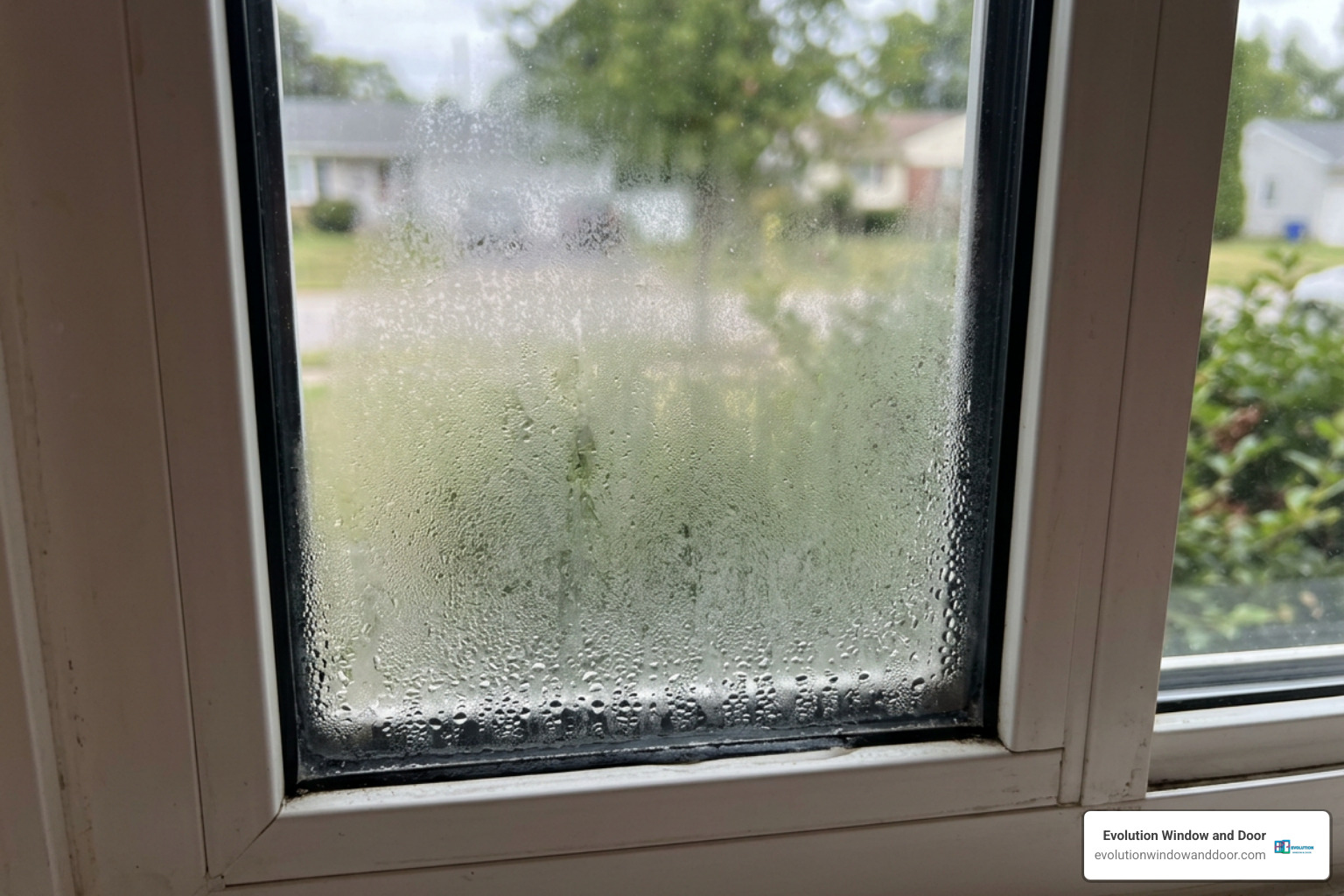
Spotting a broken seal before water damages your drywall or subflooring can save you thousands of dollars in secondary structural repairs. Window seals do not always blow out with a loud bang; more often, they fail quietly through subtle, progressive degradation.
Here are the most common signs that your double-glazed window seal is no longer doing its job:
- Persistent Fogging or Condensation Between Panes: If you attempt to wipe away moisture or droplet film only to realize it is trapped inside the glass unit between the two panes, the inner hermetic seal has ruptured.
- Noticeable Cold or Warm Draughts: Feeling a sudden breeze or temperature pocket near a closed window indicates that the flexible perimeter rubber gasket or outer silicone caulk line has split, letting outdoor air bypass the frame.
- Distorted Glass Reflections: As insulating argon or krypton gas leaks out from a double-glazed unit, the internal pressure drops. This vacuum loss can cause the two parallel glass sheets to flex slightly inward, creating warped, mirror-like reflections when viewed from outside.
- Mould and Mildew Along Frame Edges: Water pooling near exterior sealant gaps creates an ideal breeding ground for dark mould and fungal growth along uPVC, wood, or aluminum sashes.
- Unexplained Spikes in Energy Bills: When sealed air gaps fail, your HVAC system must work considerably harder to compensate for continuous heat gain in summer and heat loss in winter.
If you notice any of these red flags throughout your home, take time to read our detailed guide on Signs It’s Time to Replace Your Doors or Windows to evaluate whether simple maintenance or a full frame upgrade is your smartest move.
Frame Perimeter Seal vs IGU Seal Failure
Understanding the clear distinction between a Frame Perimeter Seal and an Insulated Glass Unit (IGU) Seal prevents costly misdiagnoses.
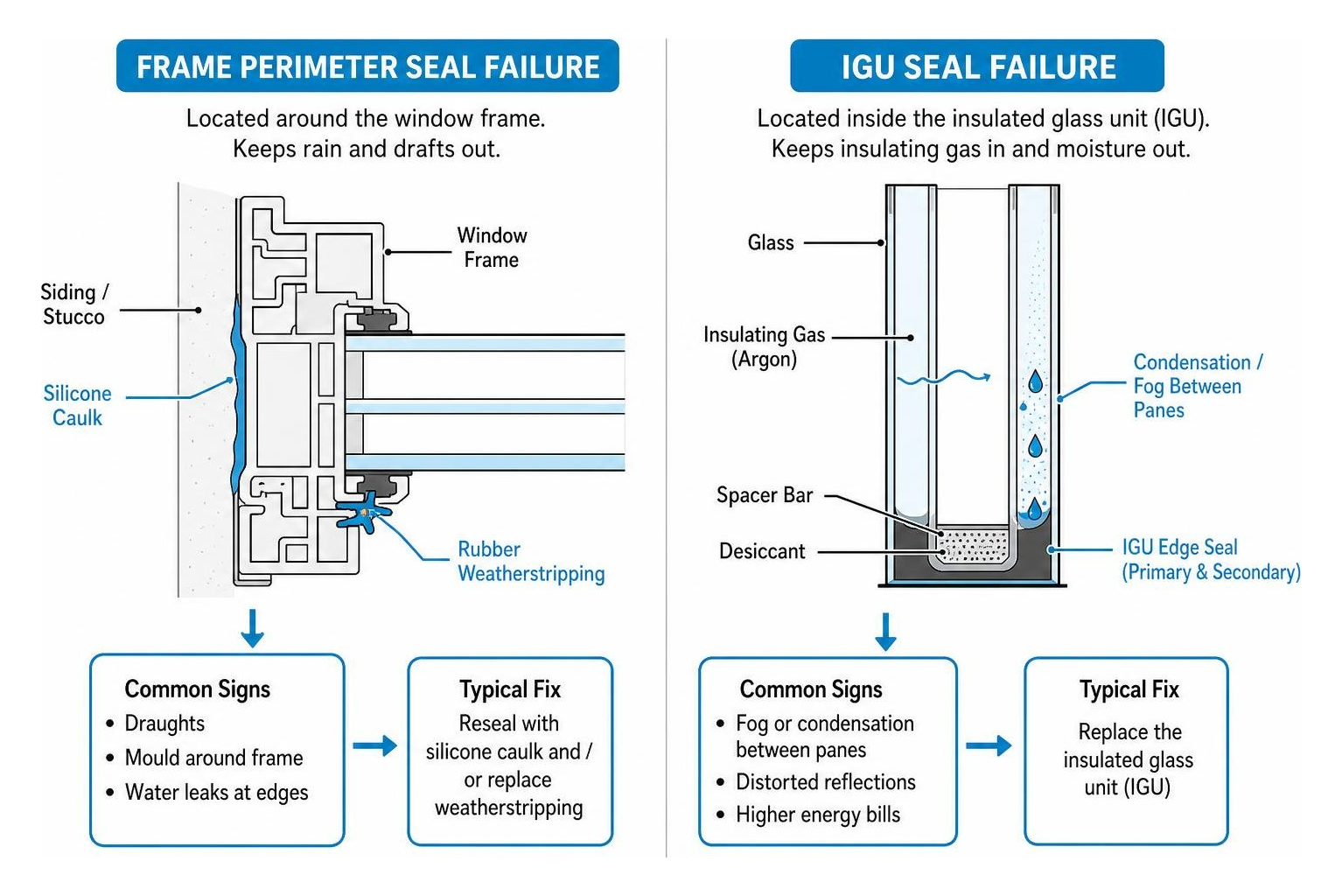
An exterior frame perimeter seal consists of the silicone caulking and rubber weatherstripping running between the exterior window frame and your home’s exterior siding, stucco, or brickwork. Its primary role is keeping rain and drafts out of your home’s wall envelope. If this sealant cracks or shrinks from heat, a simple surface scraper and fresh silicone caulk will solve the problem.
Conversely, an IGU seal is the factory-engineered primary and secondary edge seal binding the two glass panes directly to an internal spacer bar filled with moisture-absorbing desiccant. Once this internal seal breaks:
- Insulating argon gas escapes into the atmosphere (gas-filled units naturally lose about 1% per year under normal aging, but a broken seal empties the chamber rapidly).
- Moisture-laden outdoor air enters the inner cavity.
- The internal desiccant becomes saturated and can no longer absorb moisture, causing permanent mineral staining and fogging on the inner glass surfaces.
When an IGU seal fails, simply applying external caulking around the frame will not fix the foggy glass. The sealed glass pack itself must be replaced by a professional glazier. Learning How Doors and Windows Work Together for Energy Efficiency helps illustrate how maintaining these airtight seals keeps your entire home comfortable year-round.
Resealing vs. Replacing Double Glazed Windows

When faced with window seal issues, homeowners often wonder: Should I spend a couple hundred dollars to reseal, or invest in a full window replacement?
The answer depends heavily on frame condition, age, glass technology, and whether you live in a severe weather zone like Florida, where hurricane-rated impact resistance is critical.
When to Reseal, Refurbish, or Replace
To make an informed decision, let us weigh the three main repair pathways:
1. When to Reseal (Cost: $70 – $150 per window)
Resealing the exterior perimeter is ideal when:
- The double-glazed glass pane itself is completely clear with zero fogging.
- Drafts or minor water leaks are coming through dried, cracked exterior caulk or worn rubber sash gaskets.
- The existing frames (uPVC, aluminum, or composite) are sturdy, plumb, and free of structural damage.
2. When to Refurbish / Replace the IGU Only (Cost: $150 – $300 per window)
Replacing just the double-glazed glass pack is the best choice when:
- Glass panes are permanently fogged or stained inside, confirming IGU seal breakdown.
- The surrounding window frames, tracks, and locking hardware remain in excellent condition.
- Replacing the sealed unit saves roughly 70% to 80% compared to purchasing an entirely new window frame assembly, taking an experienced technician only 30 to 45 minutes per window.
3. When to Completely Replace the Window (Cost: $450 – $1,200+ per window)
Full replacement is recommended when:
- Wooden frames exhibit soft, crumbling rot or severe termite damage.
- uPVC or metal frames are badly warped, cracked, or out-of-square, preventing proper opening and closing.
- The windows are over 20 to 25 years old and feature obsolete single-coat glass technologies that waste energy.
- You want to upgrade to high-performance, Florida hurricane-rated impact glass to satisfy modern building codes and earn insurance premium discounts.
If you are thinking about upgrading your home’s aesthetics and structural protection, explore Choosing the Right Window Style for Your Home to see modern, energy-efficient frame options available today.
DIY vs Professional Window Resealing
Taking the DIY route is a popular topic among budget-conscious homeowners. Tackling exterior perimeter caulking yourself can certainly save money on labor, but it is important to weigh those savings against project complexity and safety risks.
DIY vs Professional Cost of Resealing Double Glazed Windows
Let’s look at a head-to-head financial and practical comparison for a standard 6-window exterior resealing project:
| Category | DIY Project (6 Windows) | Professional Service (6 Windows) |
|---|---|---|
| Tools Required | Heavy-duty caulking gun ($20), utility scraper ($10), 5-in-1 tool ($8), spray foam/backer rod ($15), ladder ($150 if not owned) | Included in contractor quote |
| Material Expenses | 4-6 tubes high-grade neutral cure silicone ($45 – $70) | Commercial volume pricing ($40 – $60) |
| Labor Cost | $0 (4 to 8 hours of your weekend) | $500 – $900 total |
| Total Out-of-Pocket | $80 – $220 | $550 – $960 |
| Warranty Coverage | None (Manufacturer tube warranty only) | 1 to 10 years on labor and seal integrity |
| Risk Factor | Potential ladder falls, frame scratching, incomplete weather seals | Insured, certified glazier performance |
The Reality of DIY Resealing
If your project involves basic ground-floor caulk renewal where the glass unit remains intact, DIY application is straightforward:
- Carefully cut away cracked, degraded sealant using a sharp utility knife without scoring the uPVC or metal finish.
- Clean the frame joint thoroughly with rubbing alcohol or a specialized cleaner to eliminate dirt, oil, and mildew.
- Insert closed-cell foam backer rod into gaps wider than 1/4 inch.
- Lay down a smooth, uninterrupted bead of 100% silicone sealant, tooling the joint neatly with a wet smoothing tool or gloved finger.
Why Professional Resealing Offers High Value
While DIY caulking saves approximately $30 to $40 per window in direct labor, attempting complex repairs—like removing glass stops or trying to unseal and clean inside an IGU package—is risky.
Without industrial vacuum pumps, argon gas filling lines, and specialized butyl rubber hot-melt applicators, DIY attempts to open and reseal double-pane glass almost always fail. They introduce ambient humidity into the unit, resulting in permanent fogging within weeks and potentially voiding manufacturer warranties.
Professional window installers possess the specialized equipment and structural knowledge needed to seal windows correctly the first time, ensuring your home remains protected against severe weather.
Frequently Asked Questions About Double Glazed Window Resealing
How long does it take to reseal a double glazed window and how long do seals last?
A professional glazier usually takes about 30 to 90 minutes per window to cut out old exterior perimeter sealant, clean the frame channel, and tool fresh silicone caulk. Replacing an entire Insulated Glass Unit (IGU) pane inside an existing frame takes roughly 30 to 45 minutes per opening once the custom glass pack has been manufactured.
High-quality silicone window seals typically last between 10 and 15 years. However, windows subject to severe climate conditions—such as intense Florida sun exposure, coastal salt air, or rapid thermal expansion—may require seal maintenance every 5 to 8 years.
What type of sealant is best for double glazed windows?
100% Neutral-Cure Silicone Sealant is the industry gold standard for sealing exterior double-glazed window perimeters and glass joints. Unlike acid-curing acetoxy silicones (which emit a vinegar odor and can react negatively with metal spacers or laminated glass interlayers), neutral-cure silicone:
- Remains permanently flexible through broad temperature swings without cracking or shrinking.
- Offers exceptional UV resistance against bright sunlight.
- Adheres strongly to vinyl (uPVC), aluminum, glass, masonry, and painted timber frames.
For operable window sashes, high-density EPDM rubber gaskets or silicone flipper gaskets should be used rather than liquid caulk to allow free sash movement while blocking drafts.
Can fogged glass be fixed by just resealing the frame exterior?
No. Applying external caulking around the outside window frame will not resolve internal glass fogging.
Once condensation or cloudiness appears between the two panes, the sealed double-glazed unit has lost its airtight seal, allowing its insulating argon gas to escape and moisture to saturate the internal desiccant. To restore thermal performance and glass clarity, you must have a glazier replace the internal sealed glass unit (IGU) or replace the complete window assembly.
Conclusion
Resealing your double-glazed windows is one of the most cost-effective ways to improve home comfort, halt rain infiltration, and reduce monthly energy bills. For straightforward exterior caulking jobs, budgeting $70 to $150 per window offers great protection against moisture damage. If the double-pane glass itself has fogged due to an IGU seal failure, replacing the sealed glass insert for $150 to $300 restores full insulation performance without the high expense of replacing the entire window frame.
By keeping an eye out for early warning signs—like drafts, glass distortion, or perimeter mould—you can address minor seal repairs before water damages your walls or home structure.
When you need expert guidance on maintaining window efficiency, repairing exterior seals, or upgrading older windows to impact-resistant technology, our experienced team is here to help. Explore our complete selection of replacement Windows or contact us today for friendly, professional guidance tailored to your home!


